Production Goods & Services

14hits

Narrow by category

History and Evolution of Plastic Injection Molding|From Celluloid to Industry 4.0

Plastic injection molding has transformed from a basic celluloid press into a smart manufacturing process powered by AI and sustainability. This article explores how the technology evolved and why it’s vital to modern industry. 1. The Origins of Injection Molding Injection molding began in 1872, when John Wesley Hyatt and Isaiah Hyatt patented the first injection machine using celluloid to create billiard balls, replacing ivory. Though primitive, this invention started the plastic revolution and led to today’s advanced processes. 2. Growth in the Early 20th Century The invention of Bakelite by Leo Baekeland in 1907 was a turning point, offering heat-resistant and electrically insulating plastic. By the 1920s–1930s, materials like polystyrene and nylon broadened injection molding’s role in consumer and industrial applications. 3. Modern Machinery Emerges (1940–1970) World War II accelerated demand for durable plastic parts. In 1946, James Watson Hendry developed the screw-type injection molding machine, improving control over melt flow and temperature. From the 1950s–1970s, new engineering plastics such as PC, PP, and PET enabled stronger, heat-resistant components and expanded plastic’s role in manufacturing. 4. Automation and Intelligence (1980–Present) The 1980s saw the rise of CNC and automation, enhancing speed and accuracy. By the 1990s–2000s, multi-material molding, 2K, and overmolding allowed combining different resins in a single part—offering complex functionality in fewer steps. Today, Injection Molding 4.0 incorporates AI, IoT, and 3D printing for real-time optimization, traceability, and significant reduction in cycle times and waste. 5. The Future of Injection Molding The process is evolving toward greener, smarter manufacturing: * Use of bioplastics and recycled resins * Smart systems with real-time process control * Design strategies that minimize material usage and waste Why Choose Hakkai Precision Thailand? Hakkai Precision Thailand is a trusted expert in precision injection molding. We offer end-to-end service—from mold design to high-performance part production—backed by modern automation and strict quality control. ✅ Automated machines reduce waste and cost ✅ Engineering-grade materials for every industry ✅ Custom mold development tailored to your application #InjectionMolding #PlasticMoldingHistory #MoldingTechnology #Industry4\_0 #MultiMaterialMolding #2KMolding #AIinManufacturing #Bioplastics #MoldDesign #SmartManufacturing

Engineering Plastics Explained|Selection Guide and Design Tips for Optimal Performance

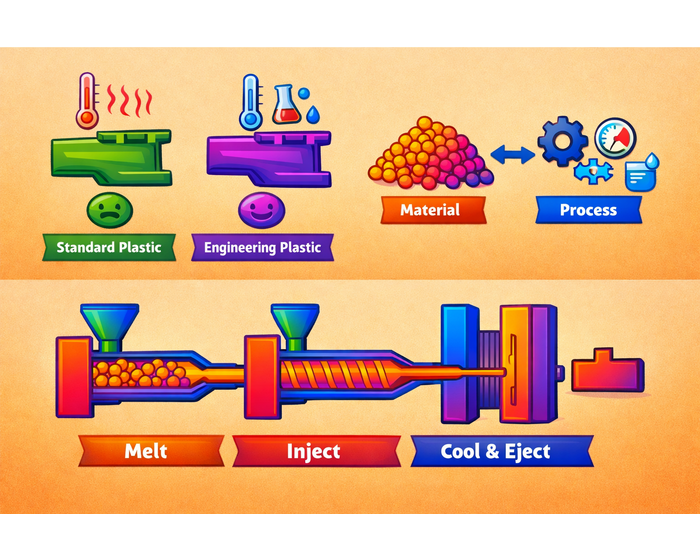
Choosing the right engineering plastic is critical for ensuring strength, durability, and cost-efficiency in product design. This article provides an overview of key materials, selection criteria, and molding considerations for engineers and designers. 1. What Are Engineering Plastics? Engineering plastics are high-performance resins with superior mechanical, thermal, and chemical properties. Unlike general-purpose plastics, they perform reliably under stress, heat, or corrosive conditions, making them ideal for structural and functional applications in automotive, electronics, and industrial sectors. They are also used to replace metal in many components due to their lightweight and processability. 2. Key Types and Properties Each engineering plastic offers unique benefits: - PBT – Durable, heat- and chemical-resistant; used in electrical connectors and appliances. - LCP – Ultra-dimensionally stable and high-flow; ideal for precision electronic parts. - PET – Strong and chemically resistant; used for insulation and structural parts. - POM – Low friction and high strength; perfect for gears and sliding components. - PA (Nylon) – Tough and wear-resistant; common in automotive, absorbs moisture. - PC – Clear and impact-resistant; suitable for lenses, covers, and displays. - ABS – Easy to mold with good surface finish; ideal for housings and toys. - PPS – Excellent chemical and heat resistance; great for under-hood automotive parts. - PEI – Maintains strength at high temperatures; used in industrial electronics. - PES – Transparent with high thermal/chemical resistance; used in medical and filtration. - TPV – Elastic like rubber but injection moldable; used in seals and grips. - PSU – Heat-resistant for piping and electrical use. - PMMA – Very clear and weather-resistant; used in optical and display applications. 3. How to Select the Right Material Match the resin to the application: - High strength → PBT, POM, PA - High heat → PPS, PEI, PES - Chemical resistance → PPS, PBT, PES - Low friction/sliding → POM - Transparency/design → PC, PMMA - Precision parts → LCP Understanding usage conditions (temperature, environment, load, exposure) helps prevent over- or under-specification. 4. Molding Considerations Engineering plastics require strict control during molding: - Drying is essential for moisture-sensitive resins (e.g., PA, PBT) to avoid defects. - Glass-filled materials wear molds faster — choose mold steels and coatings accordingly. - Fine-tuned temperature and pressure profiles are necessary to fully realize material performance. 5. Trade-Offs in Resin Selection There's no perfect material — each offers trade-offs: - Higher strength = tougher to mold - Heat resistance = higher cost - Transparency vs. impact resistance often conflict Designers must balance performance, appearance, processability, and cost in material selection. 6. Conclusion: Smart Material Selection = Product Success Engineering plastics offer vast advantages, but only when selected and processed correctly. Align the resin’s properties with the real-world application, and validate through prototyping and pre-production trials. Doing so ensures reliable, cost-effective performance over the product lifecycle. #EngineeringPlastics #MaterialSelection #InjectionMolding #PlasticDesignTips #ResinProperties #HighPerformancePlastics #PBT #LCP #POM #PlasticMaterialGuide #MoldDesign

Common Plastic Injection Molding Defects|Causes and Practical Fixes

Injection molding defects like flow marks, voids, and warping can severely impact part quality and production efficiency. Learn the root causes and proven solutions for common molding issues—plus how to prevent them with better design and machine control. 1. Flow Marks Appearance: Wavy lines or streaks along the plastic flow direction Causes: - Low injection speed - Inadequate mold or resin temperature - Poor runner/gate design Solutions: - Increase injection speed - Raise mold or melt temperature - Redesign flow path (gate and runner) for smoother filling 2. Air Traps & Voids Appearance: Internal cavities or rough surfaces from trapped air Causes: - Insufficient mold venting - Improper temperature or pressure during filling - Incomplete mold filling Solutions: - Add or enlarge air vents - Increase packing or holding pressure - Balance shot volume for full cavity filling 3. Warping Appearance: Part is bent, twisted, or deformed Causes: - Uneven cooling - Pressure imbalance across the part - Inconsistent wall thickness Solutions: - Stabilize mold temperature - Design parts with uniform wall thickness - Extend cooling time if needed 4. Burn Marks Appearance: Dark brown or black scorch spots, typically at flow ends Causes: - Compressed trapped gas or air - Excessive injection speed - Insufficient venting Solutions: - Reduce injection speed - Improve mold venting - Check for debris in the nozzle or runner 5. Short Shot Appearance: Incomplete part filling Causes: - Low injection pressure - High resin viscosity - Small gate or runner channels Solutions: - Increase injection speed or pressure - Raise melt temperature - Widen gate or runner size Final Advice: Preventing Defects with Smart Equipment Recurring molding defects often result from inadequate control over speed, pressure, or temperature. Investing in highprecision injection molding machines with smart controls can significantly reduce defect rates and improve overall product quality. #InjectionMolding #MoldingDefects #PlasticManufacturing #MoldDesign #ProductionEfficiency #ShortShot #FlowMark #AirTrap #Warping #BurnMark

Thermoplastic vs Thermosetting Resins|Key Differences and How to Choose the Right One

Thermoplastics and thermosetting resins differ significantly in their structure, processing, and performance. This article outlines their key differences and provides guidance for selecting the right resin based on application, moldability, and durability. 1. What Is a Thermoplastic Resin? Thermoplastics soften when heated and solidify upon cooling — a reversible process that supports recycling and reshaping. Common types include: - PP (Polypropylene) - PE (Polyethylene) - PC (Polycarbonate) - PA (Polyamide/Nylon) - POM (Polyacetal) These materials support various forming methods like injection molding, extrusion, and blow molding, making them ideal for automotive, consumer goods, and industrial components. 2. What Is a Thermosetting Resin? Thermosets undergo irreversible chemical curing upon heating, forming rigid 3D molecular structures. They cannot be melted or reshaped after curing. Common types include: - EP (Epoxy Resin) - PF (Phenolic Resin) - UP (Unsaturated Polyester) - Melamine Resin These are ideal for high-temperature, high-strength, and electrically insulating applications such as circuit boards, aerospace components, and industrial tooling. 3. Comparison: Processing and Application Use Thermoplastics: - Fast production cycles - Suitable for mass production - Versatile performance range (flexible to rigid) Used in: - Automotive interiors and bumpers - Electronic housings - Consumer packaging Thermosetting Resins: - Longer curing time due to chemical crosslinking - Essential for precision parts with heat and chemical resistance Used in: - Electrical insulation systems - Heat-resistant molds - Aerospace structures 4. Pros and Cons Summary Thermoplastics ✅ Fast cycle time ✅ Recyclable ✅ Flexible processing ❌ Can deform under heat Thermosets ✅ Excellent heat and chemical resistance ✅ High rigidity and durability ❌ Non-recyclable ❌ Challenging shrinkage control Final Tip: Select Resin Based on End Use Choosing between thermoplastics and thermosets depends on operating temperature, required rigidity, part complexity, and production volume. Defining performance criteria early in the design phase ensures cost-effective and reliable outcomes. #Thermoplastic #ThermosettingResin #MaterialSelection #InjectionMolding #PlasticEngineering #HighPerformanceResins #PlasticComparison

Injection Molding in Automotive Manufacturing|Why It’s Key for Lightweight, Precision Parts

Injection molding plays a pivotal role in modern automotive manufacturing—cutting weight, reducing costs, and delivering complex, precise plastic components. This article explores its applications, technical benefits, and material selection strategies for engineers. 1. What Is Injection Molding? Injection molding involves melting thermoplastic resin, injecting it into a mold under high pressure, then cooling and solidifying into the final shape. It enables complex part production in a single step, making it ideal for high-volume, precise, and cost-efficient manufacturing. As vehicles increasingly shift from metal to plastics, injection molding is indispensable for automated production lines. 2. Typical Injection Molded Automotive Parts Common automotive applications include: - Exterior parts: bumpers, radiator grilles - Interior trims: dashboard panels, door trims - Functional components: HVAC heater cases, air ducts, fuse boxes, connectors - Engine bay parts: fan shrouds, coolant reservoirs, air intake manifolds Resins like PC, PA, and PBT deliver metal-like performance where heat resistance, rigidity, and precise form retention matter. 3. Technical Advantages & Design Considerations Key benefits of injection molding in automotive production: - Integrated molding reduces part count and simplifies assembly - High dimensional accuracy ensures tight fitting and surface finish quality - Supports CAE simulation to optimize mold design, gate location, and cooling channels for better quality control Successful design requires careful gating, efficient cooling systems, and mold flow analysis to prevent defects and ensure performance. 4. Resin Types & Selection Guidelines Common engineering resins and their applications: - PP (Polypropylene): Lightweight and cost-effective, ideal for bumpers and interior trims - PA (Nylon), PBT: Robust, heat- and oil-resistant—used in engine-related parts - PC (Polycarbonate): Transparent and impact-resistant for lighting and optical applications - ABS: Aesthetic finish, easy to mold—popular in interior paneling Resin modification is also common: - Glass fiber: Increases stiffness and heat tolerance - Flame retardants: Used especially in electrical components - UV stabilizers: For parts exposed to sunlight or harsh environments Why Choose Hakkai Precision Thailand? Hakkai Precision Thailand offers comprehensive services for automotive-grade injection molding: from mold design and resin selection to mass production using automated, high-precision machines. We specialize in minimizing defects, optimizing cycle times, and ensuring product quality from design to delivery. #InjectionMolding #AutomotiveParts #LightweightDesign #PP #PA #PBT #PrecisionMolding #AutomotiveEngineering #MoldSimulation #AutomotiveManufacturing

Injection Mold Design & Maintenance Basics|Maximizing Quality and Efficiency

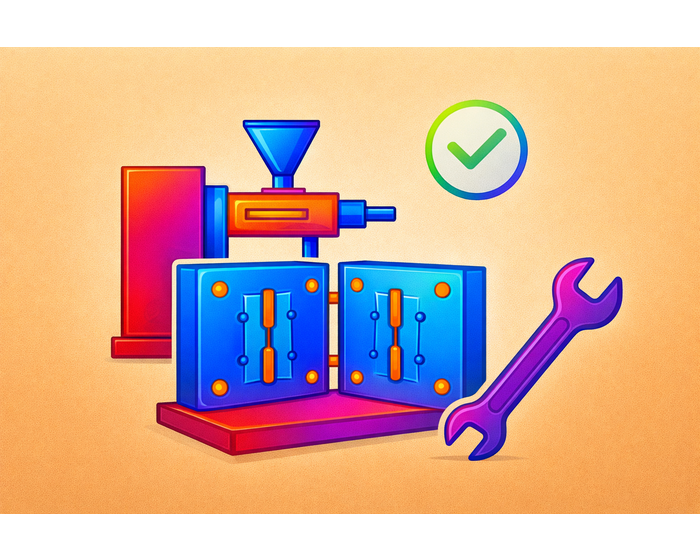
The mold is the heart of injection molding—smart design and proactive maintenance are critical for achieving high accuracy, smooth surfaces, short cycle times, and reduced costs. This guide offers engineering principles and preventative strategies for consistent high-volume production. 1. Mold Structure and Functions Injection molds are composed of two halves (fixed and movable), each forming one side of the part. During operation, molten resin is injected under high pressure, cooled, and the part is ejected. Critical design features include: - Cavity: Shapes the part and must account for material flowability and shrinkage - Gate: Controls fill direction and affects balance and flash formation - Runner & Sprue: Distributes resin evenly to all cavities - Cooling System: Efficient water circuits shorten cycle times and ensure dimensional stability - Ejection Mechanism: Ejector pins and plates must be precisely placed to avoid damage or deflection Poor or weak design in these areas undermines reliability in a high-volume production environment. 2. Mold Materials & Surface Treatments Tool steels with high hardness are standard, but choosing the right material depends on resin type and production load. For glass fiber–reinforced resins, wear-resistant steels paired with coatings such as PVD or nitride are essential to extend mold lifespan and improve part release. In a mass-production setting, durability and ease of maintenance must outweigh initial material cost. 3. Design Precautions to Prevent Defects Effective mold design anticipates common defects: - Short Shots: Optimize gate location and resin flow balance using CAE analysis - Weld Lines: Position gates to control resin merge points and maintain integrity - Flash: Tighten parting lines and enhance mold dimensional precision - Sink & Warpage: Keep wall thickness uniform and maintain balanced cooling across cavities Leveraging CAE simulations and design experience is key to mitigating risks early in the mold development process. 4. Mold Maintenance Fundamentals As molds are used over time, wear, contamination, and mechanical shifts can degrade part quality. A proactive maintenance plan is critical. Key maintenance practices include: - Lubrication and inspection of moving components (ejector pins/slides) - Cleaning cavities to remove trapped gas or carbon deposits - Flushing cooling channels and removing scale buildup - Examining and replacing worn-out gates and pins - Monitoring corrosion or oxidation and applying treatment or preservation Preventive maintenance scheduled based on cycle count (e.g., every X thousand shots) avoids unplanned downtime and maintains consistent part quality. Final Insight Smart mold design and disciplined maintenance directly impact mold longevity, part quality, and operational efficiency. Investing in durable materials, design optimization, and preventive maintenance yields measurable improvements in production yield and cost control. #MoldDesign #InjectionMolding #ToolingMaintenance #MoldEngineering #CoolingDesign #PreventiveMaintenance #MoldingDefects #CAE #HighYieldProduction #PlasticManufacturing

Latest Trends & Innovations in Injection Molding|Advancing Efficiency, Precision & Sustainability

Injection molding has evolved beyond high-volume manufacturing into a precision, sustainable, and smart process. This article explores cutting-edge materials, advanced machine technologies, and intelligent systems shaping the future of injection molding. 1. Background: Why Technology Is Evolving While injection molding was traditionally optimized for mass output, changing demands—shorter lead times, product diversity, and tighter tolerances—are driving innovation. Industries like automotive, medical, and electronics increasingly rely on high-performance materials and precision processing to stay competitive. 2. High‑Performance & Composite Materials There’s growing use of reinforced resins—thermoplastics blended with glass fiber, carbon fiber, or other fillers—to deliver metal-like strength at reduced weight. In addition, multi-material and multi-color molding (e.g., 2‑shot, overmolding) enable integrated function and design in a single part, minimizing assembly and increasing flexibility. 3. Precision Molding & Smart Process Control - In-mold sensors and real-time monitoring are embedded in molds to track pressure, temperature, and flow, enabling adjustments on the fly. - AI and machine learning optimize injection parameters and run quality control—some systems now perform process optimization 100× faster than older methods. - Rapid Heat Cycle Molding (RHCM) and conformal cooling significantly improve surface finish and reduce cycle time. 4. Sustainable & Energy‑Efficient Manufacturing - All-electric and hybrid injection molding machines are now mainstream, offering 30–50% energy savings, higher repeatability, and lower CO₂ emissions compared to traditional hydraulic equipment. - Recycled and bio-based plastics (e.g., regrind PET/PP, PLA bioplastics) are increasingly used to meet environmental regulations and reduce waste. - Closed-loop recycling of runners, sprues, and scrap material within production enables greater circularity and efficiency. 5. Emerging Techniques & Small-Part Precision Molding - Cube Mold Technology (stack-turn rotating molds) speeds up multi-material, multi-step molding and shortens cycle times. - Micro injection molding now produces parts weighing as little as 0.1g, with micrometer tolerances—critical for medical, microelectronic, and microfluidic devices. 6. Strategic Trends for the Industry - Reshoring & rapid tooling are becoming priorities as engineers seek faster design iteration and localized production. - Smart factory integration—IoT connectivity, digital twins, predictive maintenance—is enabling generative design and automated molding control. - The rise of smart functional parts, embedding electronics, RFID, or sensory capabilities, opens up new product possibilities within single-shot molding formats. Why It Matters for Manufacturers Innovation in materials, machine design, and process control isn’t optional—it’s essential. Embracing these technologies leads to faster cycles, higher yields, greater sustainability, and stronger competitive positioning. #InjectionMoldingTrends #SmartMolding #SustainableManufacturing #ElectricInjectionMolding #MicroMolding #CompositeResins #AIinManufacturing #ConformalCooling #MultiMaterialMolding #CircularEconomy

Material Selection & Performance Optimization in Injection Molding|Engineering Best Practices

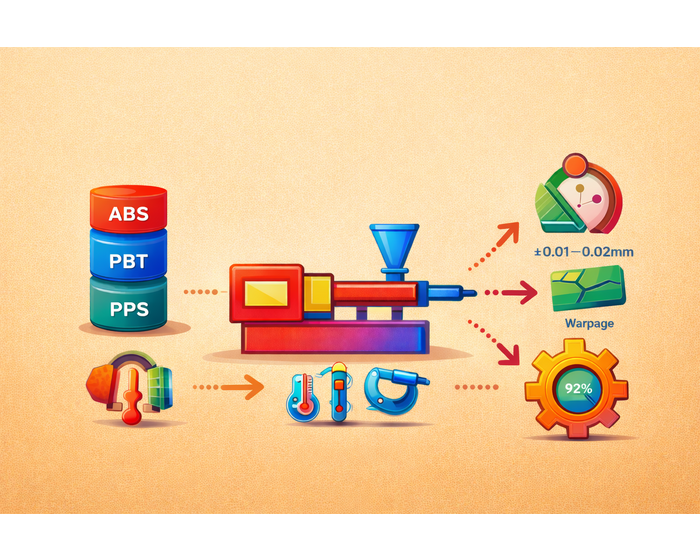
Selecting the right resin and optimizing molding conditions are essential for consistent quality, performance, and cost-efficiency. This guide provides engineers with practical insights into resin properties, material modifications, and process control methods. 1. Importance of Material Choice Injection molding relies on melting and injecting resin to create complex parts quickly. However, product durability, dimensional accuracy, and reliability heavily depend on resin properties. Choosing the appropriate material aligned with usage conditions ensures stable outputs, fewer defects, and better cost control. 2. Core Selection Criteria for Resins Most injection molding applications use thermoplastics such as PP, PC, and ABS. Key properties to evaluate include: - Mechanical strength (impact, tensile) - Heat resistance (resistance to deformation and degradation) - Dimensional stability (shrinkage, warpage control) - Chemical resistance (solvents, oils) - Appearance (transparency, gloss, dyeing) For instance, automotive parts emphasize strength and heat resistance, while medical components demand chemical resistance and biocompatibility. 3. Additives and Resin Modification for Enhanced Performance To enhance material performance, additives like glass or carbon fibers are used to increase rigidity, while flame retardants and UV stabilizers improve specific environmental resistance. Emerging resin formulations now offer tailored solutions—not just strength but also lightweight, functionality, and cost targets. 4. Matching Material Properties with Processing Conditions Even after selecting optimal resin, improper processing settings can undermine performance. Mold parameters such as melt temperature, mold temperature, injection pressure, and hold time must be fine-tuned based on material characteristics. Crystalline resins require controlled cooling as solidification speed influences dimensional accuracy. Advanced techniques like Bayesian adaptive DoE and deep reinforcement learning (DRL) now enable real-time process optimization by balancing quality and profit objectives. These technologies allow dynamic adjustment of settings to maintain consistent part quality across varying production conditions. 5. Best Practices Summary Proper material selection and optimized processing reduce rejects, improve consistency, and extend part service life. Modern AI/ML‐driven optimization delivers both quality and profitability. #InjectionMolding #MaterialSelection #ResinOptimization #SmartManufacturing #AIforMolding #InjectionControl #PartQuality #EngineeringPlastics #AdvancedResins #ProcessOptimization

Understanding Melt Flow in Injection Molding|Reduce Waste and Optimize Plastic Processing

Knowing how plastic behaves during injection molding helps factories reduce defects, shorten cycle times, and improve product quality. This article explores key scientific principles behind polymer flow. Producing consistent, high-quality plastic parts depends heavily on understanding the behavior of molten polymers during injection molding. The transformation from solid pellets to a finished product involves complex thermal and mechanical processes that influence cycle time, defect rates, and tool life. Polymer Structure and Flow Behavior Each polymer type has a unique molecular structure that affects its flow. For example, polypropylene (PP) has linear chains, allowing it to melt easily and flow with low viscosity. In contrast, polycarbonate (PC) has rigid aromatic rings, requiring higher temperatures and pressures to process. Molecular weight also affects performance: - High molecular weight = stronger parts but slower flow. - Low molecular weight = easier processing but reduced mechanical strength. Shear Rate and Viscosity Molten plastics are non-Newtonian fluids, meaning their viscosity changes with shear rate. Most thermoplastics show shear thinning behavior — as shear rate increases (e.g., faster injection), viscosity decreases. This helps the melt fill thin sections of the mold more easily. This can be modeled with the power law equation: η = K × γⁿ⁻¹ Where: - η = viscosity - γ = shear rate - K, n = material-specific constants Understanding this helps optimize injection speed and gate design. Temperature's Role in Flow Temperature greatly influences viscosity. A 10°C rise can lower viscosity by 15–20%, improving flow. But overheating can degrade the polymer — causing discoloration, loss of molecular weight, and brittleness. A properly controlled barrel temperature profile — increasing from rear to front — ensures complete melting without overheating. Mold Flow Patterns As molten plastic enters the mold through runners and gates, it experiences shear and pressure drop. The fountain flow phenomenon occurs: the center material moves forward while cooler material near the mold walls slows down. Gate design is critical: - Smaller gates = higher shear, better mixing, but risk of degradation. - Larger gates = lower shear, better for delicate materials, but longer cooling time. #InjectionMolding #PlasticFlow #ShearThinning #MoldDesign #PolymerProcessing #Thermoplastics #MeltFlowIndex #ManufacturingTips #FountainFlow #ReduceDefects

Differences and Appropriate Use of POM and PBT|Choosing the Best Material for Automotive Parts

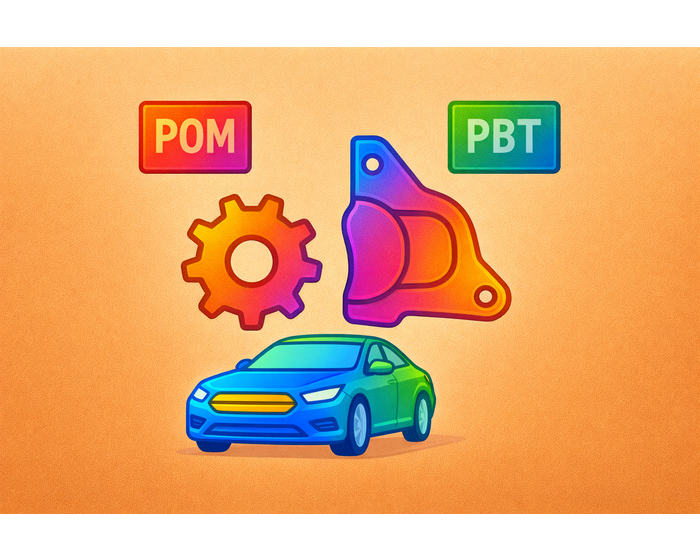
POM and PBT are both essential engineering plastics for automotive parts, each excelling in different areas—POM for wear-resistant, moving components, and PBT for heat-resistant electrical parts. Understanding their differences ensures optimal material selection for specific automotive applications. 1. Engineering Plastics for Automotive Applications Automotive parts demand high heat resistance, dimensional stability, and mechanical strength. Two of the most common materials used are POM (Polyacetal, โพลีอะซีทัล) and PBT (Polybutylene Terephthalate, โพลีบิวทิลีนเทเรฟทาเลต). POM offers high mechanical strength and low friction, making it ideal for sliding parts such as gears and actuators. PBT, known for its electrical insulation and heat resistance, is frequently used in electrical components like sensor housings and wire connectors. 2. Mechanical Performance and Application Suitability POM stands out for tensile strength and fatigue resistance—ideal for components under continuous motion. Its low friction coefficient contributes to silent, smooth operation, a key benefit in interior parts and mechanical linkages. PBT delivers superior dimensional stability, even under high heat or humidity. It retains shape even with thin walls and complex molds, which makes it excellent for parts requiring precision and rigidity. Key Selection Tip: - Use POM when wear resistance and friction reduction are critical. - Use PBT when thermal stability and structural rigidity are essential. 3. Heat, Chemical, and Electrical Performance Comparison POM resists oils and alkalis, making it a strong choice for fuel system components. However, it may deform under high thermal conditions. PBT handles sustained temperatures of 120–150°C and comes in flame-retardant variants certified under UL94 standards, which is crucial for vehicle safety compliance. Thanks to its excellent insulation, PBT is advantageous for noise suppression and creepage resistance in ECUs and sensor modules. 4. Automotive Use Cases and Industry Trends POM is often selected for: - Power window gears - Seat recliner systems - Throttle valve mechanisms PBT is prevalent in: - Engine bay connectors - Sensor casings - Headlamp adjustment modules EV Market Trend: With the shift toward electric vehicles (EVs), PBT’s flame resistance and electrical properties are gaining prominence. Meanwhile, POM remains essential for high-strength and lightweight drivetrain elements. #EngineeringPlastics #POM #PBT #AutomotiveParts #EVComponents #HeatResistantPlastics #PrecisionMolding #ElectricalInsulation #ThailandIndustry #OEM

How to Choose Engineering Plastics for Precision Component Design|LCP, PPS, PEI Compared

Selecting the right engineering plastic for precision components is crucial to achieving high dimensional accuracy and durability. This article compares the properties of LCP, PPS, and PEI, and explains how to choose the best material for your application. In precision component design common in electronics, automotive, medical, and industrial equipment the choice of engineering plastics ("enpla") directly impacts product quality. Key requirements include dimensional stability, low water absorption, heat resistance, and machining precision. 1. Requirements for Engineering Plastics in Precision Parts To ensure performance and reliability, enpla used in precision components must offer: - Dimensional stability: Minimal deformation during molding and usage - Low water absorption: Prevents swelling or property changes due to humidity - Heat resistance: Maintains strength and form under elevated temperatures - Machining precision: Supports fine-tolerance injection molding or CNC processing With these criteria in mind, we will compare three leading engineering plastics: LCP (Liquid Crystal Polymer), PPS (Polyphenylene Sulfide), and PEI (Polyetherimide). 2. LCP (Liquid Crystal Polymer) - Features and Applications - Extremely low coefficient of thermal expansion (similar to metals) - High flowability for ultra-thin, micro-precision molding - Excellent mechanical strength and dimensional consistency - Compatible with fillers like glass fiber Common Applications: Electronic connectors, sensor housings, and micro medical parts. LCP excels in humid and high-temperature environments, with minimal dimensional variance and longer mold life. 3. PPS (Polyphenylene Sulfide) - Features and Applications - Heat resistance over 200°C (180°C for continuous use) - Extremely low water absorption, maintaining shape and properties - High stiffness and inherent flame retardancy (self-extinguishing) - Good machinability for complex designs Common Applications: Automotive ECUs, precision gears, pump parts. PPS is ideal for high-temperature and tight-tolerance settings and offers easy post-molding processing due to low shrinkage. 4. PEI (Polyetherimide) - Features and Applications - High heat resistance (170 - 180°C continuous use) - Excellent electrical insulation and creep resistance - Flame retardant without additives (UL94 V-0) - Balanced rigidity and toughness with excellent transparency Common Applications: Aircraft components, medical devices, IC trays, and optical-grade precision parts. PEI's clarity and performance make it suitable for applications demanding both appearance and structural reliability. 5. Key Considerations for Material Selection Before choosing an engineering plastic for precision components, evaluate: - Required operating temperature and long-term heat exposure - Product shape, thickness, and tolerance demands - Sensitivity to moisture and environmental conditions - Need for electrical insulation and flame resistance - Mold design complexity and production cost balance Selecting materials based solely on datasheets can lead to failure. Instead, factor in real-world usage environments and processing methods. #EngineeringPlastics #PrecisionParts #LCP #PPS #PEI #InjectionMolding #HeatResistantPlastic #HighPerformancePolymers #PlasticEngineering #DimensionalStability


Understanding Plastic Injection Molding|Mechanism and Key Process Parameters for Mass Production

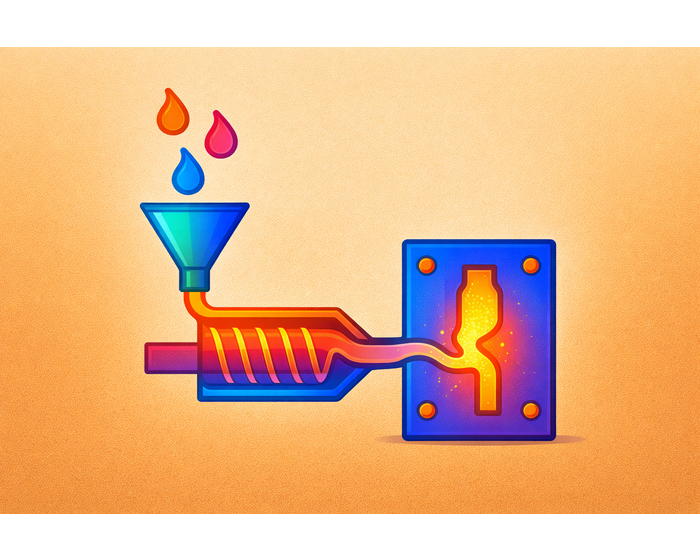
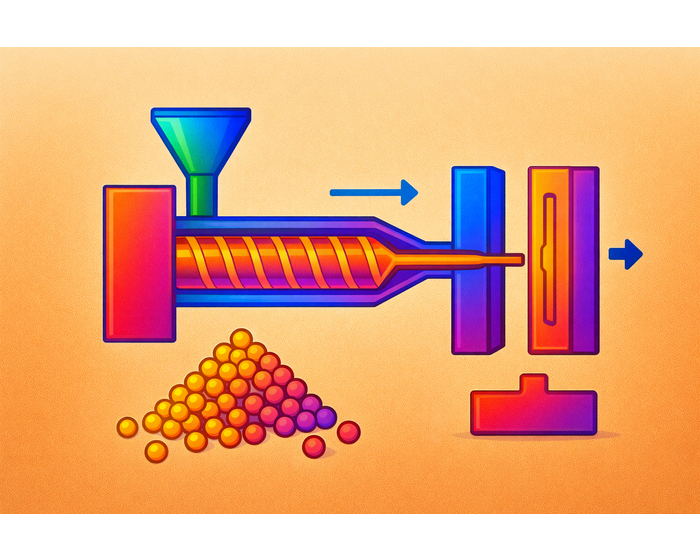
Plastic injection molding enables high-precision, automated mass production of complex components. This article explains the mechanism, process, and key parameters that ensure quality manufacturing. Injection molding is a method of forming thermoplastic resin by heating it until molten, injecting it into a mold under high pressure, then cooling and solidifying it to form the desired shape. Its advantages include: - High dimensional accuracy (±0.01 mm) - Suitability for complex geometries - Short cycle times and automation readiness - High yield with low material waste - Excellent recyclability Due to these features, it is widely used in the production of both industrial and consumer goods across automotive, electronics, and medical sectors Basic Structure of an Injection Molding Machine A standard injection molding machine consists of: - Hopper: Feeds pelletized thermoplastic resin - Screw & Cylinder: Heats, melts, and kneads resin - Injection Unit: Injects molten resin into the mold - Mold: Defines the product’s shape - Clamping Unit: Maintains mold closure under pressure Each unit works in coordination, enabling consistent and stable forming. Injection Molding Process Flow|5 Key Stages The injection molding process typically includes five automated stages: 1. Feeding & Plasticizing: Resin pellets are fed and melted inside the screw and barrel. 2. Injection: Molten resin is pushed into the mold cavity at high pressure. 3. Holding Pressure: Maintains pressure to compensate for resin shrinkage. 4. Cooling: Mold absorbs heat, solidifying the resin into shape. 5. Ejection: The mold opens and the product is removed. This cycle typically takes a few seconds to a few minutes, allowing for high-speed production. Critical Parameters for Stable Production To maintain quality and reduce defects, precise control of the following parameters is essential: - Injection Speed & Pressure: Avoid burns or short shots - Mold Temperature & Cooling Time: Prevent warping or shrinkage - Screw Rotation Speed & Back Pressure: Ensure uniform plasticization - Holding Time & Switch-Over Point: Control internal stress and accuracy Mastery of these variables minimizes production losses and ensures repeatable results. Applications of Injection Molding Injection molding is used in industries requiring high dimensional accuracy and design flexibility: - Automotive: Interior panels, connectors, instrument housings - Electronics: Device casings, switches, plugs - Medical: Syringe components, testing kits - Food Packaging: Bottles, containers, caps Its adaptability makes it a cornerstone process in modern manufacturing. #InjectionMolding #PlasticProcessing #MoldDesign #ResinProducts #PrecisionManufacturing #MassProduction #IndustrialEngineering #OEM

What is Insert Molding?|Integrating Metal and Resin for Durable, Space-Saving Parts

Insert molding integrates metal components and plastic resin in one process, reducing assembly time and enhancing part reliability ideal for automotive, electronic, and medical applications. Basic Structure and Features of Insert Molding Insert molding is a resin molding technique where metal or ceramic inserts are pre-positioned in a mold before plastic injection. This creates a single molded component with both materials firmly bonded together. Benefits of Insert Molding 1. Fewer Assembly Steps, Higher Quality The molding process encapsulates inserts directly, eliminating manual insertion, welding, or bonding. This: - Cuts production time - Minimizes defects from human error - Strengthens joints for long-term durability 2. Functional Integration of Multiple Materials Insert molding combines: - Metal: for conductivity and heat resistance - Resin: for lightweight insulation and design flexibility This is ideal for multifunctional parts in electronics, automotive, and medical equipment. Applications of Insert Molding - Automotive: Sensors, switches, bush-integrated housings - Electronics: PCB connectors, terminal casings, heat-resistant parts - Medical Devices: Surgical tools, metal-resin composite instruments - Industrial Equipment: Screwed housings, vibration dampers, high-strength parts These applications benefit from reduced size, weight, and improved mechanical integrity. Key Technical Points in Insert Molding To ensure performance, insert molding requires high precision in design and processing: - Insert Pre-Treatment: Clean metal surfaces ensure proper resin bonding - Mold Design: Positioning pins and guides secure accurate insert alignment - Resin Selection: Must consider thermal expansion differences with metal - Molding Conditions: Controlled injection pressure/temperature to avoid warping or voids Recommended Resin Materials - PA : Strong, heat-resistant, bonds well with metal - PBT : Excellent for stable electronic components - PPS : High heat and chemical resistance - PC : Used when transparency is required #InsertMolding #MetalPlasticIntegration #AutomotiveParts #ElectronicComponents #MedicalDevices #ResinMolding #PrecisionMolding #ThailandManufacturing #OEM

High-Precision Molds for Automotive Parts|Reduce Defects, Ensure Global Standards

High-precision molds help automotive manufacturers reduce defects, lower scrap rates, and meet global quality standards like IATF 16949. Investing in micron-level molds enhances safety, productivity, and reputation. In the automotive industry, precision is not just preferred — it’s critical. Each car contains thousands of components that must function together with absolute reliability. Even the slightest dimensional error can compromise essential systems such as braking, airbags, or ECU controls. Why High-Precision Molds Matter Molds with micron-level accuracy (μm) are essential for manufacturing key plastic components in vehicles, including: - Interior dashboards - Electronic control unit (ECU) housings - Air vents and interior accessories - Airbag system parts and other safety mechanisms Such molds ensure: - Dimensional consistency across mass production - Fewer defects and rejections - Reduced material waste - Simplified and faster quality inspections Long-Term Cost Efficiency While the initial cost of precision molds is higher, they yield significant savings: - Lower scrap rates - Less machine downtime from mold defects - Longer mold and machine life - Fewer reworks, saving time and labor Global Compliance Meeting international automotive standards like IATF 16949 requires traceable and repeatable manufacturing processes — precisely what high-quality molds provide. They form the backbone of quality assurance and customer trust. #AutomotiveMolding #HighPrecisionMolds #IATF16949 #PlasticInjection #CarParts #OEM #MicronLevel #MoldTechnology

CONTACT

Inquiry

This is the inquiry form for HAKKAI PRECISION (THAILAND) CO., LTD.. Please enter your inquiry.

This service is intended to provide consultation and opinion requests for processing projects.
Please do not use this information for self-promotion or sales activities.
If we receive a complaint from a recipient about the contents of the transmission, we may take measures such as forcibly stopping the use of the service.

Inquiry Type*Required
Message*Required
Attach file

Only image (jpeg, jpg, gif, png, pdf) and compressed file (zip, lzh) extensions are valid. Maximum file size 10MB