
HAKKAI PRECISION (THAILAND) CO., LTD.
SERVICE
Production Goods & Services
Understanding Plastic Injection Molding|Mechanism and Key Process Parameters for Mass Production
Product Info
Plastic injection molding enables high-precision, automated mass production of complex components. This article explains the mechanism, process, and key parameters that ensure quality manufacturing.
Injection molding is a method of forming thermoplastic resin by heating it until molten, injecting it into a mold under high pressure, then cooling and solidifying it to form the desired shape.
Its advantages include:
- High dimensional accuracy (±0.01 mm)
- Suitability for complex geometries
- Short cycle times and automation readiness
- High yield with low material waste
- Excellent recyclability
Due to these features, it is widely used in the production of both industrial and consumer goods across automotive, electronics, and medical sectors
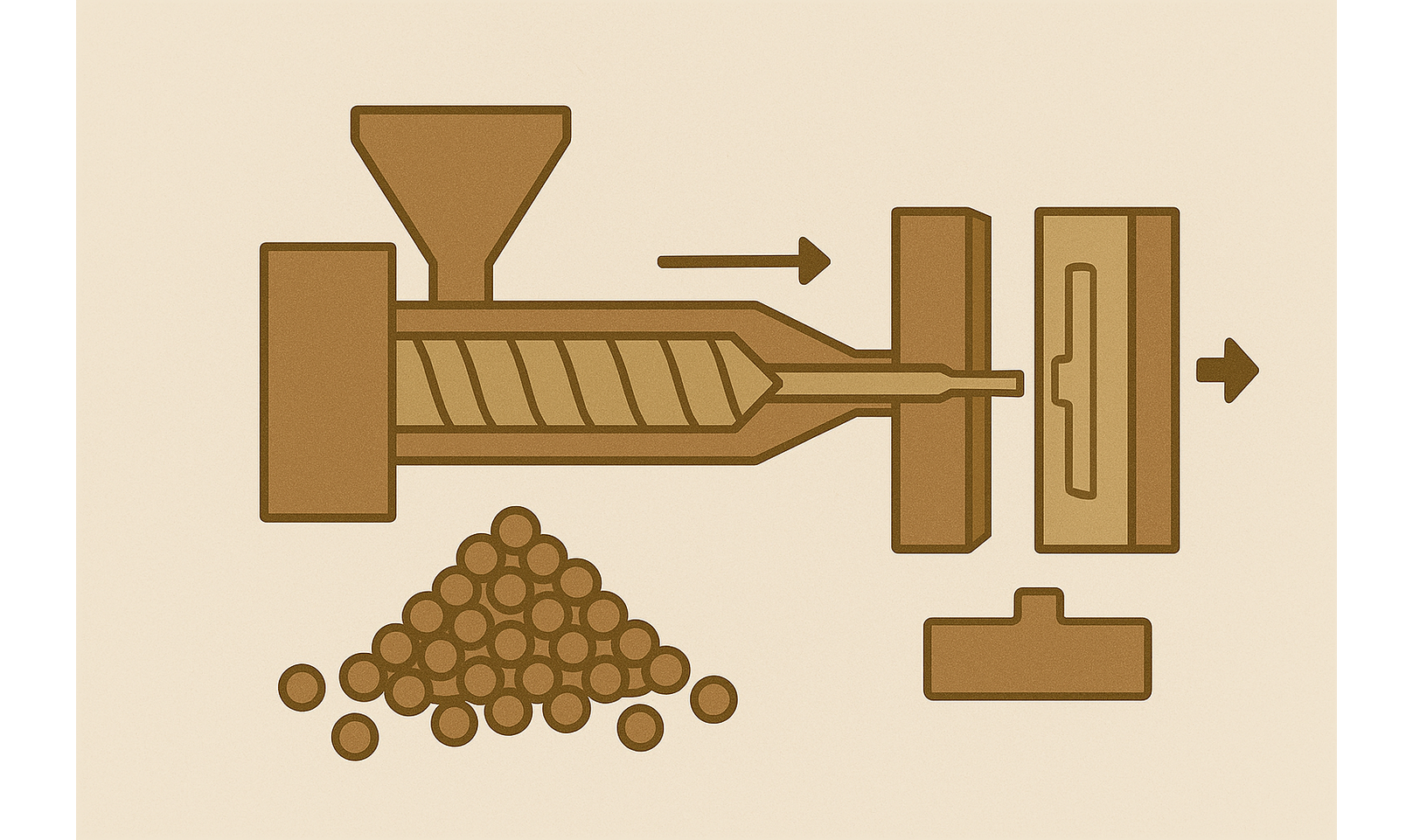
Basic Structure of an Injection Molding Machine
A standard injection molding machine consists of:
- Hopper: Feeds pelletized thermoplastic resin
- Screw & Cylinder: Heats, melts, and kneads resin
- Injection Unit: Injects molten resin into the mold
- Mold: Defines the product’s shape
- Clamping Unit: Maintains mold closure under pressure
Each unit works in coordination, enabling consistent and stable forming.
Injection Molding Process Flow|5 Key Stages
The injection molding process typically includes five automated stages:
1. Feeding & Plasticizing: Resin pellets are fed and melted inside the screw and barrel.
2. Injection: Molten resin is pushed into the mold cavity at high pressure.
3. Holding Pressure: Maintains pressure to compensate for resin shrinkage.
4. Cooling: Mold absorbs heat, solidifying the resin into shape.
5. Ejection: The mold opens and the product is removed.
This cycle typically takes a few seconds to a few minutes, allowing for high-speed production.
Critical Parameters for Stable Production
To maintain quality and reduce defects, precise control of the following parameters is essential:
- Injection Speed & Pressure: Avoid burns or short shots
- Mold Temperature & Cooling Time: Prevent warping or shrinkage
- Screw Rotation Speed & Back Pressure: Ensure uniform plasticization
- Holding Time & Switch-Over Point: Control internal stress and accuracy
Mastery of these variables minimizes production losses and ensures repeatable results.
Applications of Injection Molding
Injection molding is used in industries requiring high dimensional accuracy and design flexibility:
- Automotive: Interior panels, connectors, instrument housings
- Electronics: Device casings, switches, plugs
- Medical: Syringe components, testing kits
- Food Packaging: Bottles, containers, caps
Its adaptability makes it a cornerstone process in modern manufacturing.
#InjectionMolding #PlasticProcessing #MoldDesign #ResinProducts #PrecisionManufacturing #MassProduction #IndustrialEngineering #OEM
CONTACT
Inquiry