
HAKKAI PRECISION (THAILAND) CO., LTD.
SERVICE
Production Goods & Services
What is Insert Molding?|Integrating Metal and Resin for Durable, Space-Saving Parts
Product Info
Key Takeaways
• Insert molding bonds metal or other rigid materials with plastic in a single process, increasin• g strength and precision.
It eliminates multiple assembly steps such as welding, pressing, or adhesive bonding, improving speed and reducing human error.
• Commonly used in automotive, electronics, medical devices, and industrial components requiring durability and multi-functional design.
• Success depends on insert cleanliness, precise mold design, correct resin selection, and appropriate molding parameters.
• Suitable resins include PA, PBT, PPS, and PC materials known for strength, heat resistance, and good bonding capability.
Insert molding is an essential manufacturing technology for combining the benefits of two different materials such as the strength and conductivity of metal with the light weight and insulating properties of plastic. This process reduces assembly steps, increases durability, and supports high-volume production with stable quality. This article explains the mechanism, advantages, applications, and technical considerations of insert molding.
Structure and Principle of Insert Molding
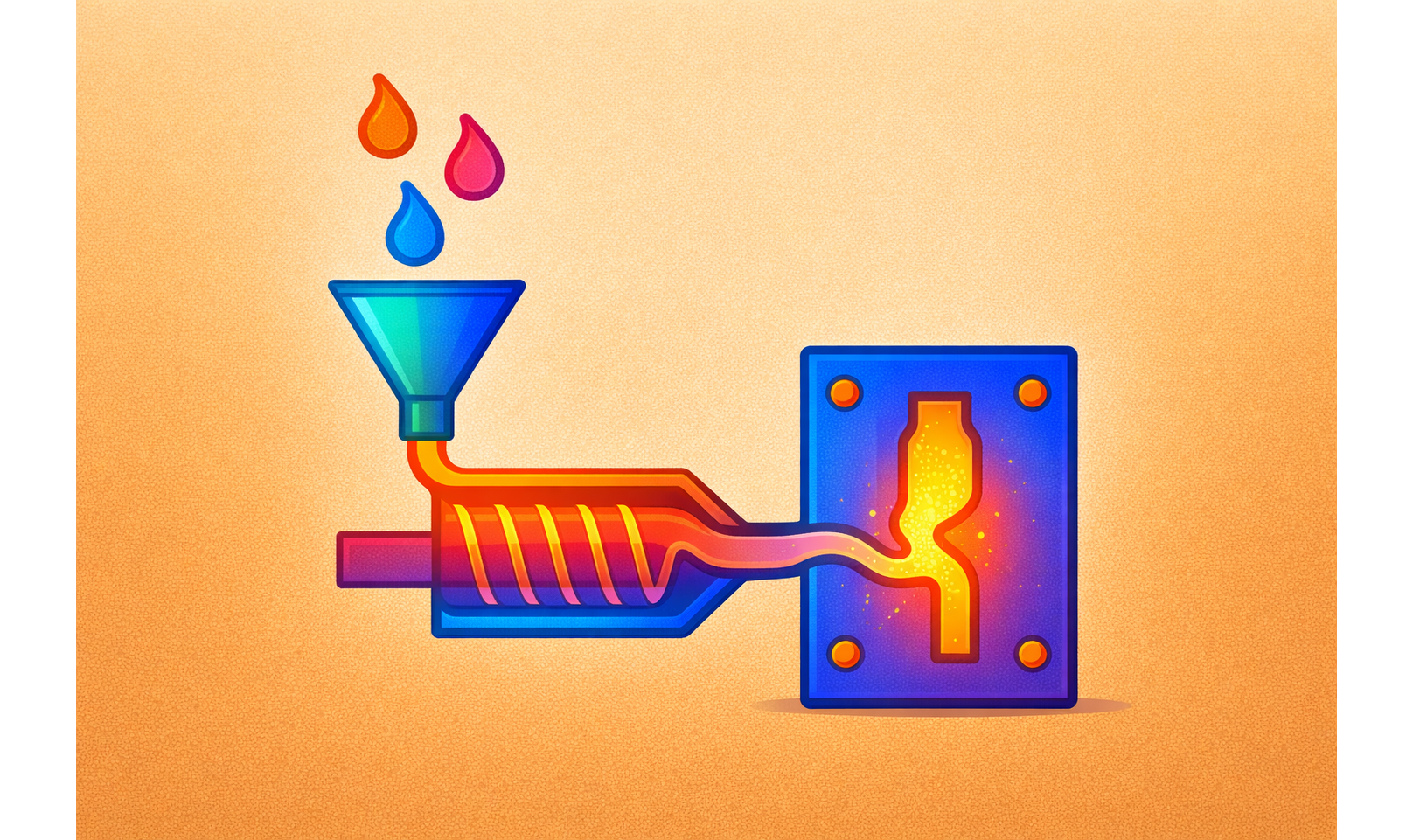
Insert molding begins by placing a metal or ceramic insert into a designated position inside the mold. Molten plastic is then injected around the insert, bonding the materials into a single unified component. Because adhesion occurs during the molding process itself, the resulting part achieves high strength, stability, and precise alignment compared with post-assembly joining methods.
Advantages of Insert Molding
1. Fewer Production Steps & Higher Efficiency
• Eliminates welding, press-fitting, or adhesive bonding
• Reduces human assembly errors
• Improves positional accuracy through in-mold alignment
2. Combines Two Material Properties in One Component
• Metal: Strength, heat resistance, electrical conductivity
• Plastic: Lightweight, insulating, easy to mold
This integration supports smaller, lighter designs while increasing overall product durability.
Key Technical Considerations Before Insert Molding
• Clean the inserts: Prevents weak bonding or gaps
• Design precise molds: Use guide pins or positioning features to keep inserts stable
• Select appropriate resin: Consider thermal expansion and bonding characteristics
• Control molding parameters: Proper temperature and pressure help avoid voids, air traps, or deformation
Recommended Plastic Materials
• PA (Polyamide): High strength, heat-resistant, good metal adhesion
• PBT (Polybutylene Terephthalate): Excellent dimensional stability, suitable for electrical components
• PPS (Polyphenylene Sulfide): High heat and chemical resistance
• PC (Polycarbonate): For transparent or impact-resistant applications
Summary
Insert molding enables strong and efficient integration of differing materials, reducing production steps while increasing part strength and functionality. Understanding mold design, material behavior, and process parameters helps ensure stable, high-quality mass production.
ーーーーーーーーーーーーーーーーーーーーーーーーーーーーーーーーーーーーーーーーーーーーーーーーーーーーーーーーー
❓ FAQ
Q1: How is insert molding different from overmolding?
A: Insert molding places a rigid part into the mold before injection, while overmolding adds a second material layer over an already molded plastic part.
Q2: How should metal inserts be prepared?
A: They must be cleaned and oil-free to ensure strong adhesion with the plastic.
Q3: Why are PA and PBT commonly used in insert molding?
A: They provide strong mechanical properties, heat resistance, and good bonding capability with metal inserts.
📚 Glossary
Insert Molding: Molding process that bonds metal or ceramic inserts with plastic
Insert: Pre-placed rigid component embedded during molding
Guide Pin: Mold component that positions inserts accurately
Bonding: Adhesion between dissimilar materials
PA / PBT / PPS / PC: Common engineering plastics used for insert molding
#InsertMolding #MetalPlasticIntegration #AutomotiveParts #ElectronicComponents #MedicalDevices #ResinMolding #PrecisionMolding #ThailandManufacturing #OEM
CONTACT
Inquiry