
HAKKAI PRECISION (THAILAND) CO., LTD.
SERVICE
Production Goods & Services
Injection Mold Design & Maintenance Basics|Maximizing Quality and Efficiency
Product Info
Key Takeaways
• Proper mold design directly influences part quality, dimensional accuracy, cycle stability, and production cost.
• Mold material selection and surface treatment must match operating conditions, especially when molding glass-fiber–reinforced resins.
• Preventive design measures such as gate location, runner balance, wall-thickness control, and cooling layout help reduce recurring defects.
• Effective preventive maintenance extends mold life, prevents downtime, and sustains part quality.
• CAE simulation is a powerful tool for predicting flow behavior, shrinkage, and defects before actual production.
Injection molds are a core asset in continuous manufacturing. High-quality molded parts depend on engineering-grade mold design and a consistent maintenance strategy. This article summarizes essential principles from structural design and material selection to defect-prevention strategies and preventive maintenance to help factories improve stability, reduce scrap, and maintain long-term production efficiency.
Mold Structure and Primary Functions
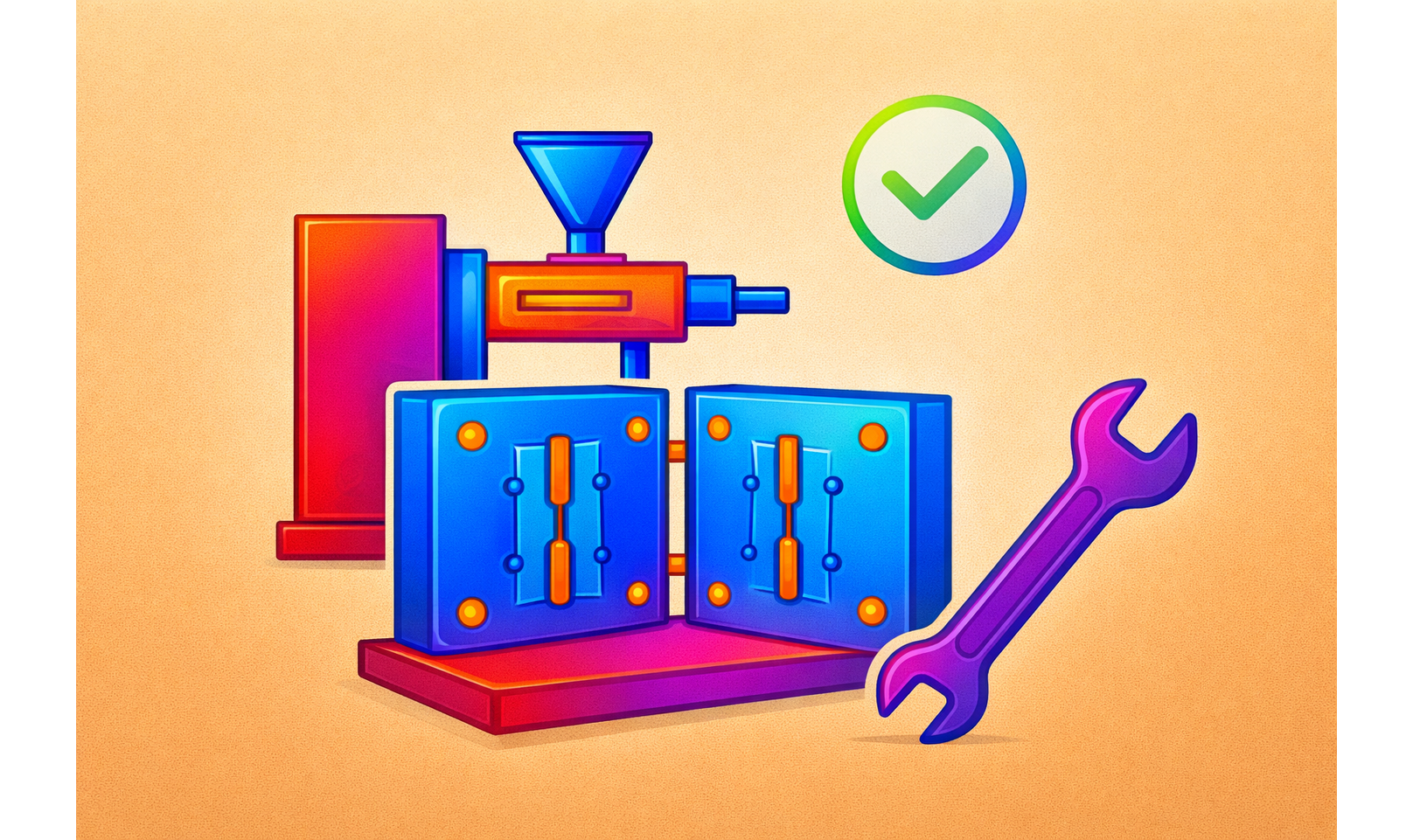
An injection mold consists of a fixed side and a moving side, working together to shape molten resin injected under high pressure. Key components affecting product quality include:
• Cavity: Defines the part geometry and must account for resin shrinkage
• Gate: Controls filling behavior and pressure distribution
• Runner / Sprue: Feeds resin to each cavity and must be balanced
• Cooling System: Strongly influences cycle time and dimensional stability
• Ejection System: Must remove parts without deformation or damage
A well-engineered structure reduces warpage, short shots, deformation, and other production defects.
Mold Materials and Surface Treatments
When selecting mold materials, factors such as hardness, wear resistance, and corrosion resistance must be considered. High-quality tool steels are generally used. For applications involving glass-fiber-reinforced resins, surface treatments such as PVD coating or nitriding are recommended to extend mold life and reduce friction.
Improving the cavity surface finish also helps with easier part release, reduces surface defects, and prevents residue buildup.
Design Strategies to Prevent Production Issues
Proper mold design minimizes recurrent defects such as:
• Short Shot: Adjust gate size/location or increase injection pressure
• Weld Line: Position gates for proper melt convergence
• Flash: Maintain high precision along parting lines
• Sink / Warpage: Ensure uniform wall thickness and balanced cooling
Using CAE simulation enables early analysis of flow patterns, material behavior, and potential defects before mold machining begins.
Principles of Mold Maintenance
Continuous operation leads to wear, residue buildup, and reduced performance. Effective maintenance should include:
• Lubricating moving components such as pins and slides
• Cleaning cavities and vent channels
• Removing scale in cooling channels
• Replacing worn pins or gates
• Preventing rust by applying protective oil and storing molds properly
Establishing a Preventive Maintenance plan based on production cycles helps avoid downtime and ensures stable long-term quality.
Summary
High-performance injection molds result from precise engineering design combined with disciplined preventive maintenance. When molds are managed correctly, factories can reduce defects, control costs, and maintain consistent production output.
ーーーーーーーーーーーーーーーーーーーーーーーーーーーーーーーーーーーーーーーーーーーーーーーーーーーーーーーーー
❓ FAQ
Q1: What factors should be considered when selecting mold materials?
A: Hardness, wear resistance, and corrosion resistance, especially for glass-fiber–reinforced resins.
Q2: Why is cleaning the cooling system important?
A: Scale buildup reduces heat transfer efficiency, causing dimensional issues and longer cycle times.
Q3: How can short shots be prevented through mold design?
A: By adjusting gate design, increasing injection pressure, or refining runner balance.
📚 Glossary
Cavity: Internal mold space defining the product shape
Gate: Resin entry point controlling flow and packing pressure
Runner / Sprue: Channels transporting resin to the cavity
Cooling System: Controls cooling rate and cycle time
Preventive Maintenance: Scheduled upkeep to prevent failures
#MoldDesign #InjectionMolding #ToolingMaintenance #MoldEngineering #CoolingDesign #PreventiveMaintenance #MoldingDefects #CAE #HighYieldProduction #PlasticManufacturing
CONTACT
Inquiry