Production Goods & Services

15hits

Narrow by category

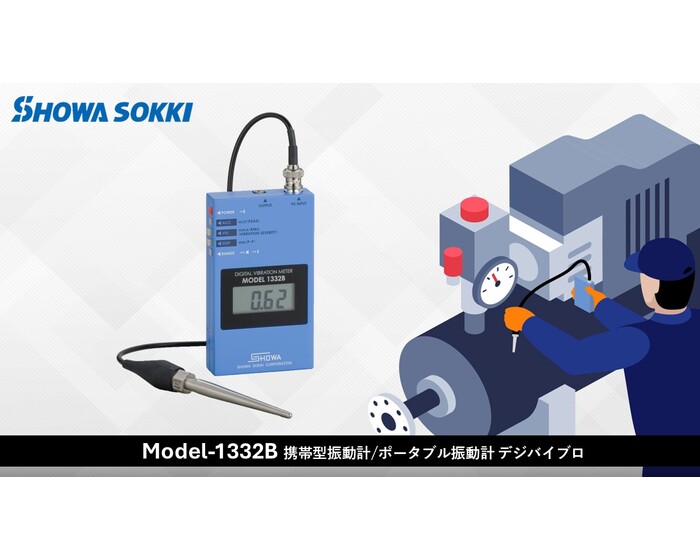
Portable Digital Vibration Meter Model-1332B DigiVibro | ISO10816 Compliant & High Accuracy

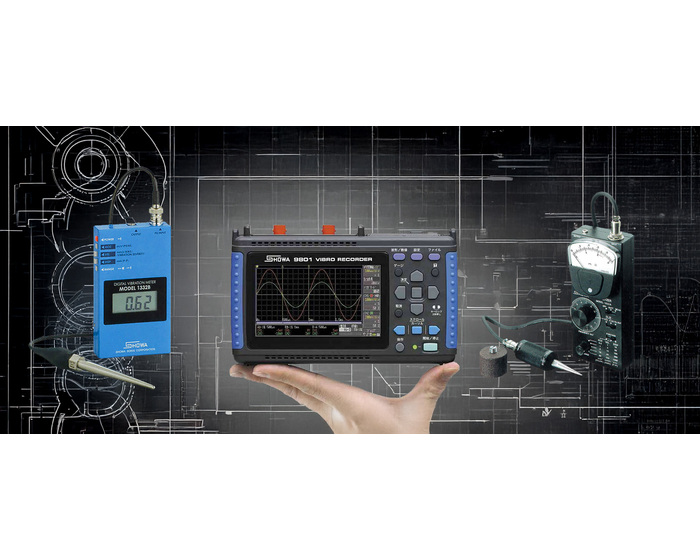
Showa Sokki Model-1332B DigiVibro – portable vibration meter with ISO10816 compliance, high accuracy & field-ready design. 🔷 Model-1332B DigiVibro – Portable Vibration Measurement Made Simple The Model-1332B “DigiVibro” by Showa Sokki is a compact digital vibration meter designed for portable, high-accuracy field measurement. It is the perfect tool for preventive maintenance and condition monitoring, ensuring precise vibration data for engineers and maintenance teams. Despite its small size, the Model-1332B offers accurate vibration detection suitable for manufacturing machinery, rotating equipment, and infrastructure systems. The device is fully compliant with ISO10816-1 international vibration standards, enabling reliable diagnostics and standardized evaluation across industries. 🔷 Key Features - High-Accuracy Vibration Measurement – Detects vibration changes with precision - ISO10816-1 Compliance – Standardized vibration monitoring for global applications - Portable & Compact – Lightweight, ideal for on-site inspections - Easy Operation – Intuitive design, suitable even for non-experts - Versatile Applications – Preventive maintenance, condition monitoring, and diagnostics - Calibration Certificate Option – Traceable calibration available upon request 🔷 Specifications - Measurement parameters: Acceleration, Velocity, Displacement - Power supply: 2 × AA alkaline batteries (LR6) - Standard sensor included for routine inspection - Optional data recording via Vibro Recorder (Model-9801), CF Card 512MB (Model-9803-73), and more 🔷 Applications The Model-1332B DigiVibro is suitable for a wide range of vibration monitoring tasks: - Machinery vibration measurement in production lines - Maintenance of generators, motors, and compressors - Condition monitoring of ships and railway vehicles - Structural vibration testing of buildings and facilities - Cooling tower fan inspection and maintenance - Routine monitoring of pumps and blowers in oil plants 🔷 Distribution & Support Showa Sokki provides sales and technical support for Model-1332B DigiVibro across Thailand, covering major industrial estates in Chonburi, Rayong, Ayutthaya, Pathum Thani, and Bangkok. 🔷 For detailed specifications, please download the PDF catalog or contact us directly. Download : https://prime.nc-net.com/105994/en/catalog/detail/7285 🔗 Cluster Internal Link - Basic Knowledge: https://prime.nc-net.com/105994/en/product_others/detail_goods/27618 - Advance Knowledge: https://prime.nc-net.com/105994/en/product_others/detail_goods/27621 #PortableVibrationMeter #ShowaSokki #DigiVibro #ISO10816 #ConditionMonitoring #PredictiveMaintenance

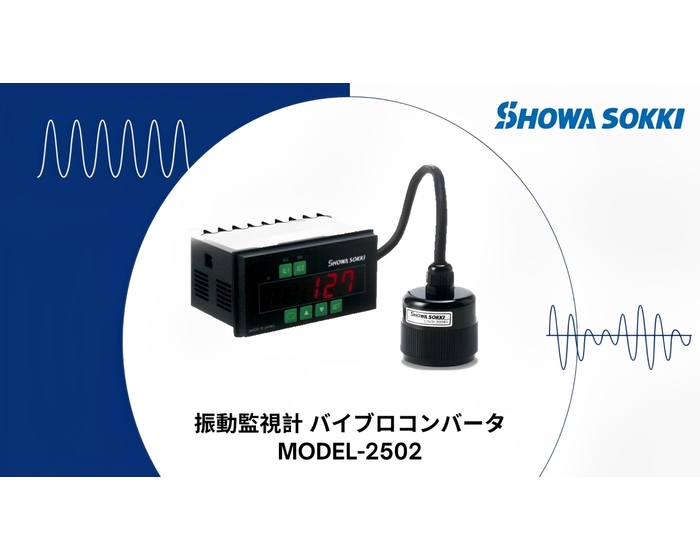
Industrial Vibration Sensor Model-2502 | High-Accuracy Real-Time Monitoring for Machinery

Showa Sokki Model-2502 – compact, high-accuracy vibration sensor for real-time machinery monitoring and predictive maintenance. 🔷 Model-2502 – High-Accuracy Vibration Sensor for Industrial Applications The Model-2502 from Showa Sokki is a precision vibration sensor engineered for continuous, real-time monitoring of rotating machinery and critical infrastructure. By providing accurate vibration data, it enables early detection of abnormalities, minimizes downtime, and enhances the efficiency of predictive maintenance (PdM) programs. Its compact and durable design allows easy installation and seamless integration into existing industrial systems, making it suitable for a wide range of environments including manufacturing facilities, power plants, and infrastructure networks. When paired with the optional Model-2590C digital monitor, the 2502 can form a comprehensive vibration monitoring system capable of advanced analysis and alarm functions. 🔷 Key Features ‐ Real-Time Monitoring – Detects vibration changes continuously for early fault identification ‐ High-Accuracy Measurement – Sensitive enough to capture subtle vibration variations ‐ Compact Design – Easy to install and integrate into new or existing systems ‐ Versatile Applications – Suitable for power generation, manufacturing machinery, and infrastructure systems 🔷 Specifications ‐ Measuring Range: Refer to catalog for details ‐ Output Signal: Standard industrial interface compatible ‐ Installation: Requires a dedicated connector when using extension cables 🔷 Applications ‐ Continuous monitoring of generators, turbines, and motors ‐ Predictive maintenance in manufacturing and production facilities ‐ Early abnormality detection in pumps, compressors, and rotating machinery 🔷 Distribution & Support Showa Sokki supplies and supports Model-2502 vibration sensors throughout Thailand, covering major industrial estates such as Chonburi, Rayong, Ayutthaya, Pathum Thani, and Bangkok. 🔷 For more details, please download the product PDF or contact us directly. Download : https://prime.nc-net.com/105994/en/catalog/detail/7541 #VibrationSensor #ShowaSokki #PredictiveMaintenance #ConditionMonitoring #IndustrialSensors #RealTimeMonitoring

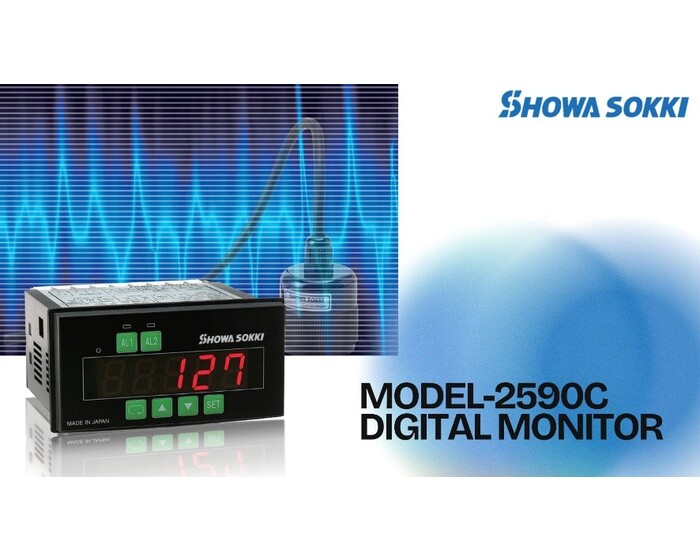
Digital Vibration Monitor Model-2590C | RMS Display with Dual Alarms for Abnormality Detection

Showa Sokki Model-2590C – digital vibration monitor with LED RMS display, dual alarms, and scalable 4–20mA input. 🔷 Model-2590C – Digital Vibration Monitor with LED Display The Model-2590C from Showa Sokki is a digital vibration monitoring display designed for equipment condition monitoring and early abnormality detection. When combined with the Vibro Converter 2502 and 2503 series, it forms a simple yet effective vibration monitoring system. It supports input signals of 4–20mA (standard) and optional 0–1V / 0–10V, displaying real RMS vibration values clearly on a red LED panel. With dual-stage alarm relays and a configurable delay timer, the Model-2590C provides reliable abnormality detection while preventing false triggers. 🔷 Key Features ‐ Clear RMS vibration display via red LED (5-digit) ‐ Dual-stage alarm relays (ALⅠ, ALⅡ) for fault detection ‐ Delay timer (0.1–99.9 sec) prevents false operation ‐ Input support: 4–20mA (standard), optional 0–1V / 0–10V ‐ Built-in DC24V sensor power supply ‐ Optional analog output: 4–20mA, 0–5V, 1–5V, 0–10V ‐ Easy DIN rail mounting ‐ Front panel rated IP65 (with rubber gasket) 🔷 Specifications ‐ Input Signal: 4–20mA (standard), 0–1V / 0–10V (optional) ‐ Input Resistance: 10Ω ‐ Display: 5-digit red LED, configurable full scale ‐ Sampling Periods: 0.125–5 sec (default: 1 sec) ‐ Accuracy: ±0.3% ±1 digit (at 23°C ±5°C) ‐ Power Supply: AC85–264V, 50/60Hz, 15VA max (DC24V option) ‐ Relay Output: AC250V 5A / DC30V 5A (resistive load) ‐ Analog Output (optional): 4–20mA, 0–5V, 1–5V, 0–10V ‐ Dimensions & Weight: 96(W) × 48(H) × 92(D) mm, ~300g ‐ Operating Environment: 0–50°C, ≤85%RH (non-condensing) 🔷 Applications ‐ Condition monitoring of pumps, blowers, and rotating equipment ‐ Early detection of vibration abnormalities in factories and plants ‐ Simple vibration monitoring system when paired with converters 🔷 Distribution & Support Showa Sokki supplies and supports the Model-2590C across Thailand, including major industrial zones in Chonburi, Rayong, Ayutthaya, Pathum Thani, and Bangkok. 🔷 For detailed specifications, please download the product PDF or contact us directly. Download : https://prime.nc-net.com/105994/en/catalog/detail/7540 #VibrationMonitor #ShowaSokki #Model2590C #ConditionMonitoring #PredictiveMaintenance #DigitalDisplay

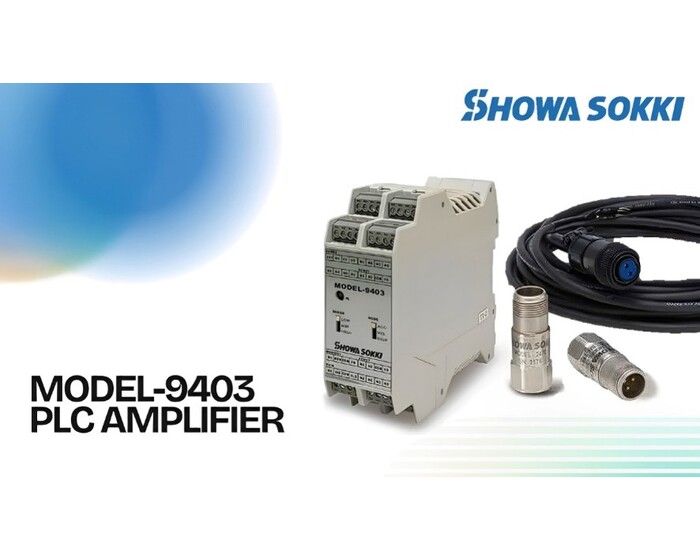
Vibration Amplifier Model-9403 | Dual DC/AC Output for PLC Monitoring & FFT Analysis

Showa Sokki Model-9403 vibration amplifier with dual DC/AC outputs, PLC integration, and FFT analysis capability. 🔷 Model-9403 – Dual-Function Vibration Amplifier for PLC and Diagnostics The Model-9403 from Showa Sokki is a multi-purpose vibration amplifier designed to support both basic monitoring (DC output) and detailed waveform analysis (AC output) from vibration sensors. It features three selectable measurement modes—Acceleration, Velocity, and Displacement—easily switched via internal jumpers. Users can also select output levels (LOW / MID / HIGH) to match specific applications. With its DC True RMS output, the 9403 can be directly connected to PLCs for continuous monitoring, while its AC raw waveform output makes it ideal for detailed diagnostics using FFT analyzers. The Through-Out function enables sharing of a single sensor signal across multiple devices, reducing system complexity. 🔷 Key Features ‐ Dual output: DC (RMS) for monitoring and AC (raw) for waveform analysis ‐ Three selectable modes: Acceleration / Velocity / Displacement ‐ Adjustable output levels: LOW / MID / HIGH ‐ Through-Out function allows sharing one sensor signal with multiple devices ‐ Compact size, designed for 35mm DIN rail mounting ‐ Reliable solution for both condition monitoring and fault diagnostics 🔷 Specifications ‐ Power Supply: DC24V (operating range: DC18–36V) ‐ Current Consumption: ≤100mA ‐ Measurement Modes: ACC / VEL / DISP ‐ Measurement Ranges:  ・ACC: 0–2 / 20 / 200 m/s²  ・VEL: 0–2 / 20 / 200 mm/s  ・DISP: 0–0.2 / 2 / 20 mm ‐ Output Levels: LOW / MID / HIGH (via jumper) ‐ DC Output: +2V (True RMS), Accuracy ±5% ‐ AC Output: ±2V, Accuracy ±2% ‐ Through-Out Function: Supported ‐ Mounting: DIN rail 35mm ‐ Dimensions: 35 × 86 × 76 mm ‐ Weight: ~195g ‐ Operating Environment: -10 to +60°C, up to 93%RH (non-condensing) 🔷 Applications ‐ PLC-based equipment monitoring via DC output ‐ Detailed vibration waveform analysis via AC output & FFT analyzers ‐ Multi-mode vibration monitoring (ACC/VEL/DISP) using a single sensor ‐ Industrial maintenance systems requiring both monitoring and diagnostics 🔷 Distribution & Support Showa Sokki supplies and provides support for the Model-9403 Vibration Amplifier throughout Thailand, including major industrial estates in Chonburi, Rayong, Ayutthaya, Pathum Thani, and Bangkok. 🔷 For complete specifications, please download the PDF catalog or contact us directly. Download : https://prime.nc-net.com/105994/en/catalog/detail/7543 #VibrationAmplifier #ShowaSokki #Model9403 #PLCVibrationMonitoring #FFTAnalysis #ConditionMonitoring

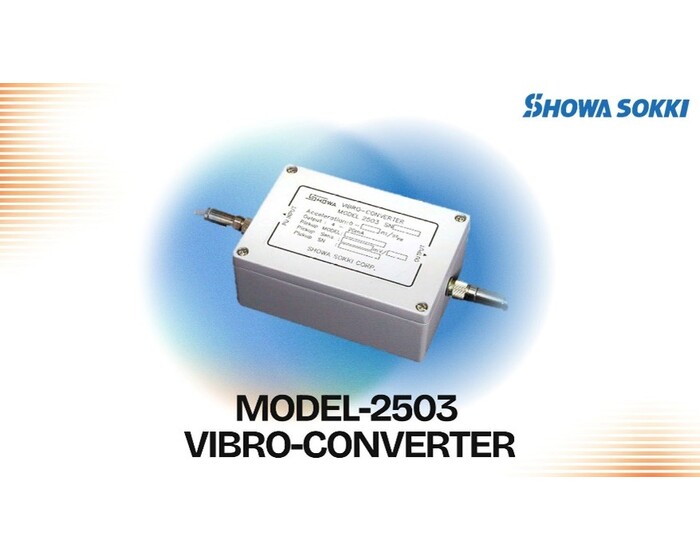
Vibration Signal Converter Model-2503 | 4–20mA Output with AC Waveform for FFT & IoT

Showa Sokki Model-2503 – versatile vibration signal converter with 4–20mA output, AC waveform, and explosion-proof support. 🔷 Model-2503 Vibro Converter – Flexible Vibration Signal Conversion The Model-2503 Vibro Converter from Showa Sokki is a versatile vibration signal converter designed for monitoring and diagnosing equipment vibration. It converts acceleration (ACC), velocity (VEL), or displacement (DISP) into a standardized 4–20mA current signal, enabling seamless integration with PLCs, monitoring systems, and IoT platforms. The unit can be tailored to suit different applications, with options to configure sensor type, measurement range, and frequency band. It is suitable for general-purpose monitoring, harsh industrial environments, and even hazardous areas when paired with explosion-proof sensors. ⚠️ Important Note The Model-2503 itself is not intrinsically explosion-proof. However, when combined with the MODEL-2450EX explosion-proof sensor and a dedicated safety barrier, it can form a reliable vibration monitoring system for use in explosive environments. 🔷 Features - Converts one of acceleration, velocity, or displacement into a 4–20mA signal - Customizable for sensor type, measurement range, and frequency band - ±2V AC output available for waveform analysis (FFT compatible) - Can be used in hazardous areas with explosion-proof sensors (🔺 main unit is not explosion-proof) - Suitable for IoT, condition-based maintenance (CBM), and equipment diagnostics 🔷 System Configuration Examples Configuration 1: Intrinsically Safe Explosion-Proof System - MODEL-2503 + MODEL-2450EX (explosion-proof) + Barrier (NZB2-26R430) Configuration 2: Low-Frequency Vibration Measurement System - MODEL-2503 + Low-frequency accelerometer (MODEL-2400A) 🔷 Main Specifications - Input Signal: Detector output (ACC / VEL / DISP) - Measurement Range: Specified by model code (e.g., 0–200µm) - DC Output: 4–20mA (0 to full scale) - AC Output: ±2V (raw waveform, full scale) - Frequency Band:  ・ACC: 5Hz–8kHz  ・VEL: 10Hz–1kHz  ・DISP: 10Hz–500Hz (low-frequency option: 2Hz–200Hz) - Power Supply: DC18–30V (converter), AC85–264V (monitor) - Operating Temperature Range:  ・Detector: up to 80°C  ・Converter/Monitor: -10 to +50°C 🔷 Applications - PLC and IoT integration for continuous vibration monitoring - Waveform analysis with FFT analyzers via AC output - Explosion-proof vibration monitoring when paired with MODEL-2450EX & barrier - Low-frequency vibration detection for infrastructure and special machinery - Enhancing predictive maintenance and safety management in industrial plants 🔷 Distribution & Support Showa Sokki provides nationwide delivery and support for the Model-2503 Vibro Converter, covering major industrial zones in Chonburi, Rayong, Ayutthaya, Pathum Thani, and Bangkok. 🔷 For detailed specifications, please download the product PDF or contact us directly. Download : https://prime.nc-net.com/105994/en/catalog/detail/7539 #VibrationConverter #ShowaSokki #Model2503 #ConditionMonitoring #ExplosionProof #IoT #FFTAnalysis

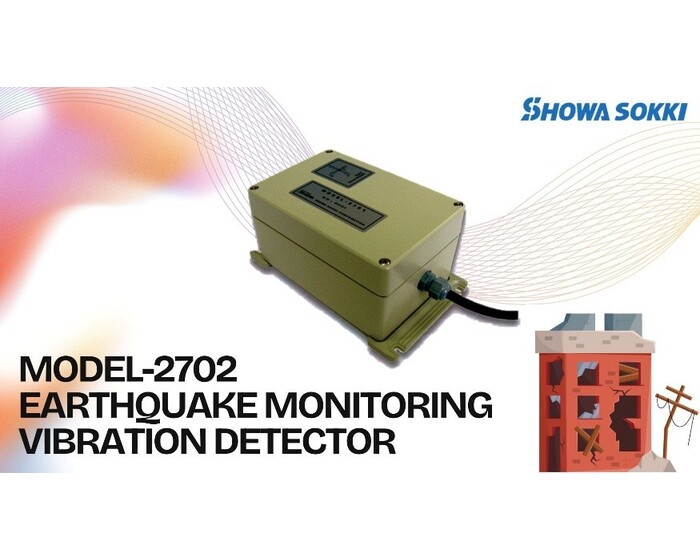
Earthquake Vibration Detector Model-2702 | 3-Axis Seismic Sensor with 4–20mA & IP65 Protection

Showa Sokki Model-2702 – 3-axis seismic vibration detector with 4–20mA output, peak-hold mode, and IP65 housing. 🔷 Model-2702 – High-Precision Earthquake Vibration Detector The Model-2702 from Showa Sokki is a 3-axis seismic vibration detector designed to detect earthquake activity with high precision. It synthesizes acceleration in the XYZ axes into a single vector and outputs the signal as a DC 4–20mA current, making it easy to integrate with industrial monitoring and safety systems. With a measurement range of 0–400 gal, it is capable of detecting both minor seismic activity and deep-seated vibrations. In addition to real-time output, it also supports a Peak-Hold mode (1–10 seconds) for event-based monitoring. The unit is housed in a durable IP65-rated aluminum die-cast enclosure, weighing approximately 1 kg, making it suitable for long-term, reliable installation in industrial facilities and infrastructure systems. 🔷 Key Features ‐ Synthesizes 3-axis acceleration (XYZ) into one output ‐ Standard DC 4–20mA output (0–400 gal) for easy system integration ‐ Switchable modes: Real-time output / Peak-hold (1–10 sec) ‐ Rugged IP65 aluminum die-cast housing for outdoor and industrial use ‐ Fully compatible with the Model-2590C Digital Monitor 🔷 Use Cases ‐ Automatic shutdown of production lines during earthquakes ‐ Triggering evacuation procedures in case of seismic activity ‐ Emergency shutdown of critical utilities such as gas and water pipelines ‐ Constructing low-cost, high-reliability earthquake monitoring systems 🔷 Main Specifications ‐ Sensor Type: 3-axis accelerometer (300mV / (9.8m/s²)) ‐ Measurement Range: 0–400 gal ‐ Frequency Range: 0.25–2 Hz ‐ Filters: HPF 0.25Hz / LPF 2Hz (±3dB±0.5dB), -6dB/OCT ‐ Output Modes: Real-time / Peak-hold (1–10 sec configurable) ‐ Output: DC 4–20mA (0–400 gal) ‐ Power Supply: DC 24V, ≤1A ‐ Operating Environment: 0°C–70°C, 45–85% RH (non-condensing) ‐ Construction: Aluminum die-cast, IP65-rated ‐ Weight: Approx. 1 kg ‐ Cable: 5m direct cable (optional lengths available, terminated) 🔷 Distribution & Support Showa Sokki supplies and delivers the Model-2702 Seismic Detector across Thailand, covering major industrial estates in Chonburi, Rayong, Ayutthaya, Pathum Thani, and Bangkok. 🔷 For detailed specifications, please download the product PDF or contact us directly. Download : https://prime.nc-net.com/105994/en/catalog/detail/7542 #SeismicDetector #ShowaSokki #Model2702 #EarthquakeSensor #VibrationMonitoring #IP65 #IndustrialSafety

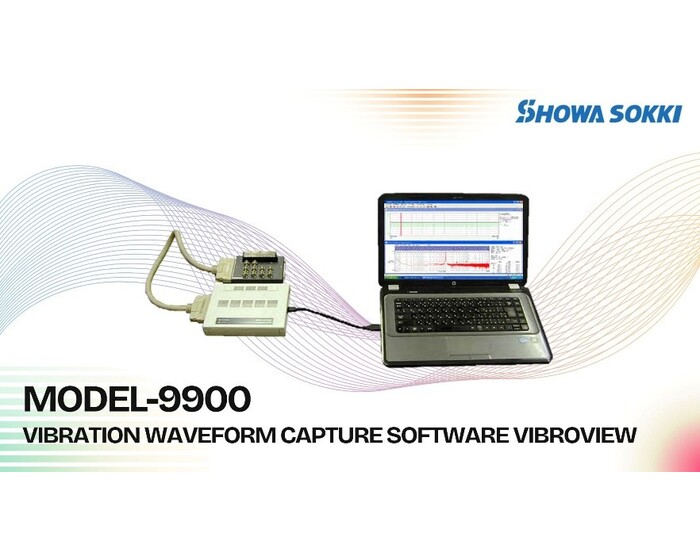
Vibration Analysis Software Model-9900 VibroView | Multi-Channel Recording & FFT Waveform Analysis

Showa Sokki Model-9900 VibroView – multi-channel vibration analysis software with FFT, audio playback, and CBM support. 🔷 Model-9900 VibroView – Advanced Vibration Analysis Software The Model-9900 “VibroView” from Showa Sokki is an advanced vibration measurement and waveform analysis software that enables engineers to capture, visualize, and analyze vibration data on a PC. It supports both real-time analysis and post-processing, making it suitable for a wide range of industrial and research applications. VibroView supports simultaneous acquisition of vibration signals across up to 32 channels, with multiple display formats such as TY time-history graphs, FFT frequency spectra, and XY plots. Engineers can apply custom filters, recalculate data, and even replay vibration waveforms as audio for intuitive diagnostics. With its ability to handle multi-channel, high-resolution vibration data, the Model-9900 VibroView is an indispensable tool for R&D, predictive diagnostics, and Condition-Based Maintenance (CBM) programs. 🔷 Key Features ‐ Acquire and analyze vibration data from up to 32 channels simultaneously ‐ Multiple display options: TY / FFT / XY plots ‐ Flexible operation: Real-time or Post-analysis modes ‐ Add custom filters and perform recalculations ‐ Audio playback of vibration waveforms for enhanced diagnostics ‐ Save data in CSV or Binary formats for further use 🔷 Main Specifications ‐ Input Channels: Up to 32CH ‐ Input Range: ±10V ‐ Input Impedance: ≥1MΩ ‐ A/D Converter: 16-bit, resolution up to 2µs/CH ‐ Max Sampling Frequency: 160kHz ‐ PC Interface: USB2.0 ‐ Trigger Modes: Manual / One-shot / Repeat ‐ Trigger Level: ±10V ‐ Recording Length: Limited only by HDD capacity ‐ Display Formats: TY / XY / FFT ‐ File Formats: Binary / CSV ‐ Window Functions: Rectangular / Hanning / Flat Top / Hamming ‐ Additional Features: FIR / Butterworth filters, audio playback ‐ Recommended OS: Windows XP / Vista / 7 / 8.1 (32-bit) ‐ Recommended PC Specs: Pentium M 1GHz or higher, ≥760MB RAM 🔷 Applications ‐ Multi-channel vibration monitoring of industrial equipment ‐ FFT waveform analysis for root-cause diagnostics ‐ Condition-Based Maintenance (CBM) and predictive monitoring ‐ Research & Development (R&D) testing of prototypes and structures ‐ Audio-based vibration evaluation for fault detection 🔷 Distribution & Support Showa Sokki supplies and provides support for Model-9900 VibroView throughout Thailand, including major industrial estates in Chonburi, Rayong, Ayutthaya, Pathum Thani, and Bangkok. 🔷 For full specifications, please download the product PDF or contact us directly. Download : https://prime.nc-net.com/105994/en/catalog/detail/7544 #VibrationAnalysis #VibroView #ShowaSokki #FFTAnalysis #ConditionBasedMaintenance #R&DSoftware

5 Common Root Causes of Compressor Vibration | How to Diagnose with 1332B

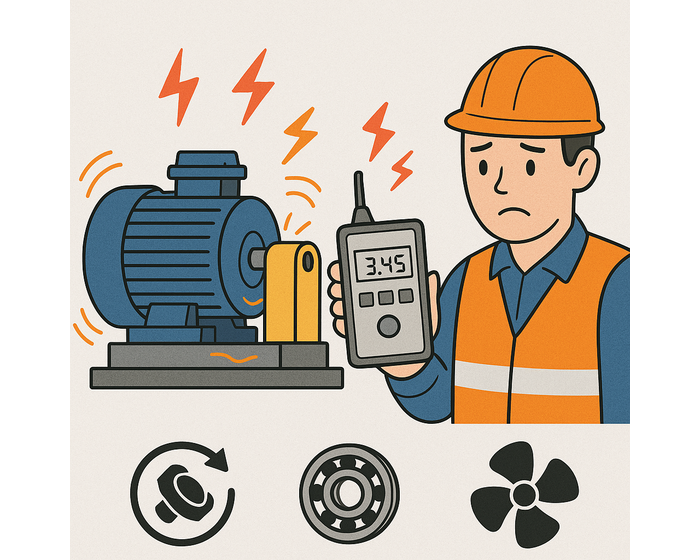
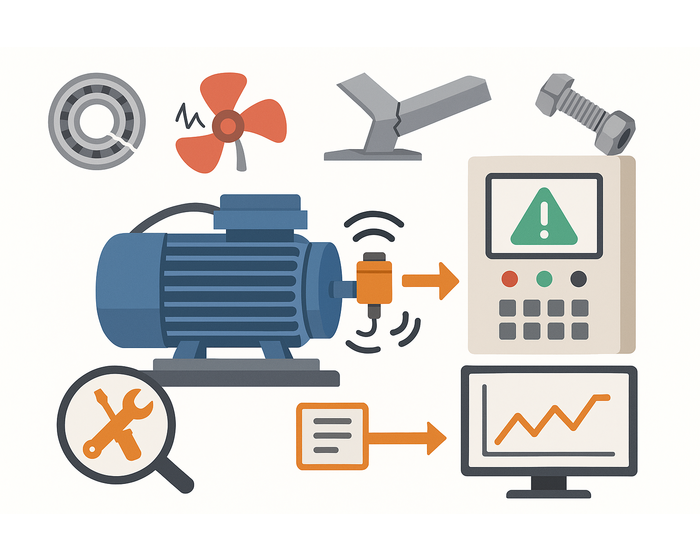
🌟 Key Takeaways - Compressors fail faster when vibration exceeds acceptable limits. - 1332B measures Acceleration, Velocity, and Displacement for accurate diagnostics. - Five major vibration causes can be identified through vibration measurements. - Velocity RMS supports health evaluation based on ISO10816 zones. - Proper vibration checking reduces downtime and increases system safety. ーーーーーーーーーーーーーーーーーーーーーーーーーーー A compressor is a critical component in industrial air systems, but it is also one of the most failure-prone machines when abnormal vibration occurs. Understanding vibration sources and using appropriate diagnostic tools—such as the DIGI-VIBRO MODEL 1332B—enables early detection before failures escalate into unexpected shutdowns. ■ 1) Unbalance — Rotor or Impeller Mass Imbalance Symptom: Velocity increases proportionally with machine speed. How to detect: - Set 1332B to Velocity (mm/s RMS) - Measure on both motor and compressor sides - A consistent increase with RPM strongly indicates unbalance ■ 2) Misalignment — Shaft Centerline Offset Symptom: High vibration in the axial direction. How to detect: - Measure all 3 axes: Horizontal / Vertical / Axial - Dominant axial vibration = clear misalignment signature ■ 3) Bearing Wear — Early Bearing Degradation or Surface Damage Symptom: Shock-pulse-type vibration. How to detect: - Use Acceleration Peak mode to capture high-frequency impact signals - Gradual increase over time = early failure or spalling progression ■ 4) Looseness — Loose Mounting or Base Structure Symptom: Velocity values fluctuate abnormally. How to detect: - Measure at multiple points - A significantly higher reading at one point often indicates structural looseness ■ 5) Resonance — Structural Natural Frequency Excitation Symptom: Vibration peaks occur only at specific RPM ranges. How to detect: - Measure during ramp-up and ramp-down - High vibration at certain speed bands suggests resonance ■ Insight Bridge Understanding these five root causes and interpreting 1332B readings correctly allows users to build reliable routine-check standards and transition smoothly into predictive maintenance practices. ーーーーーーーーーーーーーーーーーーーーーーーーーーーーーーー 📘 Summary Using the 1332B for compressor vibration monitoring provides a simple, accurate method to prevent severe failures and reduce downtime. 📥 To deepen understanding of how measurement points influence diagnostic accuracy, SHOWA SOKKI CORPORATION, expert in Vibration Measurement & Industrial Diagnostic Instruments, recommends reviewing the related Advance Knowledge article below. 🔗 Cluster Internal Link - Core Content: https://prime.nc-net.com/105994/en/product_others/detail_goods/25249 - Advance Knowledge: https://prime.nc-net.com/105994/en/product_others/detail_goods/27621 ーーーーーーーーーーーーーーーーーー ❓ FAQ Q: Which mode should I use for bearing inspection? A: Use Acceleration Peak to detect high-frequency signals associated with bearing wear. Q: What Velocity level indicates danger? A: According to ISO10816, Zone C–D indicates risk and requires maintenance action. ーーーーーーーーーーーーーーーーーー 📚 Glossary - Velocity RMS: Root-mean-square vibration velocity value - Acceleration Peak: Maximum acceleration used for high-frequency fault detection - Unbalance: Uneven mass distribution on rotating components - Misalignment: Shaft centerline deviation - Resonance: Excessive vibration at a structure’s natural frequency 📖 References 1. MODEL 1332B Technical Catalogue – SHOWA SOKKI (N/A) 2. ISO10816-1 Mechanical Vibration Evaluation – External Standard (N/A) 🔒 Trust This content has been reviewed by Mr. Satoshi Fukuda, Sales Department, SHOWA SOKKI CORPORATION, to ensure technical accuracy. #Vibration #CompressorMaintenance #SHOWASOKKI #1332B #ISO10816 #PredictiveMaintenance #IndustrialEngineering #MachineHealth #PdM #FactoryReliability 📆 Updated: 2025-12-04

Optimal Measurement Points for Compressors | Advanced Method with 1332B

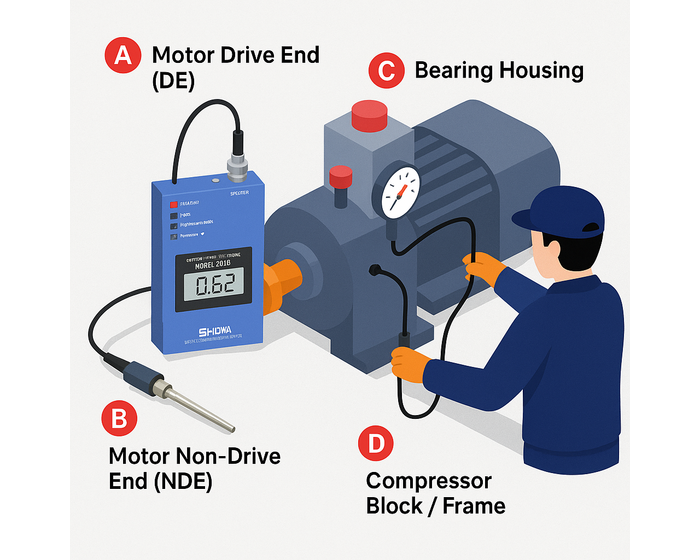
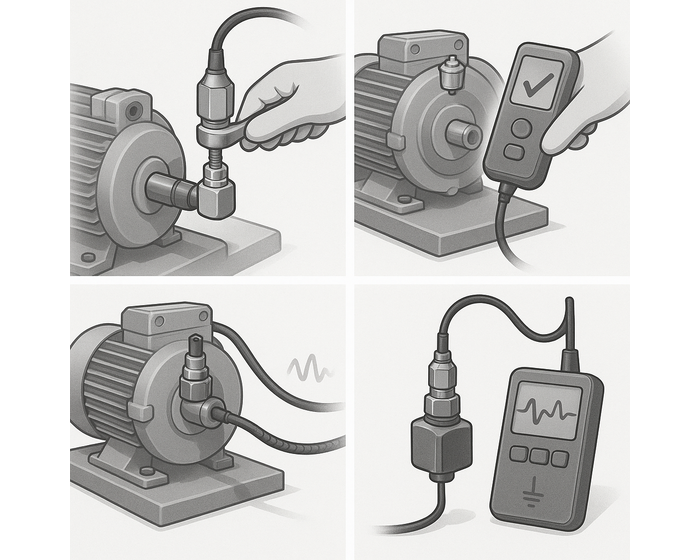
🌟 Key Takeaways - Proper measurement points influence diagnostic accuracy by more than 50%. - 1332B supports Velocity and Acceleration for fault separation. - Capturing 3-axis vibration improves diagnostic clarity. - DE / NDE / Bearing Housing must be measured every inspection. - ISO10816 helps define advanced alarm thresholds. ーーーーーーーーーーーーーーーーーーーーーーーーーーー Many technicians measure vibration at only one point, leading to misinterpretation. For example, bearing degradation may be missed because the selected point does not receive the actual vibration energy. Accurate measurement point selection is the foundation of reliable predictive maintenance. ■ 1) Primary Measurement Points on a Compressor A) Motor Drive End (DE) Receives direct force from the coupling or belt. - Ideal for detecting unbalance and misalignment - Use Velocity to observe overall machine vibration B) Motor Non-Drive End (NDE) Used to compare against DE. - DE high alone → unbalance - DE & NDE both high → misalignment C) Bearing Housing Most critical point for bearing inspection. - Use Acceleration Peak - Detect high-frequency impacts from rolling elements D) Compressor Block / Frame Used to detect looseness and resonance. - Measure multiple spots to locate structural vibration peaks ■ 2) Three Essential Measurement Directions Each measurement point should be captured in: - Horizontal - Vertical - Axial Interpretation examples: - High Axial → misalignment - High Horizontal → looseness - High Vertical → unbalance ■ 3) Sensor Mounting for Best Signal Quality 1332B supports several mounting methods: - Magnet mounting — highest stability - Contact pin — for hard-to-reach areas - Adhesive mounting — for small parts or temporary setups Principles: - Use magnet when high resolution is required - Avoid handheld measurement due to noise - Ensure firm contact to maintain measurement repeatability ■ 4) Using ISO10816 for Advanced Threshold Definition After gathering multi-point data: - Zone A = Good - Zone B = Acceptable - Zone C = Risky - Zone D = Unsafe Monthly data helps form a baseline and vibration trend for fault prediction. ■ Insight Bridge With correct measurement points and axis data, users can shift from simple fault detection to predictive failure forecasting—an essential goal of advanced PdM. ーーーーーーーーーーーーーーーーーーーーーーーーーーー 📘 Summary Selecting correct measurement points and using 1332B with ISO10816 significantly enhances the accuracy of compressor condition diagnostics. 📥For practical deployment and integration into real-world monitoring, SHOWA SOKKI CORPORATION, specialist in Vibration Measurement & Industrial Diagnostic Instruments, recommends reviewing the Core Content topic or contacting the Sales Department for guidance. 🔗 Cluster Internal Link - Core Content: https://prime.nc-net.com/105994/en/product_others/detail_goods/25249 - Basic Knowledge: https://prime.nc-net.com/105994/en/product_others/detail_goods/27618 ーーーーーーーーーーーーーーーーーー ❓ FAQ Q: How many points should I measure on one compressor? A: At minimum, DE / NDE / Bearing Housing — each in 3 axes. Q: Which mounting method provides the most stable signal? A: Magnet mounting offers the highest stability with minimum noise. ーーーーーーーーーーーーーーーーーー 📚 Glossary - DE (Drive End): Motor drive side - NDE (Non-Drive End): Motor non-drive side - Bearing Housing: Support structure for bearings - Axial / Vertical / Horizontal: Three vibration axes - ISO10816: Machinery vibration evaluation standard 📖 References 1. MODEL 1332B Technical Catalogue – SHOWA SOKKI (N/A) 2. ISO10816-1 Mechanical Vibration Evaluation – External Standard (N/A) 🔗 Cluster Internal Link - Core Content: “Online Vibration Monitoring for Compressors” - Basic Knowledge: “5 Common Causes of Compressor Vibration | How to Diagnose with 1332B” 🔒 Trust This content has been reviewed by Mr. Satoshi Fukuda, Sales Department, SHOWA SOKKI CORPORATION, to ensure accuracy. #1332B #SHOWASOKKI #CompressorVibration #ISO10816 #AdvancedPdM #MachineMonitoring #IndustrialMaintenance #VibrationAnalysis #EngineeringTools #PredictiveMaintenance 📆 Updated: 2025-12-04

Vibration Sensor Installation Techniques | Accurate Measurement for Predictive Maintenance

Proper installation of vibration sensors is crucial to ensure reliable data, prevent equipment failures, and extend machine lifespan. This article outlines practical techniques for engineers and maintenance teams. ======================== ■ Best Practices for Installing and Using Vibration Sensors 1. Sensor Placement: Accuracy Starts at the Mounting Point Mount the sensor close to key vibration sources like bearings or motor housings. Avoid weak or thin surfaces. 2. Mounting Method: Reliable Signal Requires Firm Contact Use stud mounting or epoxy for stable installation. Magnetic mounts are convenient but less accurate. 3. Surface Prep: A Flat, Clean Surface Is Essential Grind, clean, and ensure no rust or oil. Structural integrity matters. 4. Cabling: Shielded and Grounded Use shielded cables and avoid running near power lines. Fix the cables to avoid interference. 5. Choose the Right Frequency Range Match sensor capability to your machine’s vibration type. IEPE sensors are ideal for general machinery. 6. Know the Measurement Units - Acceleration (g): Impact detection - Velocity (mm/s): Overall condition - Displacement (μm): Shaft misalignment Use velocity (mm/s RMS) for predictive maintenance (ISO 10816 standard). 7. Calibration: At Least Once Per Year Routine sensor calibration ensures ongoing measurement accuracy. 8. Recommended Sensor: SHOWA SOKKI MODEL 1018 Reliable for motors, fans, and general equipment. Also compatible with portable and fixed systems. 🔍For technical inquiries or detailed specs, contact us directly. ======================== #vibrationsensor #predictivemaintenance #IEPEsensor #industrialmonitoring #machinemaintenance #calibration #conditionmonitoring #SHOWASOKKI

Vibration Sensor Types|Which Is Best for Predictive Maintenance?

Learn about piezoelectric, IEPE, MEMS, velocity, and proximity probe vibration sensors—and how to select the best for machine health monitoring, predictive maintenance, and industrial applications. ======================== 1. Why Monitor Vibration? Vibration is a key indicator of machine condition. Abnormal vibration often signals issues like bearing wear, misalignment, or imbalance in rotating machinery. Installing vibration sensors helps to: - Detect early-stage mechanical problems - Implement predictive maintenance - Minimize unplanned downtime - Ensure safe and cost-effective operations ======================== 2. Types of Vibration Sensors for Machine Monitoring 🔹 1. Piezoelectric Accelerometers High-frequency, precision measurements - Use piezoelectric crystals to convert mechanical vibration into electrical signals - Widely used in diagnostics across industries - Detects multi-directional vibrations - Requires an amplifier or IEPE circuit 🔹 2. IEPE (Integrated Electronics Piezo Electric) Sensors General-purpose industrial use - Built-in amplification - Plug-and-play installation - Compatible with most analyzers - Ideal for portable and fixed monitoring systems 🔧 Example: SHOWA SOKKI’s IEPE sensors offer high accuracy and durability for industrial environments. 🔹 3. MEMS Accelerometers Best for IoT, mobile, or entry-level solutions - Compact, energy-efficient - Common in wireless or handheld devices - Lower precision, slower response - Cost-effective for basic monitoring 🔹 4. Velocity Sensors Effective for motors, pumps, and large rotating machines - Measures vibration velocity in mm/s - ISO 10816-compliant for evaluation - Easy to interpret and implement 🔹 5. Proximity Probes (Displacement Sensors) For large rotating shafts or turbines - Measures shaft displacement in microns - Monitors misalignment and orbital behavior - High precision but complex and costly ======================== 3. How to Choose the Right Sensor? - Machine type: Small pump → IEPE, Turbine → Proximity Probe - Frequency range: High → Piezo, Low → MEMS/Velocity - Environment: Dusty/Wet → Use IP-rated sensors - Installation ease: IEPE is plug-and-play - Budget: MEMS = Low cost, Proximity = High-end ======================== 4. Industry Recommendation: SHOWA SOKKI SHOWA SOKKI, a renowned Japanese vibration measurement manufacturer, offers reliable Piezo, IEPE, and specialty sensors built for demanding industrial applications. For technical specifications or help choosing the right sensor, please download the PDF or contact us directly. ======================== #VibrationSensor #PredictiveMaintenance #IndustrialMonitoring #MachineHealth #Piezoelectric #MEMS #IEPE #FactoryAutomation #ConditionMonitoring

Disaster Preparedness (BCP) for Factories with Earthquake Detection Sensors

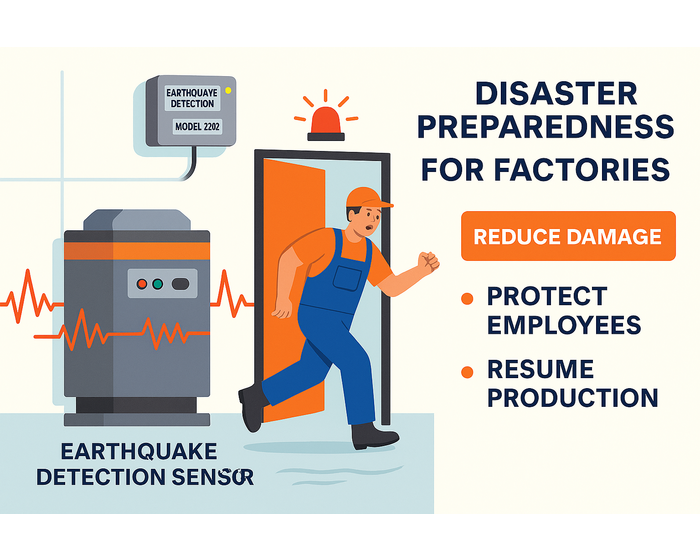
Having a solid Business Continuity Plan (BCP) doesn't just reduce damage to facilities and equipment — it also protects employees' lives. Earthquake detection sensors play a crucial role in enabling immediate response when unexpected disasters strike. 1. Why is BCP important for factories? Factories are filled with large-scale machinery, raw materials, and continuous production processes. Without proper measures, an earthquake can cause severe damage to structures, equipment, and even endanger employee safety. A Business Continuity Plan (BCP) ensures that a factory can resume production as quickly as possible after a disaster, minimizing impact on partners and customers. Automatic alert and shutdown systems are a key element of an effective BCP. 2. The role of earthquake detection sensors Earthquake detection sensors are designed to sense seismic vibrations and distinguish them from normal machine vibrations. When vibrations exceed pre-set thresholds, the system can: - Automatically shut down equipment - Alert staff to evacuate - Send signals to central control systems for data recording and additional shutdown measures These fast responses reduce equipment damage and lower the risk of accidents such as equipment tipping or hazardous material leaks. 3. Advantages of installing earthquake detection sensors - Improved employee safety: Early warnings allow time to evacuate safely. - Protect machinery and structures: Immediate shutdown prevents damage from strong shaking. - Reduced post-disaster repair costs: Minimizes severe damage and expensive overhauls. - Supports BCP initiatives: Enables quicker recovery and operational stability after a disaster. 4. Why choose SHOWA SOKKI MODEL 2702? SHOWA SOKKI is a trusted Japanese expert in vibration and seismic measurement technology. The MODEL 2702 is specifically designed for accurate earthquake vibration detection, featuring: - High sensitivity, accurately differentiating minor vibrations from dangerous seismic activity - Fast response time, allowing immediate protective actions - High durability in harsh environments (dust, humidity, temperature) - Easy integration with automated systems (PLC, alarm networks) With this reliable technology, factories can ensure higher safety levels and minimize damage during earthquakes, ultimately protecting both people and operations. The SHOWA SOKKI MODEL 2702 is an ideal choice for factories prioritizing BCP and long-term operational safety. For more details, please download the PDF or feel free to contact us directly. #FactorySafety #BusinessContinuity #EarthquakeSensor #DisasterPreparedness #IndustrialSafety #SHOWASOKKI #Model2702 #FactoryBCP #EquipmentProtection #EmployeeSafety #SeismicDetection #SmartFactory #ResilientManufacturing

Vibration Monitoring|Prevent Abnormal Noise & Vibration to Reduce Factory Downtime

Abnormal noises or vibrations in factory machines often signal serious underlying problems. By understanding these causes and adopting vibration monitoring, you can prevent costly downtime and extend equipment life. Machines in factories—such as motors, pumps, and fans—are designed to operate with stable noise and vibration levels. When you notice louder sounds or excessive shaking, it could indicate issues like: - Loosened rotating parts - Bearing wear or deterioration - Imbalance in impellers or rotating components If ignored, these problems can cause sudden production stoppages, long downtime, high repair costs, and potential safety risks for workers. Vibration monitoring is an effective solution widely adopted in modern industry. It allows you to: - Monitor real-time abnormal vibrations - Analyze vibration frequency and amplitude - Assess machine condition to plan maintenance proactively This approach, known as predictive maintenance, helps reduce repair expenses, minimize unexpected downtime, and extend machine lifespan—key concerns for factories aiming for continuous, safe, and cost-effective production. For factories needing a high-precision vibration monitoring system, SHOWA SOKKI MODEL 2702 is a reliable option. Its excellent accuracy and durability make it suitable even for harsh industrial environments. Nc Network Asia strongly recommends this model to support your production line and protect against unexpected stops. #VibrationMonitoring #PredictiveMaintenance #FactoryDowntime #MachineHealth #IndustrialSafety #ConditionMonitoring #FactoryThailand #โรงงานไทย #ลดค่าใช้จ่ายซ่อมบำรุง

Vibration Sensors|Prevent Unexpected Machine Failures with Predictive Monitoring

Vibration sensors play a critical role in industrial predictive maintenance. By detecting unusual vibrations in machinery, these sensors help prevent unexpected breakdowns, reduce downtime, and improve overall equipment reliability in factories. --- 1. What is a Vibration Sensor? A vibration sensor is a device used to measure mechanical oscillations of machinery and equipment. It converts physical vibrations into electrical signals, which can then be analyzed to monitor the condition of the equipment and detect potential failures early. Common sensor types include: - Piezoelectric: Detects force through pressure on a crystal element. - IEPE (Integrated Electronics Piezo Electric): Built-in amplifier for easy system integration. - MEMS / Capacitive: Suitable for high-resolution or portable applications. --- 2. Why Monitor Vibration in Industrial Equipment? Abnormal vibrations often signal underlying issues such as: - Bearing or shaft wear - Imbalance in rotating components - Loose bolts or structural defects - Cracks or early fatigue in machine parts Failing to address these signs can result in critical failures, such as broken shafts or motor burnout, leading to unplanned downtime and costly repairs. --- 3. How Do Vibration Sensors Work in a System? Sensors are typically mounted on key machine components—motors, pumps, fans—to continuously monitor their condition. Data from these sensors can be sent to control systems like PLCs or SCADA to: - Trigger real-time alerts - Initiate emergency shutdowns - Log data for historical analysis and trend monitoring This enables predictive maintenance, allowing teams to service machines before problems escalate. --- 4. Real-World Applications in Industry - Automotive Manufacturing: Monitoring belt-driven motors to prevent slippage or breakage. - Power Plants: Tracking turbine and generator vibrations. - Pharmaceutical & Food Processing: Ensuring consistent vibration in separators and sorters. - Buildings & Infrastructure: Detecting vibration shifts from earthquakes or foundation shifts. --- 5. A Look at Japanese Monitoring Technology One notable example is SHOWA SOKKI, a Japanese manufacturer known for reliable vibration sensors like the MODEL 2702. These devices offer: - High sensitivity for early anomaly detection - Noise-filtering functions for accuracy - Durability in harsh environments (dust, heat, moisture) - Easy integration with industrial monitoring systems Such sensors are widely used in factories, large buildings, and infrastructure requiring high safety standards. #VibrationSensor #PredictiveMaintenance #IndustrialMonitoring #MachineHealth #AvoidDowntime #SmartFactory #ConditionMonitoring #EquipmentFailurePrevention #MaintenanceTech #FactoryEfficiency

Basics of Vibration Measurement and FFT Analysis

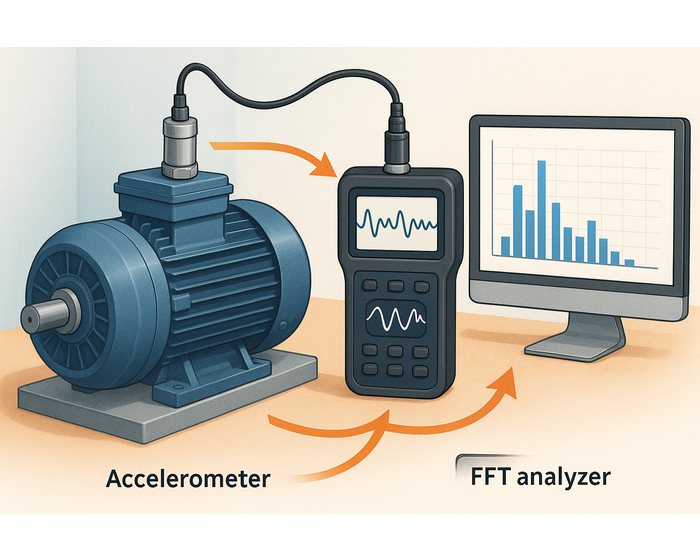
Meta Description: Vibration measurement is essential for machine condition monitoring and structural diagnostics. This article explains how FFT analysis enables precise frequency-domain diagnostics and performance evaluation, starting from the fundamentals. ============================================ 🔹 Table of Contents 1. What is Vibration Measurement? 2. Types and Characteristics of Vibration Sensors 3. The Role of FFT in Vibration Analysis 4. Steps and Precautions in FFT Analysis 5. Why Choose FFT Analyzers from Showa Sokki ============================================ 1. What is Vibration Measurement? Vibration measurement refers to the process of monitoring how an object moves over time. It is a critical technology for preventive maintenance, troubleshooting, and structural diagnostics across a wide range of equipment—such as motors, pumps, engines, and steel frameworks. Detecting anomalies such as wear, imbalance, or deformation is possible by analyzing vibrations. Beyond just measuring the amplitude, identifying which frequencies are involved is crucial, as specific frequency patterns often indicate particular mechanical issues. ---------------------------------------------------------- 2. Types and Characteristics of Vibration Sensors The core component of vibration measurement systems is the accelerometer, which converts mechanical motion into electrical signals for analysis. There are several types of accelerometers, each suited for different applications: - Piezoelectric Accelerometers: Offer wide frequency response and high durability; ideal for industrial machinery. - Capacitive Accelerometers: Suitable for detecting low-frequency and micro-vibrations. - Servo Accelerometers: High precision for slow, long-period vibration detection. Choosing the appropriate sensor type for the application is vital to ensuring accurate data acquisition. ---------------------------------------------------------- 3. The Role of FFT in Vibration Analysis While vibration signals are initially captured in the time domain, most fault signatures become clearer in the frequency domain. This is where FFT (Fast Fourier Transform) plays a crucial role—it transforms time-based data into frequency components. For example: - Imbalance in a rotating shaft shows up at the same frequency as the shaft’s RPM. - Gear defects often manifest as harmonics. - Bearing damage can appear at specific fault frequencies. FFT analysis enables engineers to identify the source of the problem, not just its symptoms. ---------------------------------------------------------- 4. Steps and Precautions in FFT Analysis To perform FFT analysis effectively, consider the following steps and best practices: 1. Secure Sensor Mounting: Loose attachments introduce noise and reduce signal accuracy. 2. Proper Sampling Rate: Ensure the Nyquist frequency is high enough to cover the target frequency range. 3. Window Function Selection: Use functions like Hanning or Hamming to reduce spectral leakage. 4. Adequate Data Collection Time: Longer duration provides higher resolution in frequency analysis. 5. Apply Filtering and Averaging: Helps eliminate external noise and smooth the data. Small oversights in these steps can significantly impact the quality of your FFT results. ---------------------------------------------------------- 5. Why Choose FFT Analyzers from Showa Sokki Showa Sokki Corporation is a trusted name in vibration measurement technology in Japan. Their FFT analyzers are designed with field usability and engineering precision in mind. Key features include: - Compact, portable hardware for field use - High compatibility with various sensor types - Real-time FFT processing with precise output - Intuitive software and GUI for ease of use - Applicable across maintenance, diagnostics, and R&D For anyone seeking a reliable, high-precision vibration analysis solution, Showa Sokki's FFT Analyzers offer a professional-grade option with proven performance. For more details, please download the PDF or feel free to contact us directly.

CONTACT

Inquiry

This is the inquiry form for SHOWA SOKKI CORPORATION. Please enter your inquiry.

This service is intended to provide consultation and opinion requests for processing projects.
Please do not use this information for self-promotion or sales activities.
If we receive a complaint from a recipient about the contents of the transmission, we may take measures such as forcibly stopping the use of the service.

Inquiry Type*Required
Message*Required
Attach file

Only image (jpeg, jpg, gif, png, pdf) and compressed file (zip, lzh) extensions are valid. Maximum file size 10MB