PRODUCTS
Technology / Product Information
Technology / product information
7hits
Narrow by Industry Category
Narrow by material Category
Pump vibration monitoring: how to detect early warning signs before failure in Thai factories
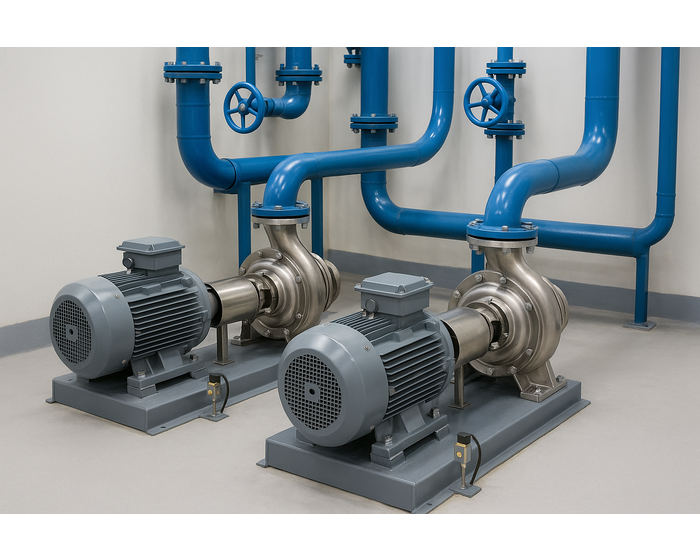
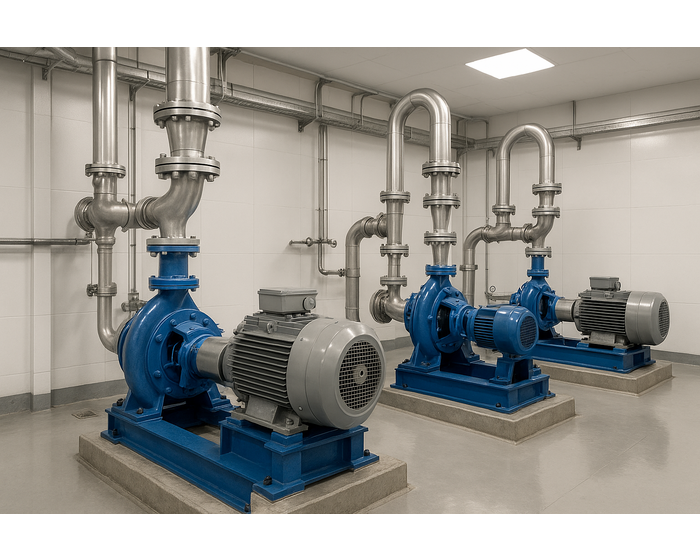
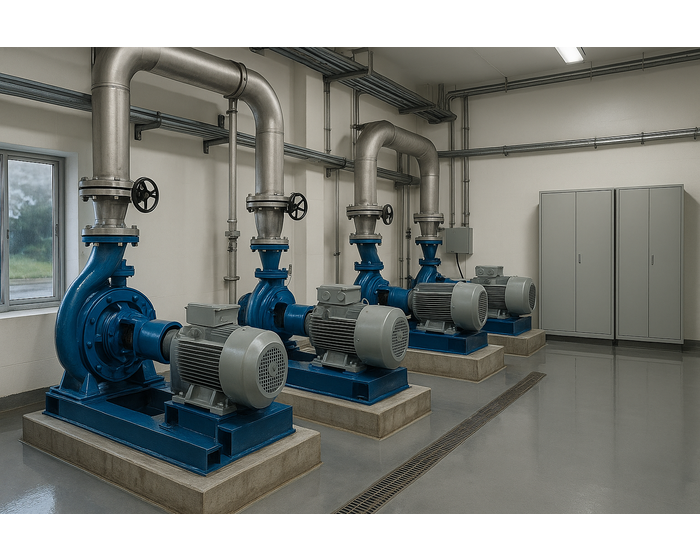
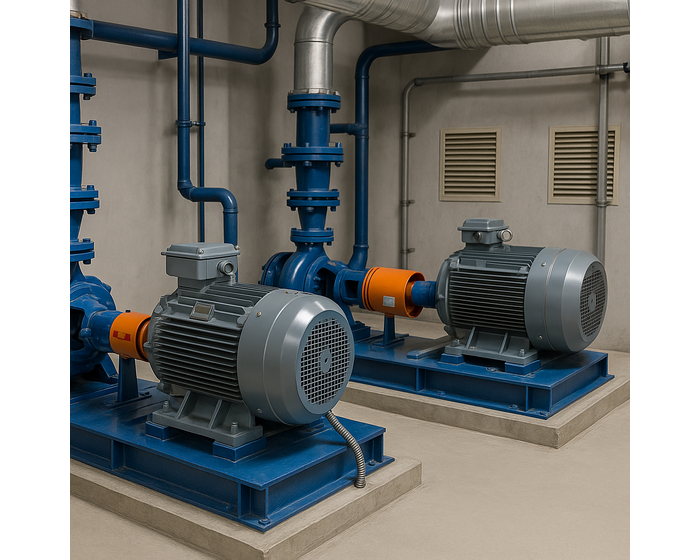
During the monsoon, Thailand mobilizes drain pumps to prevent flooding, while droughts threaten elsewhere. In such conditions, pump downtime must be minimal. The key is spotting “pre-failure signals” early — in numbers, not just by impression. ■ Why factories must start now Even if pumps look stable, small issues like entrained air, debris through the impeller, or one-sided wear occur daily. These show up first as tiny increases in vibration, long before sound or heat. Replace too early = wasted cost React too late = cascading damage Adding numbers to operator instincts lets production, maintenance, and management speak the same language and decide from the same evidence. ■ Technology for detecting pump issues Anchor monitoring on RMS vibration velocity (mm/s RMS). Use frequency to distinguish: ‐ Unbalance: Dominant 1× grows with speed ‐ Misalignment: Strong 2× with high axial content ‐ Looseness: Broad spectrum with sidebands ‐ Bearing faults: High-frequency bands via envelope analysis Set thresholds from on-site baselines, apply two-level alarms (Trend/Action) with dwell, and make them RPM-aware for VSD-driven pumps to avoid resonance false alerts. ■ Recommended equipment ‐ MODEL-1332B: Portable meter for baselines and spot checks ‐ MODEL-2502: 4–20 mA vibration transmitter for PLC/SCADA ‐ MODEL-2590C: Panel display and relay alarms ■ Use cases in Thai factories Start small: choose 1–2 critical pumps, fix points and posture, and build a baseline in mm/s RMS under real conditions. ‐ Confirm anomalies with MODEL-1332B ‐ Expand to continuous monitoring via MODEL-2502 ‐ Configure MODEL-2590C for two-level alarms that track persistent changes, not spikes Results: earlier detection before abnormal noise, fewer surprise stops, smoother planned maintenance. ■ Showa Sokki’s recommendation Success comes less from complex techniques than from measuring the same way at the same place. Showa Sokki helps select devices suited to Thailand’s hot, humid, dusty, even explosion-proof environments, and provides start-up guidance so teams can sustain use in daily routines. 📍 Begin by asking, “What do you want to protect?” — product quality, equipment life, or uptime. Then turn that into shared numbers everyone reads the same way. 📩 Please contact us via the EMIDAS form at the bottom of this article, or download the PDF for further details. Download : - MODEL-1332B (Free Download): https://prime.nc-net.com/105994/en/catalog/detail/7285 - MODEL-2502 (Free Download): https://prime.nc-net.com/105994/en/catalog/detail/7541 - MODEL-2590C (Free Download): https://prime.nc-net.com/105994/en/catalog/detail/7540 ーーーーーーーーーーーーーーーーーーーーーーーー 【Glossary】 ‐ RMS vibration velocity: Primary metric, mm/s RMS ‐ Two-level alarm: Trend/Action thresholds with dwell time ‐ Threshold: Decision level from on-site baseline ‐ Cavitation: Bubble collapse in liquid causing vibration ‐ Envelope analysis: Technique to extract bearing signatures ‐ VSD (inverter): Requires RPM band-specific thresholds 【References】 - The Nation Thailand, “ONWR mobilises pumps and machinery to brace for Tropical Storm Wipha”, 2025-07-20. - The Nation Thailand, “World Bank warns Thailand to accelerate water management investment”, 2025-06-13. - Eastern Economic Corridor Office (EECO), “EEC unlocks potential for investors”, 2024-07-08. - The Nation Thailand, “EEC incentive package aims to boost FDI”, 2024-07-04. - Bangkok Post, “Dealing with the deluge: climate-driven flood risks and industry”, 2024-10-21. #PumpVibration #PredictiveMaintenance #CNCMaintenance #ConditionMonitoring #ThailandIndustry #ShowaSokki #EEC #FactoryMaintenance (Last update : 2025-09-19)

CNC Vibration Monitoring | Threshold Design and KPIs to Prevent Downtime
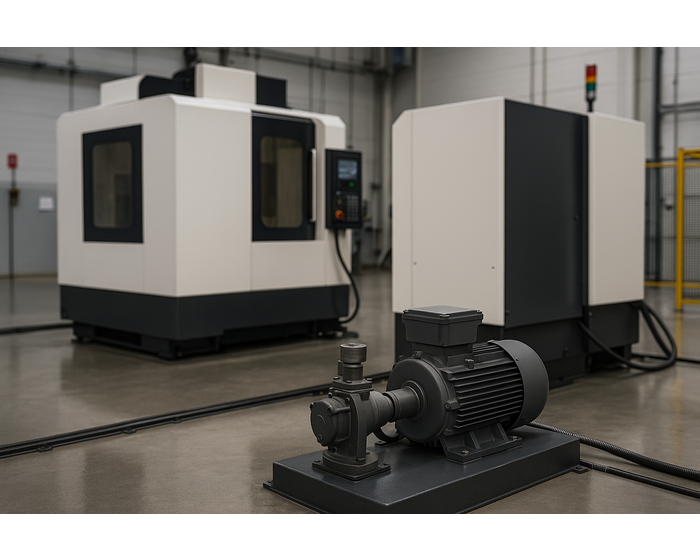
Minimize CNC downtime by detecting signs before the P point on the P-F curve, using numbers instead of impressions. ■ Why factories must start monitoring now CNC machine tools demand higher accuracy and surface quality than general equipment, which means vibration thresholds must be stricter than ISO 10816/20816 zones. In Thailand, challenges like humid rainy seasons, fine dust, and strict energy-management rules in the EEC make it critical to minimize both unplanned downtime and wasted energy. bearing lubrication breakdown, followed by misalignment, unbalance, looseness, or belt wear. CNC machines are also affected by foundation stiffness, feed resonance, and servo/spindle dynamics. Relying only on listening and touch misses early signals. A shared numerical language ensures production, maintenance, and quality work on the same evidence. ■ Detecting problems with vibration data The key metric is RMS vibration velocity (mm/s RMS), supported by frequency analysis: ‐ Unbalance: 1× signal increasing with speed ‐ Misalignment: Dominant 2×, strong axial ‐ Looseness: Wide spectrum with sidebands ‐ Bearing faults: High-frequency, found via Envelope Analysis > Use site-specific baselines taken after installation/overhaul under real cutting conditions. Design two-tier thresholds with trend/action alarms and dwell time to avoid false alerts. ■ Two-tier threshold design 1. Quality threshold: Stricter than ISO, detects early signs of surface finish or dimensional drift, as well as tool wear. 2. Protection threshold: Aligned with ISO for safe shutdown and equipment protection. Even small increases in RMS velocity can signal rising problems. Monitoring the rate of change (slope) is as important as the absolute values. ■ KPI examples for CNC maintenance ‐ % of machines exceeding quality thresholds (by line/team) ‐ Average recovery time from vibration alarm to corrective action (MTTR) ‐ Tool life improvement after vibration correction ‐ Energy efficiency: Material removal per kWh before/after vibration fixes These KPIs help balance uptime, quality, and energy management. ■ Recommended equipment ‐ MODEL-1332B: Portable meter for baselines & spot checks (Free Download) 👉 https://prime.nc-net.com/105994/en/catalog/detail/7285 ‐ MODEL-2502: 4–20 mA transmitter for PLC/SCADA (Free Download) 👉 https://prime.nc-net.com/105994/en/catalog/detail/7541 ‐ MODEL-2590C: Panel display with relay alarms (Free Download) 👉 https://prime.nc-net.com/105994/en/catalog/detail/7540 ■ Showa Sokki’s recommendation Start by asking: “What do you want to protect—surface finish, accuracy, tool life, or throughput?” With clear goals, thresholds become shared values for quality and uptime. Showa Sokki provides not only instruments but also advice on measurement points, sensor mounting, and setup suited to Thailand’s environment. We recommend starting with one optimal unit, verify results, and expand step by step to avoid over-measuring or over-investing. For details, you can download the product PDF or contact us directly. ーーーーーーーーーーーーーーーーーーーーーーーーーー 【Glossary】 ‐ P-F curve: Timeline from first detectable point (P) to functional failure (F) ‐ RMS velocity: Primary vibration metric (mm/s RMS) ‐ Two-level alarm: Trend vs. Action thresholds with delay ‐ Threshold: Based on site baseline, not generic ISO tables ‐ BPFO/BPFI: Bearing fault frequencies found by Envelope Analysis ‐ VSD (inverter): Variable-speed drives needing RPM-aware thresholds ‐ Resonance: Amplified vibration at natural frequency ‐ Electrical fluting: Bearing damage from stray current 【References】 ‐ ISO 10816/20816 vibration guidelines ‐ CNC-specific threshold practices ‐ Thailand climate impact: humidity, dust, rainy season ‐ Energy-management rules for designated factories ‐ EEC production & investment outlook ‐ Bearing frequency & envelope analysis resources #CNC #VibrationMonitoring #PredictiveMaintenance #ThaiFactory #ShowaSokki #DowntimePrevention (Last update : 2025-09-10)
Catching early warnings before unplanned stops | Practical guide to motor health with vibration data
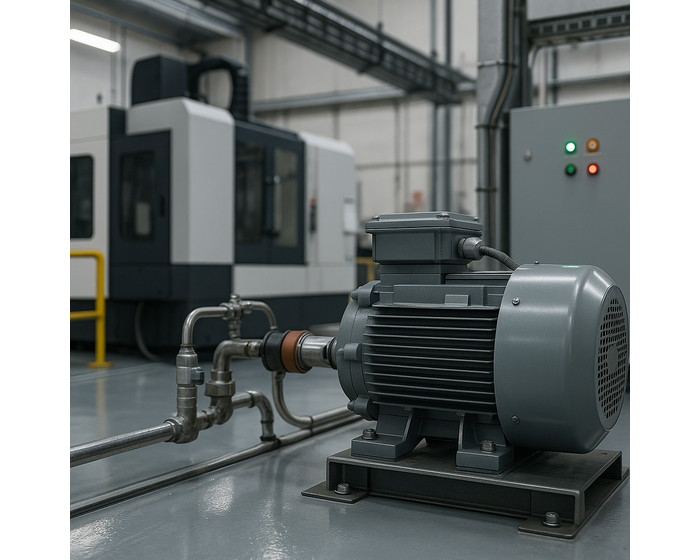
Machine-tool lines run many motors—spindles, feed axes, coolant and hydraulic pumps. Heat, humidity, cutting-fluid mist, and fine chips strain bearings and seals. Tiny vibration changes are the start of the P-F curve, invisible to the ear. If ignored, production plans collapse fast. ■ Why factories should start monitoring today Thailand pushes CNC/automation investment while demand swings remain large. Surprise stops hurt costs. The frontline is knowing motor health without stopping, using vibration numbers everyone can share. ■ Vibration technology that reveals motor issues early Motor failures overlap: poor lubrication, contamination, misalignment, looseness, and VSD-related resonance or electrical fluting. These early signs are narrow and subtle. Use RMS vibration velocity as the core metric, then confirm with spectrum and time trends. - Unbalance: dominant 1× grows with speed - Misalignment: strong 2× and higher axial - Looseness: broad spectrum, sub-harmonics - Bearing: high-frequency signatures, revealed by envelope analysis Set thresholds from your baseline, not generic tables. Use a two-level alarm with dwell to cut false spikes. ■ Recommended tools - MODEL-1332B: Handheld for fast baseline - MODEL-2502: 4–20 mA transmitter into PLC/SCADA - MODEL-2590C: Panel display with relays ■ How to apply in the field before problems escalate Make “normal” visible. Fix points, axes, and surfaces consistently, log mm/s RMS with spectra under real jobs. For VSD machines, band thresholds by RPM to avoid false alarms. Verify early hints with MODEL-1332B, then monitor fixed points via MODEL-2502, and configure two-level alarms with MODEL-2590C. Typical results: - Issues detected before abnormal noise - Reduced risk of downtime - Repairs moved into planned stops ■ Summary & Showa Sokki’s recommendation Turn “that felt odd” into numbers. Start baselining with MODEL-1332B, scale with MODEL-2502, and add MODEL-2590C when panel alerts are needed. Showa Sokki and our Thai partners will help pick the best-fit unit and teach practical first-use methods. For more details, contact us or download the product PDF. ------------------------------------------------------------------ Main product/process : - MODEL-1332B: https://prime.nc-net.com/105994/en/product_others/detail_goods/25249 - MODEL-2502: https://prime.nc-net.com/105994/en/product_others/detail_goods/25250 - MODEL-2590C: https://prime.nc-net.com/105994/en/product_others/detail_goods/25338 Download : - MODEL-1332B (Free Download): https://prime.nc-net.com/105994/en/catalog/detail/7285 - MODEL-2502 (Free Download): https://prime.nc-net.com/105994/en/catalog/detail/7541 - MODEL-2590C (Free Download): https://prime.nc-net.com/105994/en/catalog/detail/7540 ------------------------------------------------------------------ 【Glossary】 - RMS vibration velocity: Key metric; mm/s RMS - Two-level alarm: Trend / Action with dwell - Threshold: Site-derived decision value - P-F curve: Time from detection to failure - Electrical fluting: Bearing damage by stray current - RMS / Peak / P-P: Common units mm/s RMS, m/s² Peak, μm P-P 【References】 - ISO/JIS vibration standards for rotating machinery - Bearing diagnosis with FFT & envelope analysis - Guides on baseline thresholds and two-level alarms - Thailand investment promotion for CNC and automation #CNC #MachineTool #MotorVibration #PredictiveMaintenance #ISO10816 #ShowaSokki #EEC #ConditionMonitoring #SpindleMotor #EnvelopeAnalysis (Last update : 2025-09-10)
Why machine-tool motors fail unexpectedly | From instinct to vibration numbers you can act on
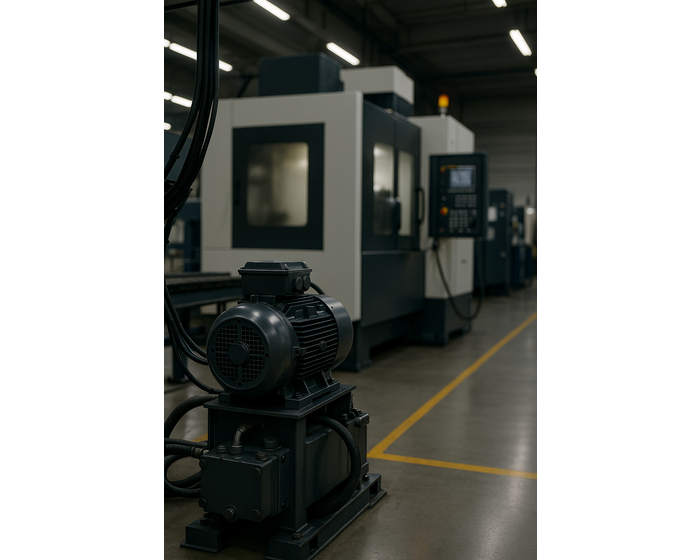
On a night shift in Chonburi, a machining center spindle slowed slightly and a warning light blinked. The operator sensed “something’s off” and paused, but after restart the spindle-drive motor overheated and the line was down for half a day. Cases like this show a common pattern: instinct notices changes, but without vibration numbers it’s hard to make timely decisions. ■ Why it matters now CNC automation is expanding in the EEC, driven by EV upgrades and shifting demand. Plants are asked not just to “avoid downtime,” but to “choose when to stop.” Heat, humidity, and varying cut loads make motors show misalignment, unbalance, looseness, or failing cooling fans as subtle vibration patterns—too fine for the ear. Frequent tool and fixture changes also blur whether differences come from the process or the machine. ■ From feelings to numbers The core is RMS vibration velocity as the primary KPI, supported by spectrum and trend analysis: - Unbalance: dominant 1× growing with speed - Misalignment: strong 2× plus higher axial vibration - Looseness: broad spectrum with sub-harmonics - Bearings: high-frequency signatures, revealed via envelope analysis To avoid false alerts, apply two-level alarms with dwell time and set thresholds from on-site baselines, not generic values. Practical tools: - MODEL-1332B: Handheld meter for fast baseline and spot checks https://prime.nc-net.com/105994/en/product_others/detail_goods/25249 - MODEL-2502: 4–20 mA transmitter for continuous monitoring into PLC/SCADA https://prime.nc-net.com/105994/en/product_others/detail_goods/25250 - MODEL-2590C: Panel display with configurable alarms https://prime.nc-net.com/105994/en/product_others/detail_goods/25338 ■ Applying in the field First, “learn the normal numbers” by capturing baselines during real jobs, across typical speeds and loads. This helps teams distinguish between process changes and machine anomalies. Confirm suspected issues with MODEL-1332B, then fix monitoring points with MODEL-2502, and configure MODEL-2590C alarms that focus on persistent trends rather than momentary spikes. Plants adopting this approach often: - Detect faults before audible noise - Cut unplanned stoppages - Move repairs into scheduled windows ■ Summary & Showa Sokki’s recommendation Ears differ, numbers agree. Start with baselines everyone can read the same way. Use MODEL-1332B for a fast start, expand with MODEL-2502 for continuous monitoring, and add MODEL-2590C for in-panel alerts. Showa Sokki and our Thailand partners are ready to help you pick the best-fit unit and get practical training for a smooth first phase. For more details, contact us or download the product PDF. ------------------------------------------------------------------ Download : - MODEL-1332B (Free Download): https://prime.nc-net.com/105994/en/catalog/detail/7285 - MODEL-2502 (Free Download): https://prime.nc-net.com/105994/en/catalog/detail/7541 - MODEL-2590C (Free Download): https://prime.nc-net.com/105994/en/catalog/detail/7540 ------------------------------------------------------------------ 【Glossary】 ‐ RMS vibration velocity: Key health metric (mm/s RMS) ‐ Two-level alarm: Trend vs Action with dwell ‐ Threshold: Derived from on-site baseline ‐ Misalignment: Adds strong 2× and axial content ‐ Unbalance: Dominant 1×, grows with speed ‐ Mechanical looseness: Broad spectrum, sub-harmonics ‐ Envelope analysis: Bearing high-frequency detection ‐ FFT: Fast Fourier Transform ‐ RMS / Peak / P-P: Common units 【References】 ‐ CNC automation investment trends in Thailand & EEC ‐ ISO 10816/20816 motor vibration assessment ‐ Envelope & FFT analysis for bearing diagnostics ‐ Communication frameworks for production and maintenance teams #CNC #MachineTool #MotorVibration #PredictiveMaintenance #ISO10816 #ShowaSokki #EEC #ConditionMonitoring #SpindleMotor #EnvelopeAnalysis (Last update : 2025-09-10)
Catching the “P” on the P-F curve | KPI design to detect bearing and misalignment issues on motors for pumps and blowers
In Chonburi and Rayong, rainy-season continuous operation of pumps, blowers, and cooling systems strains bearings and couplings on motors for pumps and blowers. The challenge is to capture the onset of P (Potential Failure) on the P-F curve with ISO 10816-aligned KPIs—without stopping machines. ■ Why now Heavy rain, long duty cycles, and high load accelerate risk. With VSDs, RPM ranges widen and quiet early symptoms are missed by listening alone. A shared numeric language helps production, maintenance, and contractors decide consistently. ■ KPI technology explained Center KPIs on RMS vibration velocity (mm/s RMS), combined with frequency and time-domain evidence: - Unbalance: dominant 1×, grows with speed - Misalignment: strong 2× and axial vibration - Bearings: high-frequency content; envelope reveals BPFO/BPFI - Looseness: broad spectrum with sub-harmonics Use FFT for separation, envelope for confirmation. Implement two-level alarms with dwell, and set thresholds from baseline, not generic tables. - MODEL-1332B for fast baselining https://prime.nc-net.com/105994/en/product_others/detail_goods/25249 - MODEL-2502 for continuous 4–20 mA to PLC/SCADA https://prime.nc-net.com/105994/en/product_others/detail_goods/25250 - MODEL-2590C for in-panel display and alarms https://prime.nc-net.com/105994/en/product_others/detail_goods/25338 ■ Applying in the field Capture 30–60 minutes after startup as baseline, across VSD speed bands. Compare units to spot outliers. Confirm early changes with MODEL-1332B, then install MODEL-2502 for monitoring, and configure MODEL-2590C alarms. Plants detect issues earlier, reduce downtime, and shift to planned maintenance. ■ Showa Sokki’s recommendation Don’t miss the “P.” Start with site baselines, set band-aware thresholds, and combine RMS, spectrum, and envelope KPIs. Begin with MODEL-1332B, expand with MODEL-2502, and add MODEL-2590C for panel alarms. Showa Sokki supports KPI designs aligned to ISO 10816 and real EEC conditions. 📩 For more details, please download the PDF or feel free to contact us. ------------------------------------------------------------------ Download : - MODEL-1332B (Free Download): https://prime.nc-net.com/105994/en/catalog/detail/7285 - MODEL-2502 (Free Download): https://prime.nc-net.com/105994/en/catalog/detail/7541 - MODEL-2590C (Free Download): https://prime.nc-net.com/105994/en/catalog/detail/7540 ------------------------------------------------------------------ ■ Glossary - RMS vibration velocity: Key health metric (mm/s RMS) - Two-level alarm: Trend vs Action, with dwell - Threshold: Derived from site baseline - FFT: Fast Fourier Transform - BPFO/BPFI: Bearing defect frequencies - VSD (inverter): RPM control needing band-specific rules - P-F curve: Time from detection P to failure F - RMS / Peak / P-P: Common units ■ References - ISO 10816 series overview for rotating machinery vibration assessment - Application notes on ISO 10816/20816 in industrial condition monitoring - Guides for interpreting vibration severity tables under ISO - Sample explanatory materials on vibration zones and terminology #PFcurve #ISO10816 #VibrationMonitoring #PredictiveMaintenance #ShowaSokki #PumpAndBlower #MachineHealth #EEC #ConditionMonitoring (Last update : 2025-09-09)
Flood- and outage-resilient plants | Beginner’s guide to detecting pump and blower motor issues with vibration monitoring
One rainy evening in Chonburi, a pump motor sounded slightly rough. The operator thought, “it’s still running, no problem.” Hours later, the bearing seized, halting the line and delaying shipments. If the team had shared vibration numbers instead of impressions, the outcome could have been different. This scenario reflects common on-site cases in Thailand. ■ Why motors suddenly stop — uncovering the truth of “invisible degradation” Thailand’s rainy season brings humidity, splashing water, mud, and long continuous runs, raising risks for pumps, blower, and cooling systems. Night and weekend shifts run lean, so small changes are easily missed. With the EEC driving flood-control investment and uptime demands, rotating equipment health is critical. The spread of variable-speed drives (VSD) widens operating RPM, so listening and fixed routines often miss early, quiet anomalies. ■ Effective monitoring approach Start by tracking RMS vibration velocity, then analyze frequency and time patterns. Common progression: - Small RMS rise → periodic modulation → stronger high-frequency components - Define thresholds from site-specific baselines, not only generic standards - Use two-level alarms (Trend / Action) with dwell time to filter spikes - Make alarms RPM-aware for VSD-driven machines ■ Applying in the field Establish a baseline in both dry and rainy seasons, logging RMS with RPM. Verify with a handheld meter like MODEL-1332B, then deploy MODEL-2502 at fixed pump/blower points to stream 4–20 mA into PLC/SCADA. When panel alerts are required, pair with MODEL-2590C to set two-level alarms with delay. ■ Benefits observed - Detect anomalies before audible noise - Lower risk of unplanned stoppages - Align maintenance plans with spare parts and manpower ■ Showa Sokki’s recommendation Resilient plants start with numbers, not impressions. Baseline with MODEL-1332B, expand to continuous monitoring with MODEL-2502, and add MODEL-2590C for in-panel alerts. Showa Sokki and our local partners will help select the best-fit unit and design a practical first-phase setup tailored to site conditions. 📩 For more details, please download the PDF or feel free to contact us. ------------------------------------------------------------------ Main product/process : - MODEL-1332B: https://prime.nc-net.com/105994/en/product_others/detail_goods/25249 - MODEL-2502: https://prime.nc-net.com/105994/en/product_others/detail_goods/25250 - MODEL-2590C: https://prime.nc-net.com/105994/en/product_others/detail_goods/25338 Download : - MODEL-1332B (Free Download): https://prime.nc-net.com/105994/en/catalog/detail/7285 - MODEL-2502 (Free Download): https://prime.nc-net.com/105994/en/catalog/detail/7541 - MODEL-2590C (Free Download): https://prime.nc-net.com/105994/en/catalog/detail/7540 ------------------------------------------------------------------ ■ Glossary - RMS vibration velocity: Key health indicator; unit mm/s RMS - Two-level alarm: Separates Trend vs Action, with dwell - Threshold: Decision level derived from on-site baseline - VSD (inverter): RPM-controllable drive needing band-specific rules - Predictive maintenance: Acting on early indicators to avoid failure - P-F curve: Window from detection (P) to functional failure (F) - RMS / Peak / P-P: Common vibration units ■ References - Water and infrastructure investment in the EEC area - Flood and landslide alerts in Thailand’s eastern provinces - Public–private initiatives on water management in EEC - Budget reports for flood/drought mitigation in eastern Thailand - Thailand’s energy management framework for factories - Energy-efficiency labeling and minimum standards - 2025 flood-risk outlook (La Niña) - Flood-mitigation meetings in Chonburi industrial estates #VibrationMonitoring #PumpAndBlower #RMSvibration #HVACThailand #PredictiveMaintenance #ShowaSokki #MachineHealth #DataCenterReliability #VSD #ConditionMonitoring #EEC #FloodResilience (Last update : 2025-09-09)
Vibration monitoring for pumps and blower | Detect early anomalies with field-defined thresholds
In Thailand’s hot, humid, and dusty environment with a long rainy season, rotating equipment such as pumps and blower face continuous stress. Motors that run nonstop are especially vulnerable—an unexpected stop can disrupt production. Using “field numbers” instead of impressions is becoming the foundation of reliable maintenance. ■ Why it matters now With investment in the EEC and rising uptime needs in data centers and HVAC, early anomaly detection is essential. The spread of variable-speed drives (VSD, inverters) means RPM varies widely. Listening or fixed-speed checks may miss early issues like unbalance, misalignment, looseness, soft foot, and resonance—often preceding bearing or coupling failures. ■ Effective monitoring approach Track RMS vibration velocity with frequency trend analysis. Typical patterns: - Slight RMS rise → periodic fluctuation → high-frequency growth - Define thresholds from site baselines, not only standards - Use two-level alarms (Trend/Action) with dwell time - Make alarm rules RPM-aware for VSD ■ Applying in the field Build a baseline during dry and rainy seasons, logging RMS with RPM. Align thresholds with actual load conditions to avoid false alarms from resonance. Plants applying this detect anomalies earlier than noise checks and shift maintenance from reactive to planned. ■ Benefits observed - Detect anomalies earlier than audible noise - Lower risk of unplanned shutdowns - Maintenance schedules align better with spare parts and manpower ■ Showa Sokki’s recommendation Beyond principles, Showa Sokki provides practical tools: - MODEL-1332B: Portable vibration meter for quick baseline capture https://prime.nc-net.com/105994/en/product_others/detail_goods/25249 - MODEL-2502: Vibration-to-current (4–20 mA) converter for PLC/SCADA https://prime.nc-net.com/105994/en/product_others/detail_goods/25250 - MODEL-2590C: Panel display with configurable two-level alarms https://prime.nc-net.com/105994/en/product_others/detail_goods/25338 Our Thailand team can help select the best-fit unit and design an initial monitoring setup for your site. ■ For more details, please download the PDF or contact us. ------------------------------------------------------------------ Download : - MODEL-1332B (Free Download): https://prime.nc-net.com/105994/en/catalog/detail/7285 - MODEL-2502 (Free Download): https://prime.nc-net.com/105994/en/catalog/detail/7541 - MODEL-2590C (Free Download): https://prime.nc-net.com/105994/en/catalog/detail/7540 ------------------------------------------------------------------ 【Glossary】 - RMS vibration velocity: Standard health metric; unit mm/s RMS - Two-level alarm: Trend vs Action with dwell time - Threshold: Decision level from on-site baseline - VSD (inverter): RPM-controllable drive needing band-specific rules - P-F curve: Time from detection (P) to functional failure (F) - RMS / Peak / P-P: Common vibration units 【References】 - Thailand automotive & EV growth, 2025 - Eastern region maintenance trends, 2024 - Growth of data centers & HVAC, 2025 - Hyperscaler data center plans in Bangkok, 2025 - Articles on condition monitoring in HVAC - Thai primers on vibration monitoring - Market reports on balancing and workforce #VibrationMonitoring #PumpAndBlower #RMSvibration #HVACThailand #PredictiveMaintenance #ShowaSokki #MachineHealth #DataCenterReliability #VSD #ConditionMonitoring (Last update : 2025-08-29)
CONTACT
Inquiry