Production Goods & Services

4hits

Narrow by category

Spot Welding Explained | How It Differs from Conventional Welding in Industrial Production

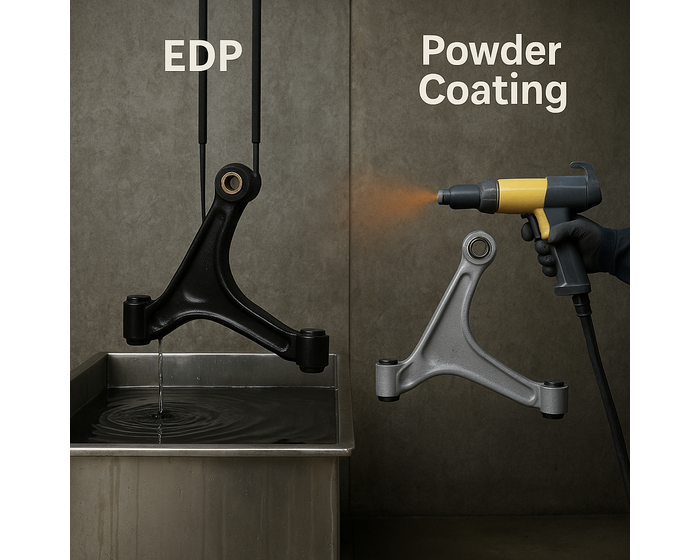
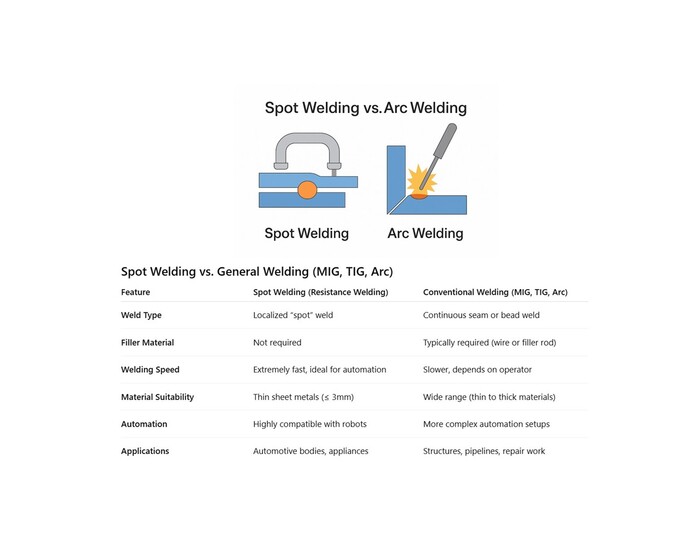
Spot welding (resistance spot welding) is a fast and reliable method to join thin sheet metals, especially in automotive and appliance production lines. Learn how it works, how it differs from MIG/TIG welding, and why Siam Daiso excels in robotic spot welding. ======================== ■ What Is Spot Welding? Spot welding is a resistance welding method that joins two or more metal sheets using pressure and electric current at specific contact points. How it works: - Copper electrodes press against both sides of the sheets - A high current passes through the contact area - Heat generated by resistance melts the metal locally - The molten metal solidifies under pressure, creating a strong weld "spot" This process is completed in milliseconds, making it highly suitable for high-volume automated production. ======================== ■ Key Advantages of Spot Welding - ✅ Very fast cycle time—perfect for mass production - ✅ No filler wire or shielding gas required → lower costs - ✅ Easy integration with robotic welding arms - ✅ Clean appearance—weld is often hidden inside sheets - ✅ Reliable and repeatable quality in automated lines ■ Limitations of Spot Welding - ❌ Not suitable for thick materials (>3mm) - ❌ Electrodes must access both sides of the workpiece - ❌ Less effective on metals with very low resistance (e.g., aluminum) - ❌ Lower overall strength than full seam welds in some cases ======================== ■ Spot Welding in the Automotive Industry In automobile manufacturing, spot welding is widely applied to assemble car body panels, frames, and substructures. Robotic spot welding systems ensure: - Faster cycle times - Consistent weld quality - Reduced human error Spot welding is often combined with pressing and EDP coating (Electro-Deposition Painting) in an integrated production line. ======================== ■ Recommended Manufacturer: Siam Daiso Industries Co., Ltd. Siam Daiso Industries Co., Ltd. is a Thailand-based manufacturer specializing in robotic spot welding for automotive metal components. Strengths of Siam Daiso: - High-precision robotic spot welding systems - Integrated pressing and EDP coating processes - Proven large-scale production for automotive OEMs - Certified: ISO9001:2015, ISO14001:2015, IATF16949:2016 👉 For more information, please download the PDF or contact us directly. ======================== #SpotWelding #RoboticWelding #AutomotiveManufacturing #SheetMetalWelding #SiamDaiso #IndustrialWelding #ResistanceWelding #MassProduction #WeldingTechnology

Understanding Press Machines|How Metal Dies Work in Industrial Manufacturing

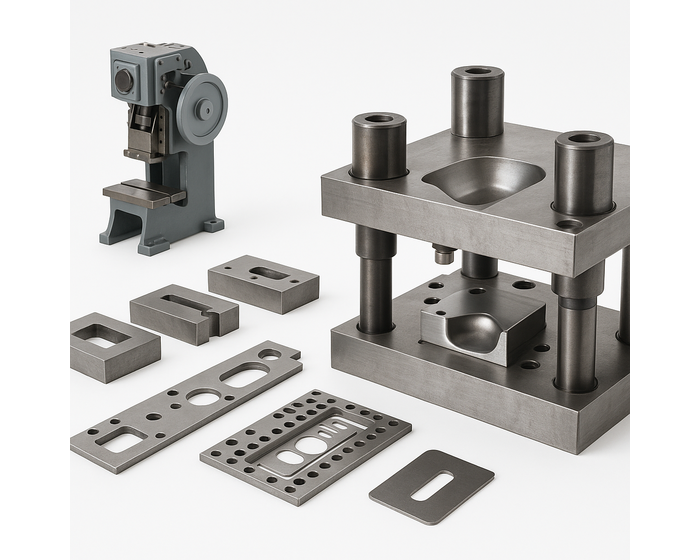
Discover the role of press machines and metal dies in sheet metal forming. Learn the types of presses, die functions, and key benefits for mass production. Plus, meet a leading expert in automotive metal pressing. ======================== 1. Introduction: Why Are Press Machines Important? Press machines are essential equipment in industrial metalworking, particularly for sheet metal forming. These machines apply high force to metal sheets through a specialized tool called a die to cut, bend, or shape them into desired forms. Pressing is a high-speed, repeatable process widely used in automotive, electronics, and appliance industries. It allows mass production of metal parts with high precision and consistent quality. ======================== 2. How Does a Press Machine Work? A press machine works by transferring force from a mechanical or hydraulic system to a metal die, which then forms the sheet metal into a specific shape. The basic components include: - Press Machine Frame: Generates and controls the pressing force - Metal Die: Custom-designed tool for shaping or cutting - Workpiece (Metal Sheet): The raw material to be formed ======================== 3. Common Types of Press Machines 3.1 Mechanical Press Uses a flywheel and crankshaft system to deliver fast, repetitive force ✅ Best for: High-speed production of small metal parts 3.2 Hydraulic Press Uses hydraulic fluid pressure for slower, controlled movement ✅ Best for: Forming thick or complex parts with high precision 3.3 Servo Press Powered by a servo motor, allowing programmable motion profiles ✅ Best for: Complex forming tasks requiring fine control and energy efficiency ======================== 4. What Is a Metal Die? A die is a precision tool installed in the press machine. It defines the final shape and dimensions of the metal part. Dies are made from hardened steel and precisely machined using CNC and EDM. Common Types of Dies: - Blanking Die – Cuts out flat shapes from sheet metal - Bending Die – Forms angles or curves - Forming Die – Shapes metal into 3D contours - Progressive Die – Performs multiple steps in a single stroke across different stations ======================== 5. Advantages of Pressing with Dies - ⚙️ High production speed - ⚙️ Uniform product quality - ⚙️ Cost-effective in large volumes - ⚙️ Easy integration into automation lines - ⚙️ Suitable for complex geometries with tight tolerances ======================== 6. Recommended Manufacturer: Siam Daiso Industries Co., Ltd. Siam Daiso Industries Co., Ltd. is a trusted manufacturer of automotive and industrial metal parts, specializing in high-precision pressing operations using in-house dies and advanced press machines. Highlights of Siam Daiso’s capabilities: - In-house design and production of complex metal dies - Integration of pressing, robotic spot welding, and EDP coating - High-volume production with Japanese-style quality control - International certifications including ISO9001:2015, ISO14001:2015, and IATF16949:2016 For more information, please download the PDF or contact us directly. ======================== #PressMachine #MetalStamping #MetalDie #SheetMetalForming #ManufacturingTechnology #IndustrialMachinery #AutomotiveParts #MassProduction #OEMSolutions #ThailandManufacturing

Metal Welding Types | Industrial Applications & Comparison in Automotive Manufacturing

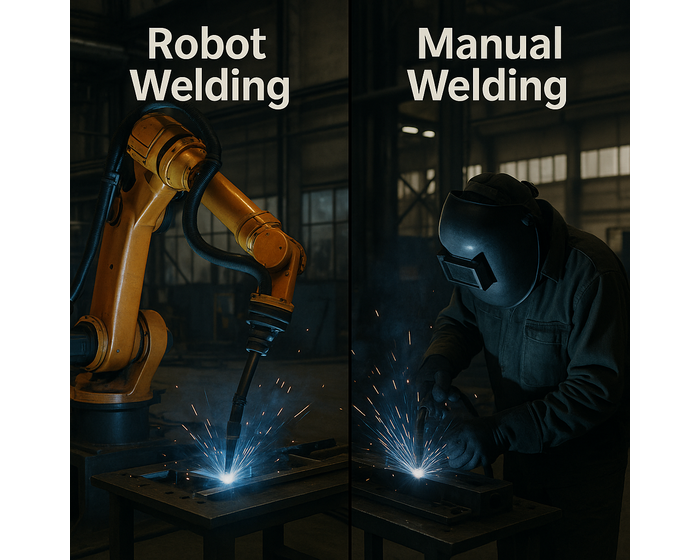
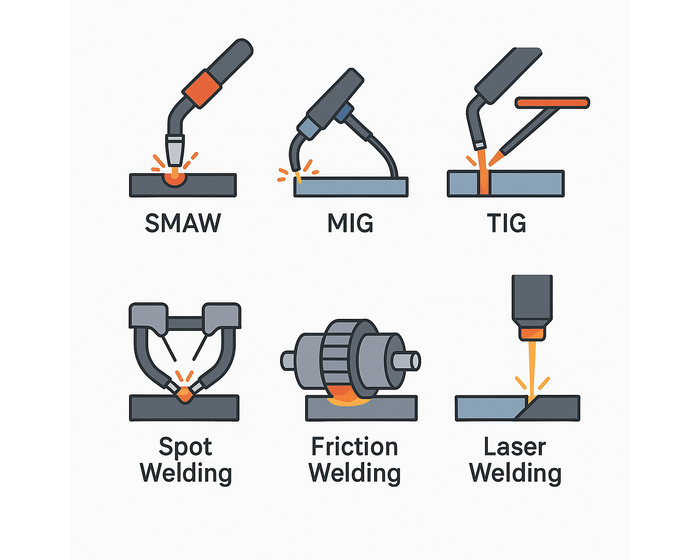
Learn about key metal welding methods—MIG, TIG, Arc, Spot, Friction, Laser—and explore Siam Daiso’s robotic spot welding and EDP painting services for automotive parts manufacturing in Thailand. ======================== 1. Why Understanding Welding Methods Matters Choosing the optimal welding method is essential for automotive metal components. The right technique affects structural integrity, production speed, quality control, and compatibility with automation. ======================== 2. Key Welding Methods in Industry - SMAW (Shielded Metal Arc Welding): Also known as stick welding, uses flux-coated electrode; robust and suitable for outdoor or structural work. - MIG Welding (GMAW): Continuous wire feed and shielding gas allow fast, clean welds; ideal for automation and high-volume production. - TIG Welding (GTAW): Uses tungsten electrode and filler rod for precise, high-quality welds; suited for thin or non‑ferrous metals. - Spot Welding: Widely used in automotive body assembly; pressure and current join metal sheets at discrete points; easily automated with robotic systems. - Friction Welding: Solid-state process using rotational force without filler or gas; offers high strength for cylindrical parts. - Laser Welding: High-precision laser melting provides fast, clean joints with minimal distortion; equipment cost is higher. ======================== 3. Selection Criteria for Your Factory Consider these factors when choosing a welding method: - Material type and thickness - Desired strength and surface quality - Production volume and cycle time - Equipment availability or automation plans ======================== 4. Industry Case Study: Siam Daiso Industries Co., Ltd. Siam Daiso Industries is a Thai manufacturer specializing in high-quality automotive metal parts. Their core capabilities include: - Metal Pressing - Robotic Spot Welding for reliable, repeatable weld joints - General Welding (SMAW, MIG, TIG) - EDP Coating (Electro‑Deposition Painting) 📄 Download the full technical sheet or contact us for project inquiries. ======================== #MetalWelding #SpotWelding #EDPCoating #AutomotiveParts #RoboticWelding #SiamDaiso #OEM #ThaiManufacturing

Precision Metal Parts Manufacturing|Step-by-Step CNC & Mold Process Explained

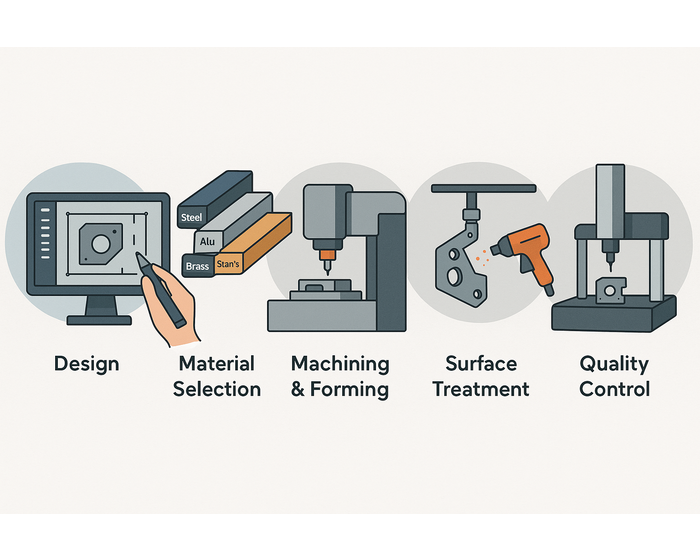
Discover the full process of precision metal parts production—from CAD design, CNC machining, and mold fabrication to quality inspection. Ideal for engineers and factory procurement teams in Thailand and Southeast Asia. 1. Introduction Precision metal components are essential in electronics, automotive, automation systems, and medical equipment. Their production involves advanced engineering, machinery, and strict quality systems. Knowing the manufacturing process helps improve product design, sourcing decisions, and production efficiency. ======================== 2. Key Stages in Precision Metal Part Manufacturing 2.1 CAD Design 3D CAD models are used to define shapes, tolerances, and functional specifications. 2.2 Material Selection Typical materials include: - Stainless Steel – corrosion resistance - Aluminum – lightweight and easy to machine - Tool Steel – durable and suitable for dies/molds - Brass & Copper – for thermal and electrical uses 2.3 CNC Machining & EDM High-precision processes used: - CNC turning (lathe) and milling - Grinding for surface finish - EDM / Wire-cut EDM for complex geometries 2.4 Surface Finishing Based on functional and visual needs: - Deburring & polishing - Heat treatment - Surface coating or plating 2.5 Quality Inspection To ensure accuracy and consistency: - CMM (Coordinate Measuring Machine) - Micrometers, gauges, and optical tools - Surface roughness measurement ======================== 3. Key Capabilities of High-Quality Manufacturers - Micron-level tolerance control - Ability to machine small, complex parts - In-house production of jigs, fixtures, and molds - ISO-certified QC processes - Experience in high-mix, low-volume manufacturing ======================== 4. Why Choose Siam Daiso Industries Co.,Ltd. Siam Daiso Industries Co.,Ltd. is a trusted Thai manufacturer of precision metal parts and metal molds, serving global clients in electronics, automotive, and industrial systems. They combine Japanese-quality systems with skilled local teams. Highlights: - Advanced CNC machining for small metal components - In-house mold, jig, and die production - Strong quality management and timely delivery - Experience with complex, multi-step manufacturing - Proven exporter of OEM parts 📄 Download full technical documentation or contact us for inquiries. ======================== #CNCmachining #MetalParts #MoldFabrication #EDM #PrecisionEngineering #ThailandFactory #ISOQuality #OEM #ManufacturingProcess

CONTACT

Inquiry

This is the inquiry form for SIAM DAISO INDUSTRIES CO., LTD.. Please enter your inquiry.

This service is intended to provide consultation and opinion requests for processing projects.
Please do not use this information for self-promotion or sales activities.
If we receive a complaint from a recipient about the contents of the transmission, we may take measures such as forcibly stopping the use of the service.

Inquiry Type*Required
Message*Required
Attach file

Only image (jpeg, jpg, gif, png, pdf) and compressed file (zip, lzh) extensions are valid. Maximum file size 10MB