
SIAM DAISO INDUSTRIES CO., LTD.
SERVICE
Production Goods & Services
What is EDP Coating?|Why EDP Has Become the Standard for Automotive Parts
Product Info
🌟 Key Takeaways
- EDP Coating uses electricity to pull paint onto metal surfaces, creating a uniform film that improves corrosion resistance up to 500–1,000 hours in Salt Spray Test.
- Ideal for automotive steel parts such as seat components, brackets, and reinforcements.
- Works especially well for complex shapes or parts with inner cavities that spray coating cannot reach.
- Produces a consistent film and reduces risks of rejection from SST and Cross Cut tests.
- A fully automatic EDP line provides more stable film quality than manual processes.
ーーーーーーーーーーーーーーーーーーーーーーーーーーーーーーー
🔶 Why EDP is Important in the Automotive Industry
Automotive metal parts face moisture, dust, chemicals, and road salt throughout many years of use. Traditional coating methods often cannot protect these parts for the full lifetime of a vehicle.
EDP (Electro-Deposition Coating) is preferred because it forms a highly uniform film even in deep or hard-to-reach areas.
In real manufacturing environments, many automotive factories in Thailand use epoxy-based black paint with fully automatic EDP systems to maintain film consistency and meet strict quality standards.
🔶 What is EDP Coating?
EDP is a coating method that uses electric current to attract paint particles onto the surface of a metal part. The part becomes one electrode, and the paint bath becomes the opposite electrode.
Once electricity flows, the paint moves toward the part—similar to “iron powder being pulled by a magnet”—creating a 360-degree coating, including inside cavities where spray coating cannot reach.
🔶 Main Steps in an EDP Line
1. Degreasing / Cleaning – Removes oil and dust
2. Surface Conditioning – Prepares the surface for better adhesion
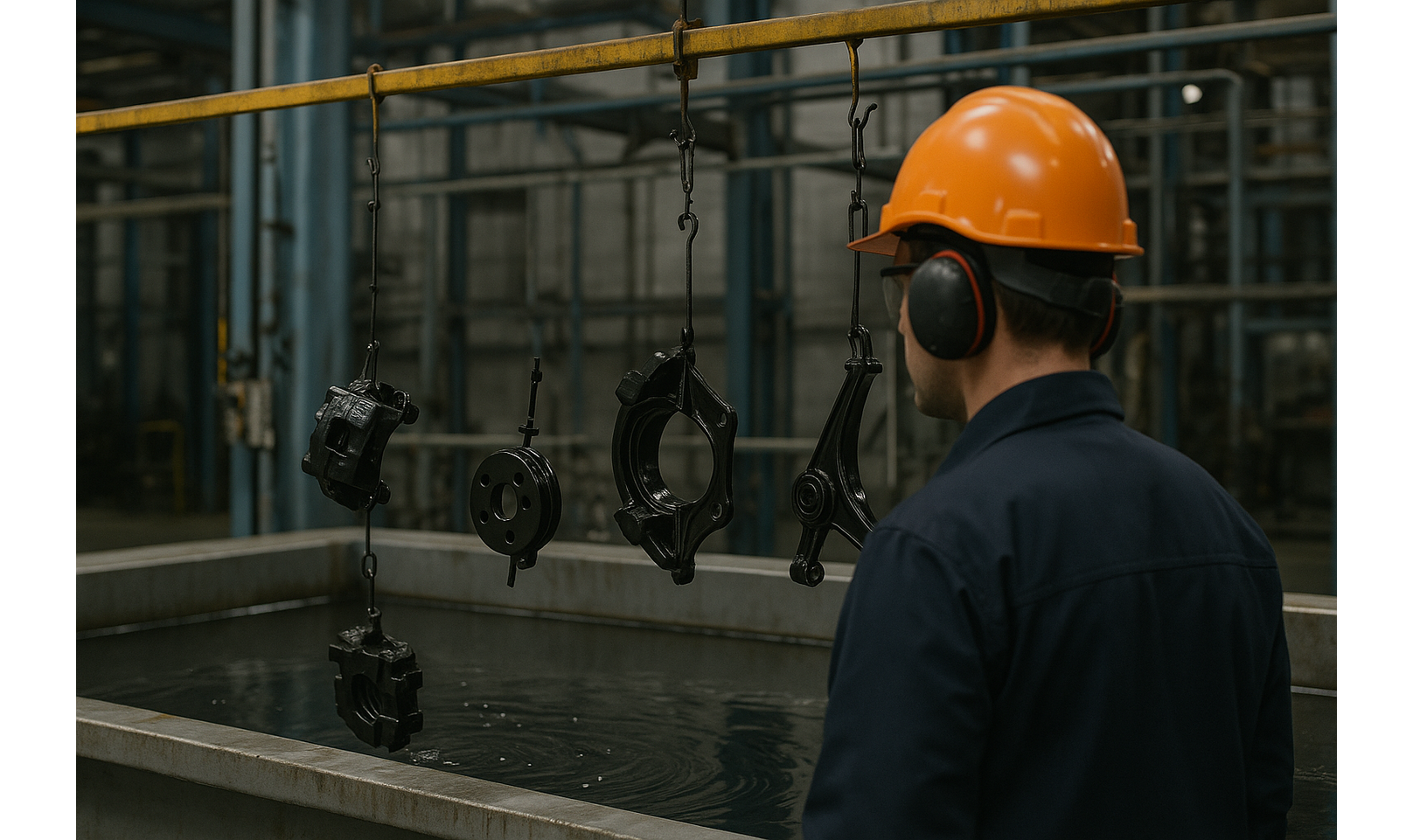
3. ED Coating (Crane Dipping) – Dipping and applying electric current
4. Rinsing – Removes excess paint for a smooth finish
5. Baking – Cures the epoxy film
A common industrial example includes Crane Dipping / 135-minute cycle time / 400 kg per bar, which helps support high-volume production while keeping film quality stable.
🔶 When Should You Choose EDP?
EDP is suitable when:
- Parts have complex shapes or narrow cavities
- High corrosion resistance is required (Toyota / Honda / Isuzu / Mitsubishi / Ford standards)
- A fully uniform film is needed without thick or thin spots
- Parts are structural, such as seat components or brackets
🔶 Common Problems When the Coating System is Not Proper
- Uneven film thickness leading to early rusting
- Paint not reaching deep areas
- Film detaching during adhesion tests (Cross Cut)
- Failing Salt Spray Test, causing high rejection rates
Using epoxy-based paint with a fully automatic line helps minimize variation and ensure consistent results.
🔶 Example from Automotive Parts
Seat components experience vibration, moisture, and long-term usage. With normal spray paint, the inside of the steel frame often remains uncoated and begins to rust early.
EDP creates a complete internal and external coating, extending service life and reducing warranty claims.
📘 Summary
EDP Coating is a highly effective method for achieving strong corrosion resistance and uniform coating in automotive parts. Understanding how it works helps engineers and purchasers choose the most suitable coating process for real-world applications.
📥 CTA
For deeper understanding of EDP quality control, consider exploring advanced topics or consulting coating specialists in your region.
ーーーーーーーーーーーーーーーーーーーーーーーーーーーーーーー
❓ FAQ
Q: How is EDP different from powder coating?
A: EDP provides better corrosion resistance and reaches complex areas more effectively. Powder coating offers aesthetic finishes but is less suitable for deep cavities.
Q: Does material thickness affect EDP quality?
A: Not significantly. Film formation depends mainly on electrical potential, not metal thickness.
Q: Why do automotive manufacturers prefer EDP?
A: Because it consistently meets strict corrosion standards like Salt Spray Test requirements.
ーーーーーーーーーーーーーーーーーーーーーーーーーーーーーーー
📚 Glossary
- EDP Coating: Electrical coating method that forms a uniform paint film
- Epoxy Black: Corrosion-resistant epoxy paint
- Salt Spray Test (SST): Corrosion resistance test
- Cross Cut Test: Film adhesion test
- Crane Dipping: Dipping method using a crane
- Fully Automatic Line: Automated coating process line
📖 Reference
[1] EDP Line Specification – Production Dept., SIAM DAISO INDUSTRIES CO., LTD. (N/A)
[2] Automotive SST Requirement – Toyota / Honda / Isuzu / Mitsubishi / Ford (N/A)
🔒 Trust
This article is reviewed by the Production / Coating Process department of a representative automotive coating facility in Thailand for technical accuracy.
#EDPCoating #AutomotiveCoating #MetalFinishing #SurfaceTreatment #EpoxyCoating
#SaltSprayTest #ManufacturingThailand #AutomotiveParts #IndustrialProcess #QualityControl
📆 Updated: 2025-12-08
CONTACT
Inquiry