Technology / product information Processing categories

Technology / product information

19hits

Narrow by Industry Category

Narrow by material Category

Steam Oxide Film Treatment|Enhances anti-rust and corrosion resistance

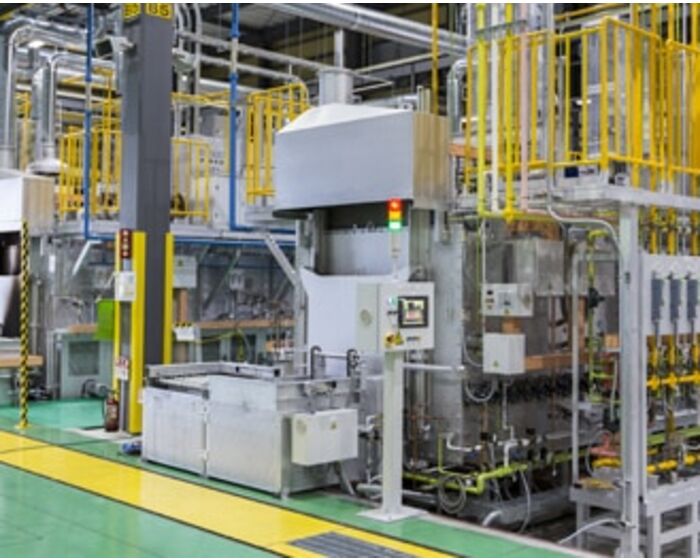
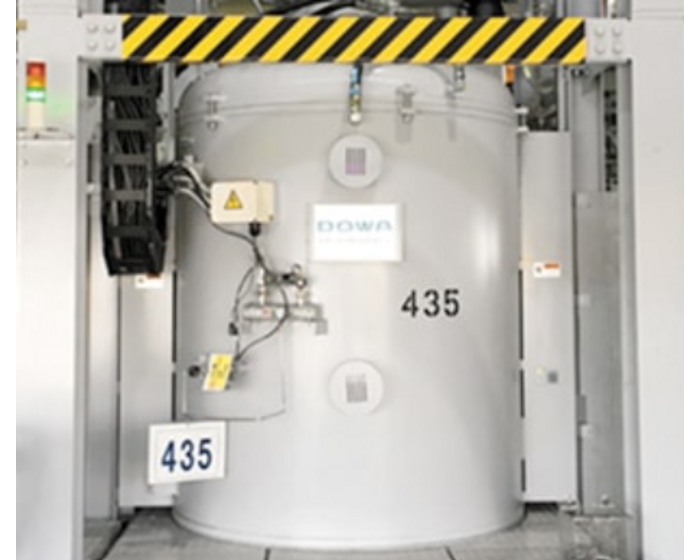
In industrial machinery and equipment, surface oxidation and corrosion are key causes of deterioration that reduce both durability and visual quality. Steam Oxide Film Treatment is an environmentally friendly surface modification process developed to solve these issues. By oxidizing steel surfaces in a hydrogen-steam atmosphere, this process forms a dense, stable Fe₃O₄ (Magnetite) oxide film, improving anti-rust, corrosion resistance, and appearance simultaneously. Process Principle The Steam Oxide Film Treatment process involves heating steel components to 400–450°C in a hydrogen-steam atmosphere (H₂ + H₂O) to promote controlled oxidation. During this process, a chemically stable Fe₃O₄ (Magnetite) layer forms on the metal surface. This Fe₃O₄ layer tightly adheres to the steel substrate and effectively prevents oxidation caused by air or moisture — stopping the formation of red rust (Fe₂O₃). Additionally, it gives the metal a dark gray to black matte finish, offering both anti-reflective and decorative properties. Properties After Treatment Formation of a dense Fe₃O₄ oxide film, improving anti-rust and corrosion resistance. Excellent resistance to humidity, salt, and thermal oxidation. Thin and uniform coating with virtually no dimensional change. The surface retains lubricating oil effectively, enhancing wear and sliding properties. Provides a smooth, uniform black appearance for improved aesthetics. Applicable Materials and Components Materials: All types of steel — structural carbon steel, alloy steel, and general-purpose steel. Components: Shafts, gears, brackets, pins, bolts, and other mechanical parts. Maximum work size: 600 × 1230 × 500 mm (processed in a Batch-Type Steam Oxide Furnace). Advantages of Steam Oxide Film Treatment Low-temperature process (400–450°C) minimizes thermal deformation. Produces a uniform, tightly bonded Fe₃O₄ film with long-term anti-rust protection. Negligible dimensional change, suitable for precision parts. Beautiful black surface finish with excellent paint and lubricant adhesion. Environmentally friendly process — uses only steam and hydrogen, no harsh chemicals. Summary Steam Oxide Film Treatment is a low-temperature oxidation process that forms a protective Fe₃O₄ oxide layer on steel surfaces using a hydrogen-steam atmosphere. With a processing temperature range of 400–450°C, it enhances corrosion resistance, anti-rust performance, and lubrication properties without altering the dimensions of the component. The result is a smooth, uniform black finish, ideal for precision machinery and structural steel parts that require both performance and aesthetics. ※For more details please download the PDF or contact us. #SteamOxideFilmTreatment #Fe3O4 #BlackOxide #DOWAThermotech #AntiCorrosion #HeatTreatment #SurfaceCoating #MagnetiteLayer #LowTempOxidation #MachineParts

Carburizing Process|Surface Hardening for Heavy-Load Parts

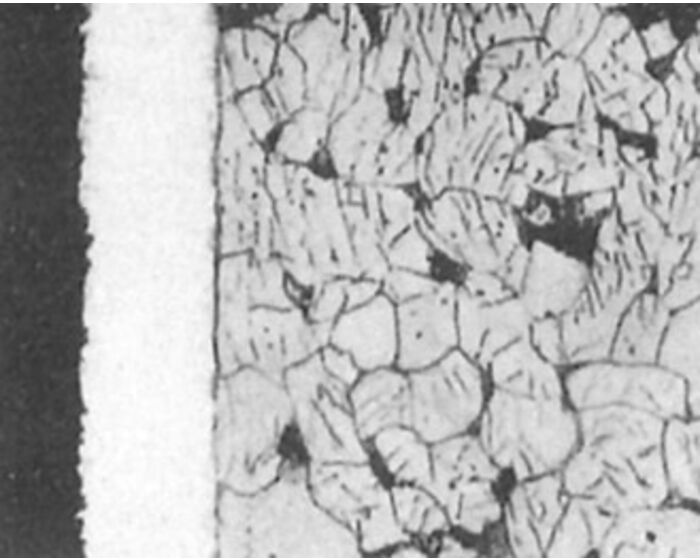
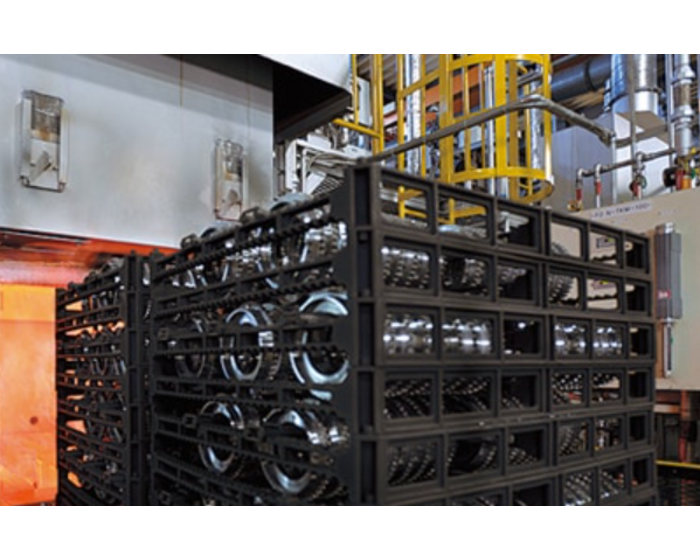
In the machinery and automotive industries, components subjected to high torque or impact loads such as gears and shafts often face severe surface wear. Enhancing surface hardness without compromising the core toughness is key to extending the component’s service life. The Carburizing Process is widely adopted to achieve this balance, providing a hardened, wear-resistant surface while maintaining ductility in the core ideal for demanding mechanical and powertrain applications. Process Principle Carburizing is a surface hardening process that diffuses carbon atoms into the steel surface within a carbon-rich gas atmosphere at 800–980 °C. The carbon penetrates the steel’s crystal structure, forming a carburized layer with higher carbon concentration than the core. After rapid quenching, this layer transforms into a martensitic structure, resulting in an extremely hard and wear-resistant surface. Properties After Treatment Achieves surface hardness between 650–800 HV. Provides outstanding resistance to wear, fatigue, and friction. The martensitic structure strengthens the surface while maintaining toughness in the core. Reduces the risk of cracking or deformation under repeated impact or heavy loads. Applicable Materials The Carburizing Process is suitable for steels requiring a balance between hardness and toughness, including Structural Carbon Steels and Alloy Steels. Applications & Use Cases Ideal for high-load and precision components, including: Gears: Require hard, wear-resistant surfaces. Bushings and Rolls: Subjected to high rotational forces and surface contact stress. Spindles: Demand high surface smoothness and rotational precision. The process supports large components up to 760 × 1230 × 720 mm, making it suitable for both small and heavy-duty production. Advantages of Carburizing Increases surface hardness without making the core brittle. Improves wear resistance and fatigue strength. Allows controlled case depth based on design requirements. Applicable to a wide range of shapes and component sizes. Summary Gas Carburizing is a core heat treatment process that enhances the surface hardness of steels for superior wear and fatigue resistance. Operating at 800–980 °C, it forms a martensitic surface layer with hardness between 650–800 HV while preserving internal toughness. This process extends component life and reliability, making it indispensable for automotive, machinery, and powertrain applications requiring long-term durability. For more information, please download PDF or contact us. #Carburizing #HeatTreatment #DOWAThermotech #Martensite #SurfaceHardness #Gear #Spindle #MachineParts #ThermalEngineering #IndustrialFurnace

Shot Peening Process|Surface Reinforcement to Prevent Cracking in Heavy-Load Machine Parts

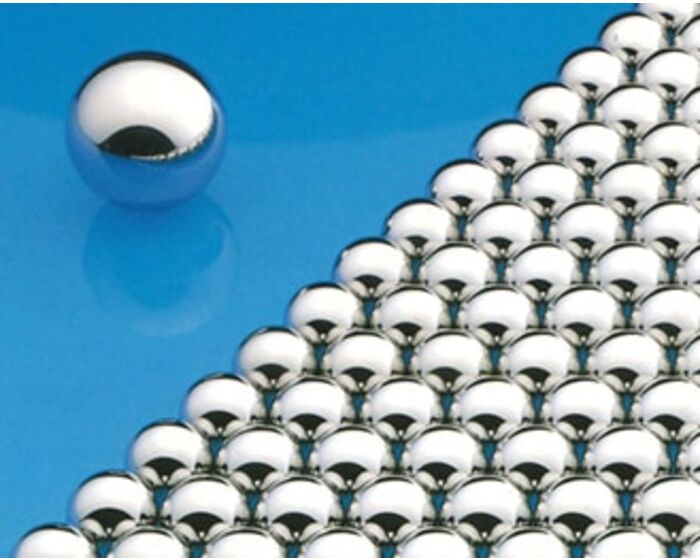
In the machinery and automotive industries, metal fatigue is a primary cause of premature cracking and failure in high-stress components such as gears, shafts, and powertrain parts. The Shot Peening process is a mechanical surface treatment that enhances fatigue strength by creating a compressive residual stress layer on the metal surface. This compressive stress counteracts tensile forces that cause cracking, extending component life without introducing heat or altering the material structure. Process Principle Shot Peening uses high-pressure air to shoot small metallic or ceramic shots onto the surface of the workpiece. Each impact creates microscopic indentations that produce a compressive residual stress field, strengthening the surface and increasing resistance to fatigue and cracking. Because the process is conducted at room temperature (approximately 25 °C), it does not affect the metallurgical structure of previously heat-treated materials. The intensity and coverage can be precisely controlled according to the component’s geometry and functional requirements. Properties After Treatment Surface hardness: 800–1000 HV Formation of compressive residual stress that reduces fatigue and crack propagation Enhanced wear resistance and impact toughness No change or reduction in the existing martensitic structure or hardness Compatible with previously hardened or carburized components Applicable Materials Shot Peening is most effective on steels that have undergone quenching & tempering or carburizing & quenching, maintaining a stable martensitic structure, such as SCM420, SNCM439, SCr420 and other alloy steels used in high-strength, fatigue-prone mechanical components. Applications & Use Cases Widely applied in automotive, machinery, and power transmission industries to enhance fatigue strength of critical parts, including Bevel Gears, Pinion Gears, Counter Shafts. The process accommodates workpieces up to φ500 × 500 mm or φ270 × 900 mm, using Nozzle Type and Impeller Type peening machines that deliver stable air pressure and consistent impact energy. Advantages of Shot Peening Extends metal fatigue life by several times Improves surface hardness and resistance to cracking No heat input eliminates risk of dimensional change or distortion Ideal for maintenance and reconditioning of high-load components Highly controllable process parameters such as air pressure, shot size, and peening distance Summary Shot Peening is a surface strengthening process performed at room temperature to enhance fatigue resistance by generating compressive residual stress on the metal surface. The treated surface achieves hardness levels of 800–1000 HV without altering the base structure, making it ideal for gears, spindles, and drive shafts in high-load applications that demand long-term reliability and fatigue strength. For more details, please download PDF or contact us. #ShotPeening #SurfaceHardening #DOWAThermotech #CompressiveStress #FatigueStrength #Gear #MachineParts #HeatTreatment #NozzleType #ImpellerType

Gas Soft Nitriding Process|Enhanced Wear Resistance with Nitride Layer for Various Machine Components

In mechanical and automotive manufacturing, maintaining surface hardness and dimensional accuracy is crucial. The Gas Soft Nitriding process offers an optimal solution for improving surface wear resistance without causing thermal distortion or cracking. This low-temperature, gas-controlled treatment creates a uniform, hard surface while preserving the core’s toughness ideal for shafts, gears, pins, bushings, and precision components. Process Principle In the Gas Soft Nitriding process, parts are heated in a controlled ammonia-based nitrogen gas atmosphere at temperatures below 570 °C. Nitrogen atoms react with the steel surface to form two distinct layers a compound nitride layer (ε-Fe₂₋₃N) on the surface and a nitrogen diffusion layer beneath it. These layers enhance surface hardness (400–900 HV), wear resistance, fatigue strength, and corrosion resistance, while maintaining the base material’s original structure. Properties After Treatment Surface hardness: 400–900 HV (depending on material and processing time). Smooth, uniform surface with no dimensional change or distortion. Significantly improved wear and friction resistance. Enhanced corrosion resistance under normal atmospheric conditions. Extended component lifespan and reduced maintenance frequency. Applicable Materials Suitable for carbon structural steels (S-Series) and alloy steels (SCM, SNCM Series) that require a hard surface combined with a tough, ductile core. Note: Not recommended for stainless steels (SUS Series) due to the Cr₂O₃ surface layer, which inhibits nitrogen diffusion. Applications & Use Cases Gas Soft Nitriding is ideal for general mechanical components requiring high surface hardness and precision, such as Shafts, Gears, Bushings, Pins and other mechanical parts. Capable of handling workpieces up to 760 × 1230 × 720 mm using the THN-80 Batch Type Furnace, which ensures uniform temperature and gas distribution. Advantages of Gas Soft Nitriding Low-temperature process minimizes distortion. Increases surface hardness and wear resistance without structural alteration. Improves fatigue strength and corrosion resistance. Produces smooth surfaces suitable for precision components. Automated control ensures consistent quality and process repeatability. Summary Gas Soft Nitriding is a low-temperature surface hardening technology designed to increase wear resistance, fatigue strength, and surface hardness without part distortion. By forming a durable ε-Fe₂₋₃N compound layer and nitrogen diffusion layer, the process achieves surface hardness levels of 400–900 HV, making it suitable for carbon and alloy steels used in all types of mechanical components. For more details, please download PDF and contact us. #GasSoftNitriding #ToughNite #DOWAThermotech #HeatTreatment #Nitriding #SurfaceHardness #Fe2_3N #PrecisionParts #LowTemperatureFurnace #MachineComponents

Carbonitriding Process|Surface Hardening for Low-Carbon Steel

For low-carbon steels requiring enhanced surface hardness and resistance to wear, the Carbonitriding process (Carburizing–Nitriding) is one of the most effective heat treatment solutions. By simultaneously introducing carbon (C) and nitrogen (N) into the steel surface, this process creates a hard yet tough surface layer with superior fatigue resistance compared to conventional carburizing. It is particularly suitable for components subjected to alternating loads, rotation, or continuous friction such as gears, spindles, and bushings across the machinery and automotive industries. Process Principle Carbonitriding involves heating the steel workpiece in a gas atmosphere containing carbon and ammonia (NH₃) at 730–900 °C. During the process, carbon and nitrogen atoms diffuse simultaneously into the steel surface. After heating, the part is quenched to form a martensitic structure a microstructure known for its exceptional strength and hardness. The treated surface contains Fe–C–N compounds, producing a fine-grained structure that combines high hardness, excellent wear resistance, and improved fatigue strength while minimizing the risk of surface cracking compared to standard hardening processes. Properties After Treatment Average surface hardness: 600–750 HV Fine-grained martensitic structure offering both hardness and ductility Strong adhesion of the carburized–nitrided layer, resistant to flaking or peeling Improved fatigue strength and corrosion resistance Core remains tough to prevent internal cracking under stress Applicable Materials The Carbonitriding process is best suited for low-carbon and low-alloy steels that require a balance between surface hardness and core toughness, such as S10C, S20C, SCM420, SCR420. These grades are commonly used in parts that endure alternating or rotational stresses, such as gears and shafts. Applications & Use Cases Widely used in high-load components across automotive, machinery, and energy industries, including: Gears and Bushings: Enhanced wear and fatigue resistance Spindles: Require high surface precision and hardness Rolls: Need long-lasting durability under repeated stress Supports large workpieces up to 760 × 1230 × 720 mm, making it suitable for both medium and large-scale production environments. Advantages of Carbonitriding Simultaneously improves surface hardness and toughness Provides better fatigue and wear resistance than standard carburizing Requires lower treatment temperature, ideal for low-carbon steels Produces a smooth surface with minimal dimensional change after quenching Compatible with continuous production systems using automatic furnaces Summary Carbonitriding is a surface hardening process specifically designed for low-carbon steels. Conducted at 730–900 °C under a precisely controlled carbon–nitrogen gas atmosphere, it produces a martensitic surface layer with hardness of 600–750 HV. The process enhances wear and fatigue resistance while maintaining core toughness making it ideal for gears, bushings, rolls, and spindles in high-load industrial applications. For more information, please download PDF or contact us. #Carbonitriding #HeatTreatment #DOWAThermotech #Martensite #LowCarbonSteel #SurfaceHardness #Gear #Spindle #IndustrialFurnace #ThermalEngineering

TKM Series Heat Treatment Furnace|30% CO₂ Reduction & Carburizing-Compatible for High-Efficiency Processing

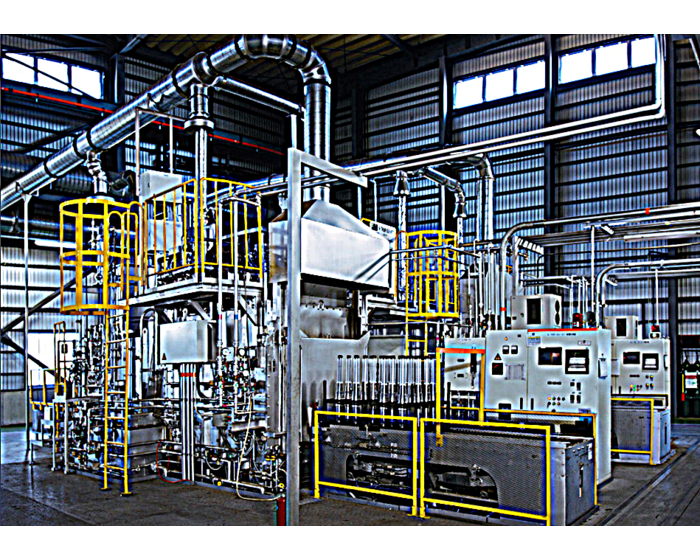
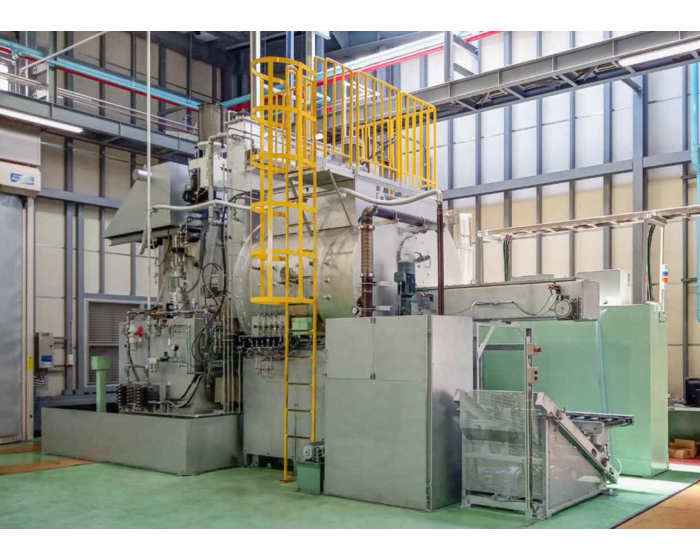
The TKM Series by DOWA Thermotech is a high-efficiency heat treatment furnace supporting carburizing and other thermal processes, with over 30% CO₂ reduction ideal for mass production of automotive and industrial components in sustainable manufacturing. Developed in-house, the TKM Series combines gas heating with regenerative burners and a new insulation structure to reduce heat loss and improve environmental performance. Designed for high-capacity, high-uniformity processing, it optimizes productivity and cost-efficiency in engine, transmission, gear, and shaft treatments. ■ Key Specifications: - Model Range: TKM-40ERT to TKM-120ERT - Effective Dimensions (mm): L 915 - 1220 × W 510 - 760 × H 450 - 750 - Max Capacity: 820 kg/batch - Operating Temp: Up to 930℃ - Heating Method: Gas-fired with regenerative burners - Transport Method: Pusher type ■ Productivity & Environmental Benefits: - Over 30% CO₂ reduction compared to conventional models - 20% lead time reduction via faster heating and integrated processing - Lower furnace surface temperature improves workplace safety and comfort - Reduced energy costs via thermal efficiency and heat retention ■ Applications: - Automotive: Carburizing of engine, transmission, and drivetrain components - Industrial Machinery: Heat treatment for bearings, gears, shafts - Aerospace: High-performance surface processing for lightweight parts - Metal Tools: Enhanced wear resistance through surface hardening ■ Why Choose the TKM Series? - Environmentally compliant with measurable CO₂ savings - Supports high-volume carburizing and integrated process flow - Consistent treatment quality with uniform heat control - Durable ceramic insulation for long-term operation efficiency DOWA Thermotech’s TKM Series is the solution for factories looking to balance energy savings, throughput, and quality in heat treatment. ※For more details please download the PDF or contact us. #HeatTreatmentFurnace #CarburizingFurnace #EnergySavingFurnace #CO2Reduction #SustainableManufacturing #AutomotiveHeatTreatment #IndustrialFurnace #DOWA #OEM

Z-TKM Series Vacuum Carburizing Furnace|Up to 97% CO₂ Reduction for Sustainable Heat Treatment

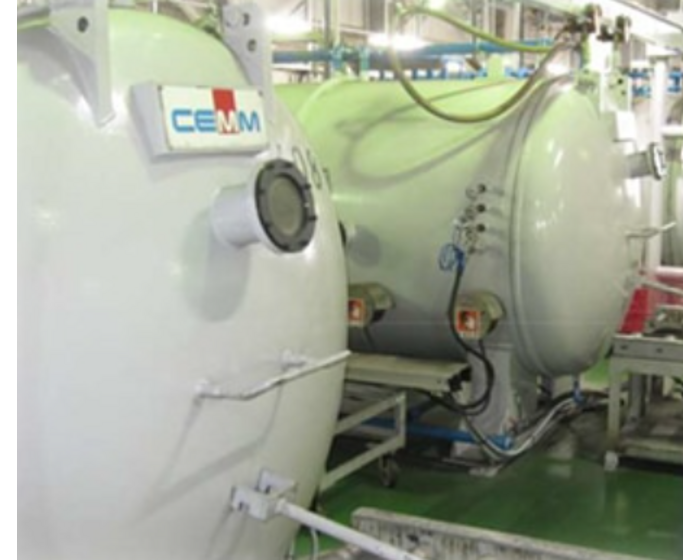
DOWA Thermotech’s Z-TKM Series is a next-generation vacuum carburizing furnace delivering up to 97% CO₂ reduction and compatibility with green energy sources a breakthrough solution for eco-conscious, high-precision heat treatment. Built to match the performance and cost-effectiveness of conventional furnaces, the Z-TKM offers a flameless, safe, and energy-flexible design, ideal for manufacturers transitioning to sustainable production while maintaining treatment quality. ■ Environmental and Technical Highlights: - CO₂ Reduction (In-Plant): Up to 97% - Total CO₂ Reduction: Over 60% when using green energy - Safety: Flameless design for lower operational risk - Energy Flexibility: Compatible with ammonia, hydrogen, and other renewable heat sources ■ Specifications: - Max Temperature: Up to 1,000℃ - Tray Size: 760 × 1,230 × 720 mm - Batch Weight: Up to 720 kg - Utilities: Electricity, cooling water, nitrogen gas, carburizing gas, etc. - Transport System: Supports both batch and straight-through designs - Compatibility: Integrates seamlessly with TKM Series systems ■ Applications: - Automotive: Vacuum carburizing for engine, transmission, and gear components - Aerospace: High-strength processing for lightweight metal parts - Industrial Machinery: Enhanced durability for bearings, shafts, and structural parts ■ Why Choose Z-TKM: - Unmatched CO₂ emissions reduction (up to 97%) - Fully green energy compatible for future-proof operations - Designed for safe, efficient, high-capacity carburizing - Cost-effective upgrade path via TKM Series compatibility DOWA Thermotech’s Z-TKM Furnace sets a new industry standard for low-emission, high-performance heat treatment, helping manufacturers meet environmental goals without sacrificing productivity. ※For more details please download the PDF or contact us. #VacuumCarburizing #CO2Reduction #GreenManufacturing #SustainableHeatTreatment #ZTKMFurnace #AutomotiveHeatTreatment #AerospaceComponents #DOWATechnology #OEM

V-TKM Series Vacuum Furnace|CO₂ Reduction & High-Efficiency Heat Treatment Co-Developed with Toyota

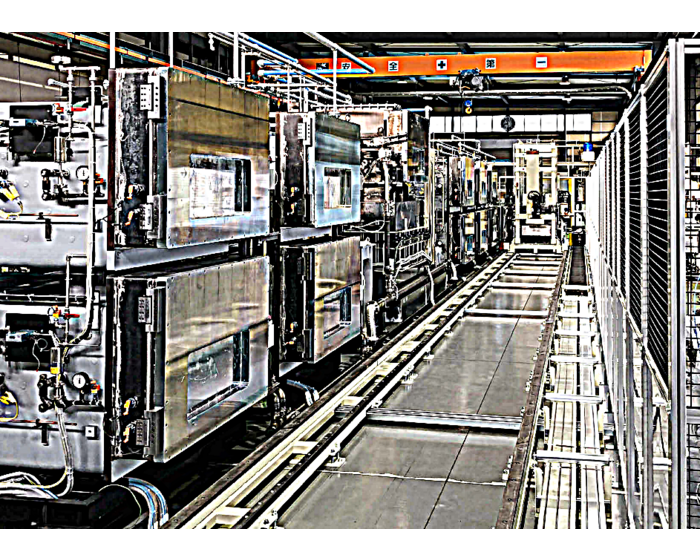
The V-TKM Series, co-developed by DOWA Thermotech and Toyota, is a next-generation inline heat treatment furnace that delivers up to 97% CO₂ reduction, supports small-lot flexible production, and reduces processing time by two-thirds ideal for smart, sustainable manufacturing. Based on Toyota’s “Just-in-Time” philosophy, the V-TKM features a compact, automated vacuum transport system and a cell-based layout, making it perfect for factories transitioning to green energy and high-mix low-volume production. ■ Key Advantages & Innovations: - CO₂ Reduction: Up to 97% in-plant - Processing Time: Cut to one-third of traditional systems - Quality Variation: Reduced by 65% - Equipment Footprint: Minimized by 47% - Safe & Green: Flame-free, compatible with hydrogen and ammonia ■ Product Specs: Two Models: - V-1: 200×300×50 mm trays (20 kg/batch) - V-2: 620×760×250 mm trays (120 kg/batch) Shared Features: - Max Temperature: 1,100℃ - Processes: Carburizing, sintering, quenching, brazing - Quenching Methods: Oil or gas - Transport System: Automated vacuum cell transport - Utilities: Electricity, air, nitrogen, carburizing gas, water ■ Ideal Applications: - Automotive: Sintering and carburizing of engine/transmission parts - Aerospace: Heat treatment of precision, lightweight components - Industrial Machinery: Wear-resistant processing for bearings, shafts ■ Why Choose V-TKM? - Toyota-developed, production-optimized design - Eco-friendly with up to 97% CO₂ emission cuts - Perfect for small-lot, high-precision production - Fully automated, space-saving, and green energy-ready The V-TKM Furnace redefines the future of flexible, sustainable heat treatment, delivering both high productivity and low environmental impact. ※For more details please download the PDF or contact us. #VTKMFurnace #HeatTreatmentInnovation #ToyotaDevelopment #CO2Reduction #GreenManufacturing #VacuumHeatTreatment #SmartFactory #PrecisionComponents #OEM

S-TKM Series Continuous Furnace|3× Productivity & Space-Saving Heat Treatment for Mass Production

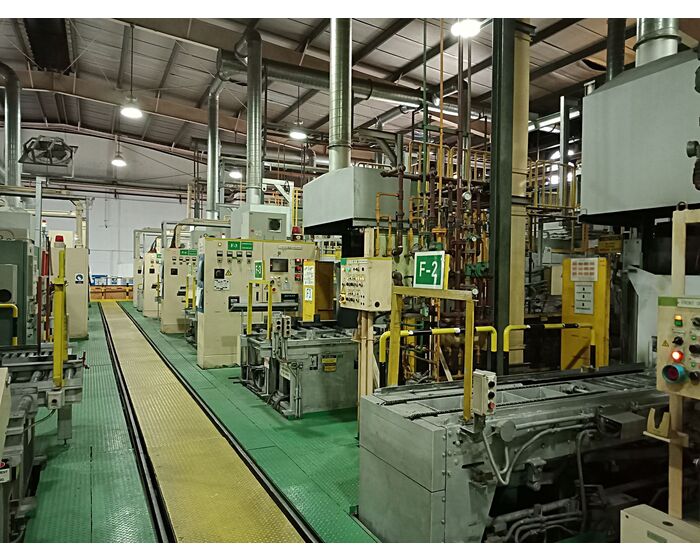
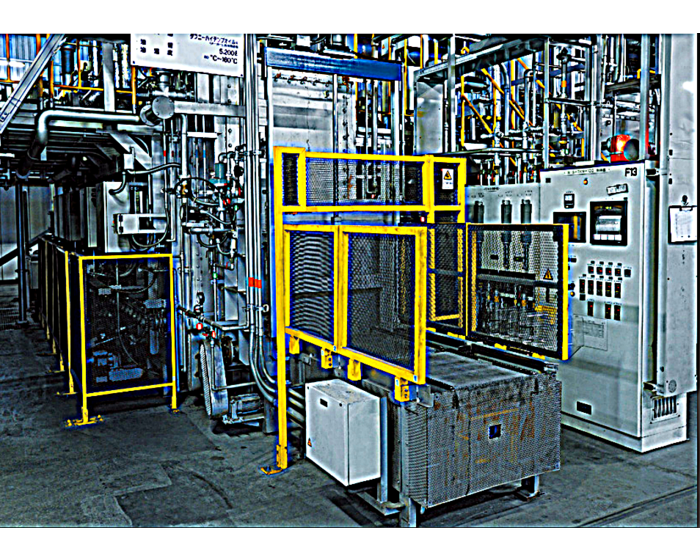
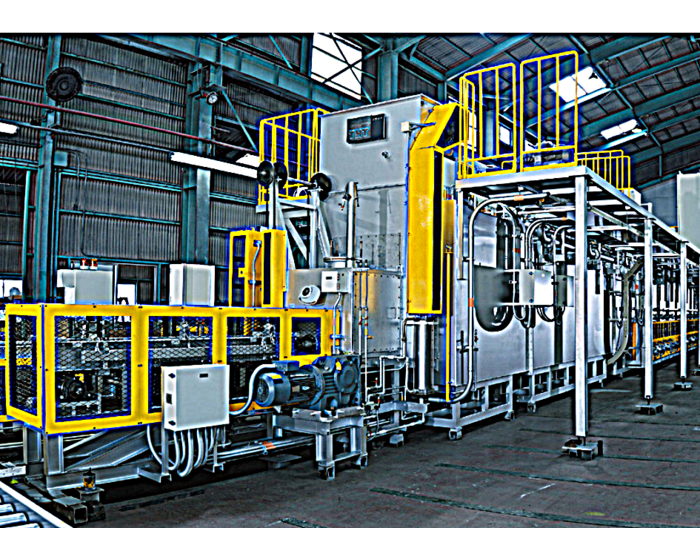
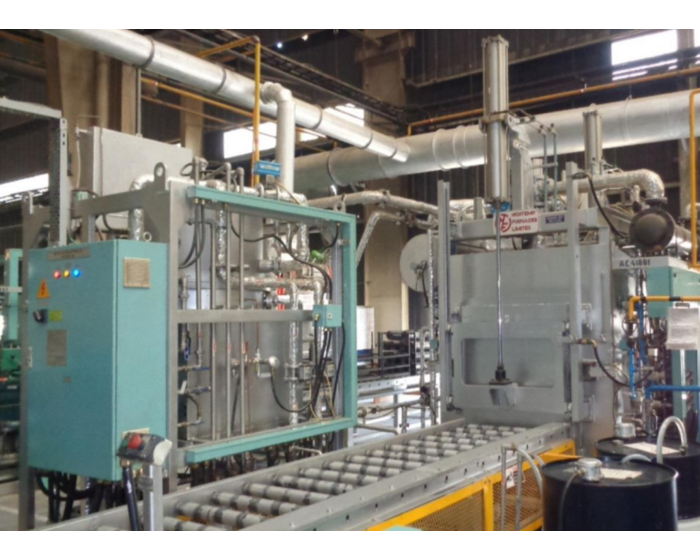
The S-TKM Series by DOWA Thermotech is a continuous heat treatment furnace that delivers up to 3× higher productivity than batch furnaces while reducing CO₂ emissions and saving factory floor space. It’s ideal for mass processing of automotive, industrial, and aerospace components. Equipped with a roller hearth system, regenerative burners, and a compact structure, the S-TKM ensures efficient, uninterrupted processing and flexible layout integration in both new and existing production lines. ■ Performance Highlights: - 3× higher throughput vs. conventional batch furnaces - Energy-efficient heating: Gas or electric (selectable) - Supported Temp: Up to 930℃ - Transport System: Roller hearth conveyor for stable flow - CO₂ & energy reduction through high-efficiency insulation and burners ■ Specifications: - Models: STKM 80 / STKM 100 - Furnace Interior: 3075mm (615×5) length, 660 - 760mm width, 600 - 720mm height - Max Load/Tray: 360kg - External Dimensions: L 6876 - 6910mm / W 2900 - 3000mm / H 5074 - 6257mm ■ Industry Applications: - Automotive: Carburizing of transmission gears and shafts - Industrial Machinery: Hardening of gears and bearings - Aerospace: Tight-tolerance, high-precision heat treatment ■ Why Choose S-TKM? - Continuous operation enables unmatched production volume - Compact & modular design fits tight factory layouts - Flexible heat source (gas/electric) for energy optimization - Contributes to CO₂ reduction & operational cost savings The S-TKM Continuous Furnace streamlines production with high efficiency, energy savings, and process stability, making it a smart choice for next-gen mass production lines. ※For more details please download the PDF or contact us. #ContinuousFurnace #HeatTreatment #MassProduction #STKMFurnace #ProductivityBoost #SpaceSavingFurnace #AutomotiveHeatTreatment #CO2Reduction #EnergyEfficientFurnace #OEM

Hybrid Continuous Gas Carburizing Furnace|30% CO₂ Reduction & 10% Faster Processing for Automotive Parts

DOWA Thermotech’s Hybrid Continuous Gas Carburizing Furnace combines tray pusher and roller hearth systems to deliver both 30% CO₂ reduction and 10% faster processing, supporting efficient, environmentally responsible heat treatment for mass production. This next-gen furnace integrates high-performance regenerative burners, compact design, and dual-transport systems to streamline heating, carburizing, diffusion, and quenching. It's ideal for manufacturers seeking productivity, reliability, and environmental compliance in one solution. ■ Key Technical Benefits: - CO₂ Reduction per unit weight: Approx. 30% - In-furnace lead time: Reduced by approx. 10% - Energy Costs: Cut by approx. 40% - Installation Space: Reduced by approx. 20% (compact layout) ■ System Features: - Heating Method: Gas or electric (flexible selection) - Transport System: Tray pusher + roller hearth hybrid - Processes Supported: Heating, carburizing, diffusion, oil quenching - Furnace Structure: Ceramic & refractory brick lining - Quenching System: Integrated oil tank - Environmental Design: High-efficiency combustion + low CO₂ emission structure ■ Target Industries: - Automotive: Transmission gears, drive shafts (durability treatment) - Industrial Machinery: Bearings, cams (precision heat treatment) - Aerospace: Lightweight components requiring surface hardening ■ Why Choose the Hybrid Furnace? - 30% CO₂ reduction aligns with global sustainability goals - 10% faster cycle time boosts productivity - 20% smaller footprint fits tighter factory layouts - Dual transport system ensures stable and efficient operation The Hybrid Continuous Gas Carburizing Furnace is a smart choice for modern factories aiming to combine sustainability, efficiency, and flexible heat treatment capability. ※For more details please download the PDF or contact us. #GasCarburizingFurnace #HybridFurnace #CO2Reduction #HeatTreatmentThailand #HighEfficiencyFurnace #AutomotivePartsTreatment #EnergyEfficientFurnace #RollerHearth #TrayPusher #OEM

High-Temp Carburizing Quench Furnace|Up to 53% Faster Processing & High-Concentration Treatment

DOWA Thermotech’s High-Temperature Carburizing Quench Furnace is a next-generation roller hearth-type continuous furnace that enables up to 53% faster processing and supports high-concentration carburizing, optimizing both productivity and surface hardening quality. This advanced furnace integrates uniform rapid heating, high-flow circulation, and automated quenching, offering a powerful solution for automotive, aerospace, and precision mechanical parts production. ■ Key Technical Benefits: - Processing Time: Cut by up to 53% vs. conventional continuous furnaces - High-Concentration Carburizing: Delivers stable hardened layers in shorter cycles - Uniform Heating: Minimizes quality variation - Temperature Range: Suitable for high-temp carburizing & diffusion - Automated Line: From heating → carburizing/diffusion → quenching (oil tank) ■ System Specs & Features: - Heating: Electric or gas-compatible - Transport: Roller hearth-type continuous system - Structure: Refractory brick lining for durability - Automation: Continuous feed system reduces labor and increases consistency - Target Parts: Transmission gears, shafts, bearings, lightweight aerospace structures ■ Ideal Applications: - Automotive: High-hardness treatment for transmission gears and shafts - Precision Machinery: Durability-focused surface hardening for bearings, cams - Aerospace: Strengthening lightweight structural components under stress ■ Why Choose This Furnace? - Faster throughput (up to 53% reduction) cuts operational lead times - Supports high-concentration carburizing in shorter cycles - Uniform heat control ensures consistent treatment quality - Compatible with automation systems for streamlined production The High-Temp Carburizing Quench Furnace enables manufacturers to achieve faster cycles, stronger parts, and lower costs, making it an ideal fit for mass production with quality control. ※For more details please download the PDF or contact us. #CarburizingFurnace #HighTempFurnace #HeatTreatmentInnovation #FasterProcessing #HighConcentrationCarburizing #RollerHearthFurnace #AutomotiveHeatTreatment #PrecisionParts #OEM

Endothermic Gas Generator Furnace|Soot-Free & No Burnout Needed for Clean Heat Treatment

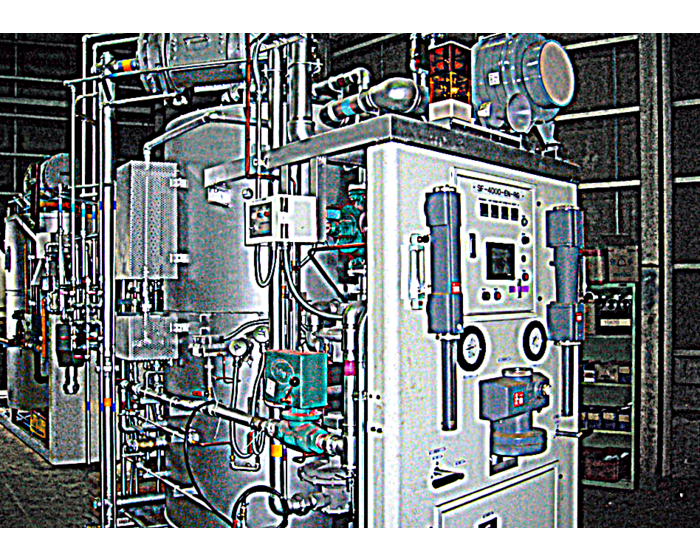
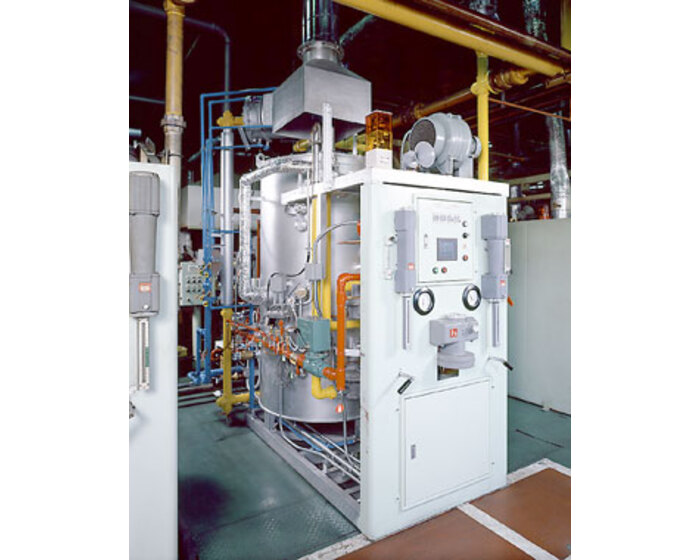
DOWA Thermotech’s Endothermic Gas Generator Furnace uses a gas-heated, soot-free system that eliminates the need for burnout cleaning while reducing CO₂ emissions and energy costs ideal for environmentally conscious heat treatment operations. With a compact footprint matching electric models, this next-gen generator delivers clean, high-efficiency endothermic gas using a regenerative swirl-type burner that prevents soot buildup and supports stable gas supply for carburizing and surface treatment. ■ Key Features & Benefits: - Soot-Free Operation: Prevents carbon buildup around burners - No Burnout Required: Eliminates periodic cleaning = less downtime - Energy Efficiency: High gas conversion with pulseless blower + double-pass retort - Compact Size: Same installation space as electric units (W1162 × D2480 × H3210 mm) ■ Environmental & Operational Performance: - CO₂ Reduction: Lower emissions than conventional gas systems - Cost Efficiency: Reduces gas production energy and maintenance cost - Max Heating Temp: Up to 1080°C - Fuel Compatible: 13A gas, propane, butane ■ Target Applications: - Automotive: Reliable gas supply for carburizing lines - Precision Machining: Clean heat atmosphere for surface treatment - Heat Treatment Facilities: Stable, high-temp endothermic gas generation ■ Why Choose This Furnace? - No soot = cleaner equipment and better part quality - Zero burnout = less maintenance, more uptime - CO₂-saving = supports environmental regulation compliance - Drop-in install = same size as electric units DOWA’s Endothermic Gas Generator Furnace is the ideal solution for heat treatment operations seeking to optimize efficiency, minimize emissions, and maintain clean, consistent gas production. ※For more details please download the PDF or contact us. #EndothermicFurnace #GasGeneratorFurnace #SootFreeFurnace #CarburizingGas #HeatTreatmentThailand #CleanFurnaceTech #EnergyEfficientFurnace #CO2Reduction #OEM

Metal Hot Zone Vacuum Furnace|High-Purity Ceramics Sintering & High-Precision Brazing Support

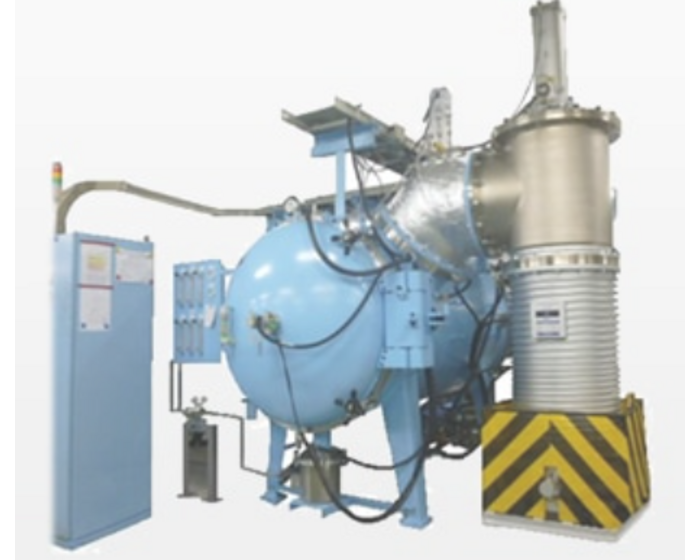
DOWA Thermotech’s Metal Hot Zone Vacuum Furnace eliminates carbon contamination from graphite structures and enables ultra-high-purity sintering and precision brazing ideal for fine ceramics, special metals, and advanced materials processing. Capable of reaching 2200°C in vacuum and 1800°C in hydrogen atmosphere, this furnace offers stable, uniform heating, programmable controls, and long-term durability, making it perfect for mass production of non-oxide ceramics and precision brazed parts. ■ Key Features: - High Temperature Capability: Up to 2200°C (vacuum), 1800°C (hydrogen) - No Carbon Contamination: Metal hot zone prevents graphite-related impurities - Uniform Heating: Precise temperature control ensures stable sintering and brazing quality - Fully Automated Control: Enables complex heat cycles with high reproducibility - High Durability: Long service life with minimal deformation of hot zone parts ■ Specifications: - Model Sizes: - Model 1: 200×500×200 mm - Model 2: 300×300×300 mm - Model 3: 300×600×300 mm - Processing Capacity: 100 - 400 kg (depending on model) - Atmospheres Supported: Vacuum / Hydrogen / Humid environments ■ Application Examples: - Fine Ceramics Sintering: High-purity processing for non-oxide ceramics - Precision Brazing: Titanium alloy, stainless steel, and complex multi-material joints - High-Temp Special Materials: Nickel-based alloys, hard metals, and technical components requiring clean atmospheres ■ Why Choose This Furnace? - Avoids carbon contamination = better product purity - Enables mass production of precision ceramics and parts - Reliable for special material heat treatment requiring exact temperature control - Ideal for advanced materials industries (e.g., electronics, aerospace, semiconductors) DOWA’s Metal Hot Zone Vacuum Furnace provides the clean processing environment, thermal precision, and automation needed for next-generation high-tech manufacturing. ※For more details please download the PDF or contact us. #VacuumFurnace #MetalHotZone #FineCeramicsSintering #PrecisionBrazing #HighTempFurnace #AdvancedMaterials #HeatTreatmentThailand #NonOxideCeramics #HighPurityProcessing #OEM

CP Meter|Real-Time Carbon Measurement in Atmosphere Gas for Heat Treatment Precision

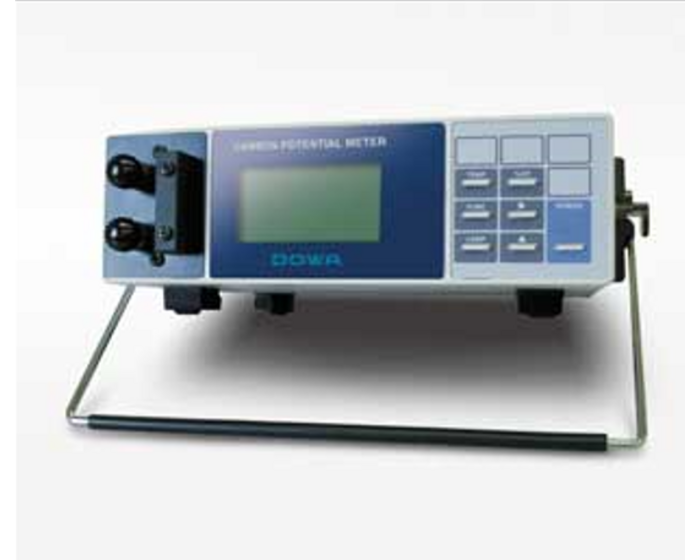
DOWA Thermotech’s CP Meter offers high-precision, real-time measurement of carbon concentration in atmosphere gas, essential for controlling carburizing, quenching, and tempering processes. Designed for on-site use, it helps maintain stable product quality and improve process efficiency in heat treatment operations. The CP Meter is equipped with an intuitive digital display, user-friendly interface, and durable construction for long-term, continuous operation even in harsh industrial environments. ■ Key Features: - Direct Carbon Measurement: Enables precise process control - Real-Time Monitoring: Instant data feedback for quick adjustments - Easy to Operate: Intuitive UI suitable for all levels of operators - Heavy-Duty Design: Withstands continuous use in heat treatment facilities - Multi-Process Compatibility: Works with carburizing, quenching, tempering, and more ■ Technical Specifications: - Target Measurement: Carbon concentration in atmosphere gas - Supported Processes: Carburizing / Quenching / Tempering - Display Method: Digital real-time display - Installation: Designed for factory floor environments, 24/7 usage ■ Example Use Cases: - Carburizing Process Control: Ensures accurate carbon potential (CP) for surface hardening - Quenching Quality Improvement: Reduces variation with reliable carbon atmosphere control - Efficiency Boost: On-site measurement reduces downtime and manual checks ■ Why Choose the CP Meter? - Ensures consistent carbon control for high-quality results - Reduces process variation and human error - Ideal for smart factories aiming for heat treatment automation - Easily integrated into existing heat treatment lines The CP Meter is your on-site solution for achieving accurate, repeatable heat treatment, improving both quality control and productivity. ※For more details please download the PDF or contact us. #CPMeter #CarbonPotentialMeter #HeatTreatmentGasAnalyzer #RealTimeMeasurement #CarburizingControl #QuenchingMonitoring #FactoryInstrumentation #ProcessControlTool #OEM

Vacuum Cleaning Machine|99% Cleaning Fluid Reuse for Cost-Efficient Precision Cleaning

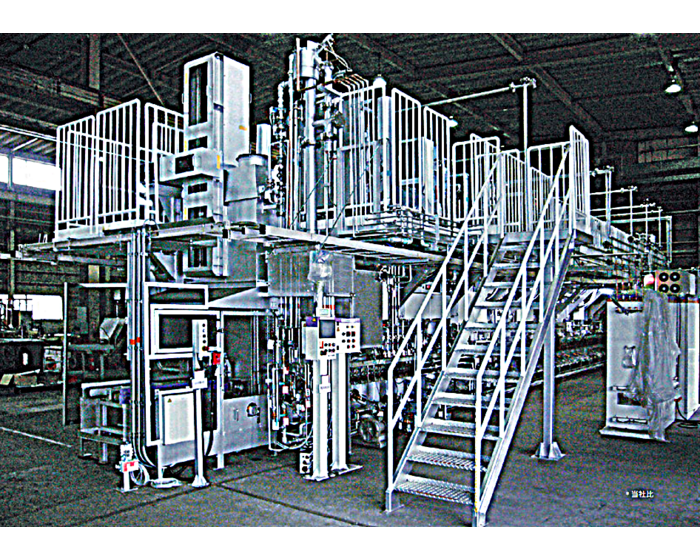
DOWA Thermotech’s Vacuum Cleaning Machine, built in India to Japanese quality standards, enables over 99% cleaning fluid reuse through a built-in regeneration unit—dramatically reducing running costs while delivering high-precision cleaning for complex metal parts. Combining vapor and endless shower cleaning with indirect heating for safety, this machine is ideal for automotive, precision machining, and mold cleaning applications. It balances cost efficiency, cleaning performance, and factory safety in one compact solution. ■ Key Features: - 99% Fluid Reuse: Built-in regeneration system cuts solvent waste and cost - Dual Cleaning Method: Vapor + endless shower for complex shapes - Safety-First Design: Indirect heating avoids combustion risks - Durable & Simple: Low-maintenance structure with high reliability - Made in India: Cost-effective manufacturing with Japanese-level quality control ■ Technical Specifications: External Dimensions (mm): - Type 80: 3650H × 2600W × 8240L - Type 100: 4140H × 2810W × 8810L Effective Cleaning Area (mm): - Type 80: 600H × 660W × 1230L - Type 100: 650H × 760W × 1230L Performance: - Max Load: 550 kg (Type 80), 720 kg (Type 100) - Cycle Time: 27 ± 3 minutes - Regeneration Capacity: 300 L/hour ■ Application Examples: - Automotive: Engine/transmission part cleaning with fine precision - Precision Machining: Bearings, gears, and high-tolerance parts - Molds: Cleaning of oil, debris, and residues in complex geometries ■ Why Choose This Machine? - Drastically lower running costs via 99% solvent reuse - Supports complex-shaped parts with uniform, high-grade cleaning - Designed for safety and long-term operation - Ideal for facilities seeking cost control and eco-efficiency The Vacuum Cleaning Machine from DOWA Thermotech is the go-to solution for factories seeking high-precision cleaning without sacrificing operational savings or safety. ※For more details please download the PDF or contact us. #VacuumCleaningMachine #PrecisionPartsCleaning #SolventReuse #CleaningAutomation #AutomotivePartsCleaning #CostEfficientCleaning #EcoFriendlyFactory #HighPrecisionCleaning #OEM

Multi-Atmosphere Vacuum Furnace|High-Temperature Debinding & Sintering in a Single Batch

DOWA Thermotech’s High-Temperature Vacuum Debinding and Sintering Furnace performs debinding, pre-sintering, and main sintering in one continuous batch under vacuum, hydrogen, or inert gas atmospheres ideal for advanced powder metallurgy and ceramics applications. This system ensures uniform heat distribution, precise atmosphere control, and forced cooling, reducing cycle time while maintaining high precision and stability. Built with safety features for hydrogen use, it’s designed for multi-material processing and operational efficiency. ■ Key Features: - Integrated Processing: Combines debinding to final sintering in one furnace - Multi-Atmosphere Compatibility: Vacuum / Hydrogen / Argon / Nitrogen - Uniform Heating: 2-side / 4-side / 6-side heating zones available - Forced Cooling: High-speed blower with heat exchanger for faster cycle time - Safety First: Hydrogen-safe design with pressure and leak control - Precision Control: Partial pressure regulation for exact vacuum levels ■ Technical Specs: - Max Temperature: - Vacuum: up to 2200°C - Hydrogen: up to 1800°C - Heating Elements: Compatible with metal or graphite hot zones - Supported Materials: - High-speed steel powders - Cemented carbide (tungsten-based) - Ultra-high alloy steels - Structural fine ceramics ■ Applications: - Powder Metallurgy: MIM/CIM part sintering - Ceramics Manufacturing: Structural and technical ceramics firing - Tooling Industry: High-hardness steel and carbide tool sintering ■ Why Choose This Furnace? - Reduces processing steps with full integration - Enables flexible, multi-material processing - Offers faster cycles with forced cooling - Supports clean, controlled environments for advanced materials - Designed for safe hydrogen operation The Multi-Atmosphere Vacuum Furnace by DOWA Thermotech delivers high-quality sintering with precision control, energy efficiency, and safety the ideal solution for modern materials processing and powder metallurgy. ※For more details please download the PDF or contact us. #VacuumSinteringFurnace #DebindingSintering #MultiAtmosphereFurnace #HydrogenHeatTreatment #PowderMetallurgy #MIM #CIM #CeramicSintering #ToolSteelHeatTreatment #OEM

Horizontal Plasma Nitriding Furnace|60Pa Vacuum & Uniform Surface Hardening for Automotive & Precision Parts

DOWA Thermotech’s Horizontal Plasma Nitriding Furnace provides stable, high-precision nitriding in a low vacuum environment (below 60Pa) ideal for enhancing wear resistance and strength in automotive, aerospace, and precision-machined components. With uniform plasma discharge, wide temperature flexibility, and large part compatibility, this furnace supports durable and consistent nitriding for mass production, while its horizontal design minimizes installation space and enhances factory layout efficiency. ■ Key Features: - High-Precision Plasma Nitriding: Uniform surface hardening with low temperature variation - Low Vacuum Operation: Stable nitriding below 60Pa (0.5 Torr) - Wide Temperature Range: 350°C to 570°C (up to 600°C) - Large Part Compatibility: Max part size Φ900×1500mm, load up to 1,000kg - Space-Saving: Horizontal design optimizes factory footprint - High Durability: Engineered for long-term operation and reliability ■ Technical Specifications: - Vacuum Level: Below 60Pa - Processing Temp: 350 - 570°C (max 600°C) - Heating Dimensions: - DPN-5065: Φ500×650mm / Max load: 600kg - DPN-9150: Φ900×1500mm / Max load: 1,000kg - Installation Dimensions: - DPN-5065: W2300×L5350×H3714mm - DPN-9150: W3080×L4555×H5100mm ■ Applications: - Automotive: Nitriding for gears, shafts, bearings - Precision Components: Surface treatment for wear resistance and durability - Aerospace: Hardening of lightweight, high-stress metal parts ■ Why Choose This Furnace? - Enables controlled, repeatable nitriding quality - Supports large and complex parts - Reduces installation footprint with horizontal design - Delivers long-term, cost-effective performance DOWA’s Horizontal Plasma Nitriding Furnace is engineered for manufacturers requiring precision surface hardening with low process variation, high durability, and large part handling capability. ※For more details please download the PDF or contact us. #PlasmaNitridingFurnace #SurfaceHardening #VacuumNitriding #AutomotivePartsTreatment #PrecisionNitriding #WearResistance #LowVacuumHeatTreatment #DOWATechnology #OEM

Vertical Plasma Nitriding Furnace|47% Faster Heating & Cooling for Uniform Surface Hardening

DOWA Thermotech’s Vertical Plasma Nitriding Furnace delivers 47% improved heating and cooling efficiency, with precise temperature zone control for uniform nitriding ideal for complex-shaped automotive, aerospace, and precision parts. This furnace minimizes arcing by suppressing glow discharge from room temperature and improves energy savings by 20% with reflector-based insulation. Its vertical design supports mixed processing of parts with varied shapes and weights. ■ Key Features: - Arc Suppression: Stable plasma discharge without premature glow from room temperature - Uniform Processing: Multi-zone temperature control for even surface hardening - Efficiency Boost: 47% improvement in thermal processing vs. previous models - Energy Saving: Reflective insulation cuts energy use by approx. 20% - Flexible Loading: Supports simultaneous treatment of varied part shapes - Rapid Cooling: In-furnace fan + heat exchanger for faster cycle time ■ Technical Specifications: - Vacuum Level: <60Pa (0.5 Torr) - Temperature Range: 350 - 570°C (max 600°C) - Effective Heating Sizes: - DPN-5065: Φ500 × H650 mm - DPN-9150: Φ900 × H1500 mm - DPN-13200: Φ1300 × H2000 mm - Max Load: 600 - 2000 kg (model dependent) ■ Applications: - Automotive Parts: Gears, shafts, bearings requiring surface wear resistance - Aerospace: Precision nitriding for lightweight and complex components - Precision Machinery: Uniform hardening for high-tolerance metal parts ■ Why Choose This Furnace? - Reduces processing time and energy consumption - Ensures uniform treatment even for complex geometries - Offers stable, arc-free plasma starting at low temperatures - Ideal for multi-part, multi-shape processing in one cycle The Vertical Plasma Nitriding Furnace is the smart choice for facilities aiming to combine high thermal performance, precision nitriding, and energy-efficient operation. ※For more details please download the PDF or contact us. #VerticalPlasmaNitriding #SurfaceHardeningFurnace #EnergyEfficientHeatTreatment #PrecisionNitriding #AutomotiveComponentTreatment #PlasmaNitridingSystem #HighEfficiencyFurnace #OEM

Industrial Furnaces|Fully Customizable High-Performance Heat Treatment Systems

DOWA Thermotech’s customizable industrial furnaces are engineered to handle carburizing, quenching, tempering, sintering, brazing, and more with flexibility, energy efficiency, and environmental compliance built in. Tailored for diverse industries, these furnaces solve key factory challenges such as reducing cycle time, cutting energy use, and maximizing layout efficiency. With options in heating methods, control systems, structure, and atmosphere, DOWA furnaces offer fully integrated solutions that align with your specific production requirements. ■ Key Features: - Wide Application Range: Furnaces for carburizing, nitriding, sintering, brazing, and more - Energy Efficient: Insulated, high-efficiency heating systems reduce operating cost - Eco-Friendly: CO₂-reducing designs, low-NOx burners, and clean gas compatibility - Shorter Processing Time: Optimized for fast, uniform heating and cooling - Custom-Built: Tailored design for part size, heating source, and layout constraints - Space-Saving Design: Ideal for retrofits or limited-floor-space factories ■ Main Applications: - Automotive: Engine components, transmission gears, drive shafts - Aerospace: Nitriding/sintering for lightweight, high-strength parts - Precision Machinery: Brazing and hardening of high-tolerance metal parts - Tooling: Heat treatment of carbide, HSS, and wear-resistant tools ■ Technical Innovations: - High-Efficiency Burners: Regenerative gas burners minimize gas use - Automation Ready: Supports automated handling and integration with robotic systems - Advanced Control: Pressure/temp control systems support complex thermal cycles ■ Why Choose DOWA Industrial Furnaces? - Custom solutions for any heat treatment application - Built for productivity with short cycles and energy savings - Designed for compliance with today’s environmental standards - Supported by global manufacturing & engineering expertise DOWA’s industrial furnaces are trusted across industries for precise, efficient, and scalable heat treatment solutions tailored to modern manufacturing needs. ※For more details please download the PDF or contact us. #IndustrialFurnace #CustomHeatTreatment #CarburizingFurnace #BrazingSystem #NitridingFurnace #SinteringFurnace #PrecisionHeatTreatment #DOWAEngineering #OEM

CONTACT

Inquiry

This is the inquiry form for DOWA THERMOTECH (THAILAND) CO., LTD.. Please enter your inquiry.

This service is intended to provide consultation and opinion requests for processing projects.
Please do not use this information for self-promotion or sales activities.
If we receive a complaint from a recipient about the contents of the transmission, we may take measures such as forcibly stopping the use of the service.

Inquiry Type*Required
Message*Required
Attach file

Only image (jpeg, jpg, gif, png, pdf) and compressed file (zip, lzh) extensions are valid. Maximum file size 10MB