SERVICE
Production Goods & Services
8hits
Narrow by category
What is Plastic? A Guide to Injection Molding Materials | Types, Properties & Selection Tips
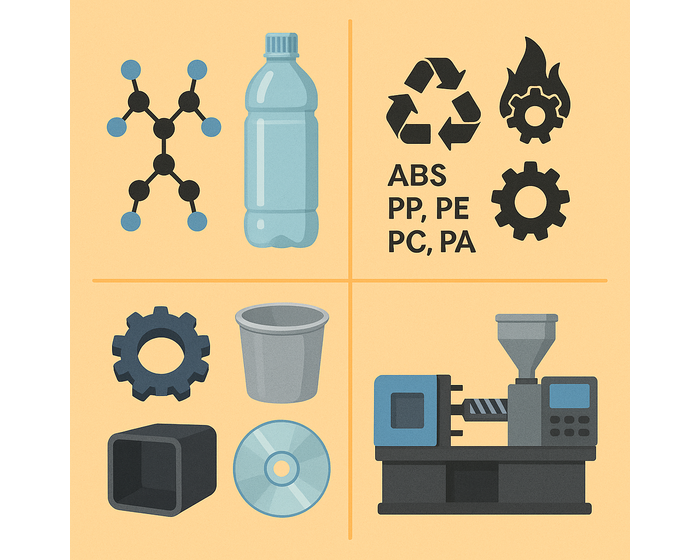
■ Summary: Plastics are versatile materials used in injection molding across Thai industries. Understanding types, properties, and selection criteria can help manufacturers reduce defects and improve efficiency. 1. Definition and Structure of Plastics Plastics are synthetic materials primarily composed of polymers—long chains of repeating monomers—that soften when heated and harden when cooled. Their structure offers unique advantages like light weight, durability, and chemical resistance, making them essential in replacing metals or wood in industrial applications. 2. Classification: Thermoplastics vs Thermosets - Thermoplastics: Can be repeatedly melted and reshaped. Widely used in injection molding. Examples include ABS, PP, PE, PC, and PA. - Thermosets: Permanently harden after molding. Known for heat resistance and mechanical strength. Common types include epoxy and phenolic resins. 3. Common Plastics Used in Injection Molding - ABS (Acrylonitrile Butadiene Styrene): Strong and impact-resistant. Ideal for automotive components and electronic housings. - PP (Polypropylene): Lightweight and chemical-resistant. Used in packaging and medical devices. - PA (Polyamide/Nylon): High tensile strength and wear resistance. Suitable for gears and mechanical parts. - PC (Polycarbonate): Transparent with excellent impact strength. Common in optical lenses and precision instruments. 4. Key Factors When Selecting Plastic Materials Manufacturers should assess: - Mechanical properties: Strength, impact resistance - Thermal properties: Heat deflection, melting point - Molding behavior: Flow rate, shrinkage, cycle time - Cost-effectiveness: Material yield and tooling - Environmental fit: UV resistance, chemical compatibility 5. Applications in Thailand’s Manufacturing Industry Thailand’s manufacturing sector relies heavily on plastic parts, particularly in: - Automotive assembly - Electronics and appliance manufacturing - Medical device production Its strategic location, skilled workforce, and competitive costs make Thailand a vital node in global plastic component supply chains. Key production challenges include: - Material consistency and traceability - Reducing molding scrap - Adapting to flexible, high-mix production demands 6. Recommended: Injection Molding Machines from Muto (Thailand) Muto (Thailand) provides advanced injection molding machines with precise control of pressure and temperature, reducing deformation and improving product quality. These machines are ideal for producing high-precision parts used in medical and electronic industries. With localized technical support and responsive after-sales service, Muto ensures efficient and reliable operations across Thai factories. 📌 Download the detailed PDF or contact us directly for technical consultation. #InjectionMolding #PlasticMaterials #Thermoplastics #ThailandManufacturing #ABSPlastic #NylonParts #EngineeringPlastics #PrecisionMolding #PlasticInjectionMachines #OEM
Techniques for Accurate Mold Design | Reduce Defects in Plastic Injection Molding
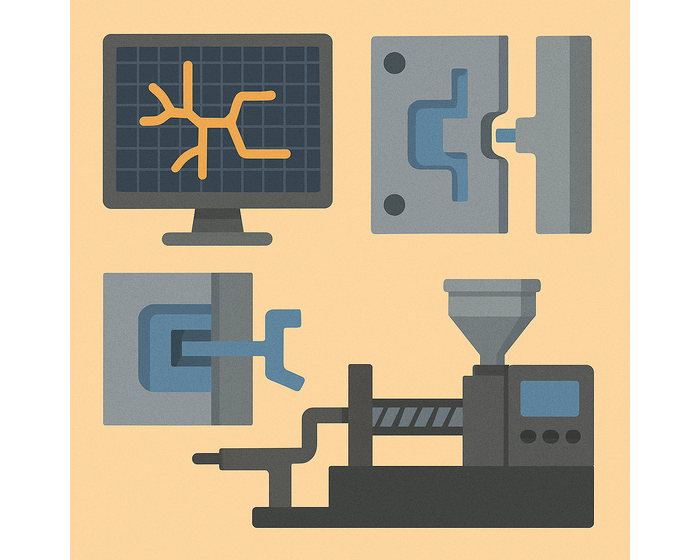
■ Summary: Accurate mold design is key to improving product quality and reducing defects in plastic injection molding. Learn the essential techniques to optimize molds and minimize production issues. 1. Importance of Mold Design in Injection Molding The mold is the heart of the injection molding process. It determines the final product’s shape, dimensions, surface finish, and accuracy. Minor design flaws can result in warping, short shots, dimensional errors, and costly defects. Starting with a well-planned mold design helps stabilize the production process, minimize rework, and improve efficiency across Thai manufacturing environments. 2. Key Factors Influencing Mold Accuracy To achieve high-precision molds, several engineering aspects must be addressed: - Flow Analysis Simulates plastic flow to optimize gate placement, weld line locations, and air traps. - Machining Tolerances Precision tooling directly impacts part uniformity and final dimensions. - Cooling System Design Balanced cooling improves cycle times and reduces shrinkage or warping. - Mold Material Selection High-quality steel ensures long-term dimensional stability and durability. 3. Mold Design Techniques to Reduce Defects Implement these design practices to cut waste and enhance product consistency: - Venting Design Prevents trapped air, which causes short shots or burn marks. - Gate Placement Optimization Ensures uniform resin flow and minimizes flow marks and weld lines. - Ejector System Efficiency Smooth ejection prevents surface damage and part deformation. - Cavity Sizing for Shrinkage Adjusting for material-specific shrinkage ensures dimensional accuracy. 4. Common Defects and Prevention Tips - Dimensional Inaccuracy: Use verified shrinkage data from material suppliers or trial results. - Weld Lines: Modify gate location or resin flow paths to eliminate weak points. - Short Shots: Improve venting and calibrate injection pressure and speed. - Warping: Design balanced cooling channels and select resins with stable thermal behavior. Addressing these issues during mold design helps reduce trial iterations and improve yield rates. 5. Why Choose Injection Molding Machines from Muto (Thailand) Muto (Thailand) delivers injection molding machines engineered for high-precision applications. With advanced control over pressure, speed, and temperature, they are ideal for complex molds and tight-tolerance parts. Combined with robust local technical support, Muto ensures Thai manufacturers can enhance product quality, reduce production defects, and improve long-term cost efficiency. 📌 Download the full PDF for more details or contact us for a consultation. #MoldDesign #InjectionMolding #PlasticDefects #PrecisionMolding #ThailandIndustry #FlowAnalysis #InjectionMachine #OEM #MoldCooling #ShortShotPrevention
Integrated Mold Manufacturing Service|Reduce Lead Time to 3 Weeks with Japanese Precision
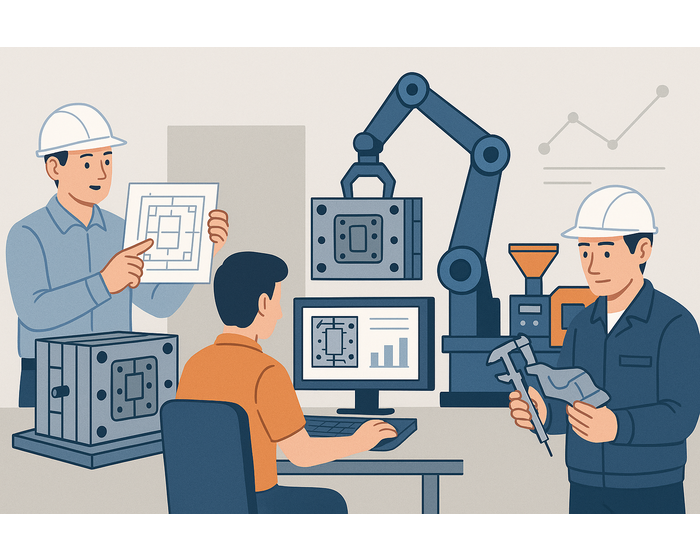
Boost efficiency, reduce production delays, and lower total costs with Muto (Thailand)’s integrated mold manufacturing service, delivering high-precision molds with real-time quality control and Japanese manufacturing standards. 1. What is Integrated Mold Manufacturing? In Thailand’s fast-paced manufacturing sectors—such as automotive, electronics, packaging, and consumer goods—molds are the foundation of production. Mold manufacturing includes multiple complex processes: CAD/CAM design, CNC machining, heat treatment, assembly, and QC testing. An integrated mold manufacturing service consolidates all these processes under one roof. Instead of coordinating with multiple suppliers, Thai manufacturers receive end-to-end support from a single, reliable partner, minimising cost, lead time, and risk. 2. Challenges of Working with Multiple Vendors Outsourcing different stages to different vendors often leads to: - Miscommunication between suppliers is causing design errors - No clear accountability when quality issues arise - Higher costs from logistics, delays, and rework - Extended lead times (often 6–8 weeks or longer) These inefficiencies directly impact your competitiveness and delivery capability. 3. Benefits of Muto (Thailand)’s Integrated Mold Service Muto (Thailand) provides a complete mold solution—covering design, manufacturing, QC, and delivery—all done in-house. Our strengths include: - Real-time quality control ensuring precise and stable mold performance - Lead time reduced to 3–4 weeks, compared to industry averages of 6–8 weeks - Fast design changes thanks to in-house collaboration between design and production teams - Japanese manufacturing standards proven in global automotive and electronics industries 4. Why Choose Integrated Services? Choosing a one-stop mold solution allows Thai manufacturers to: - Focus on their core production, not vendor management - Reduce total manufacturing costs through fewer revisions and delays - Ensure consistent quality and faster support with one accountable provider This translates to better efficiency, shorter time-to-market, and improved product consistency. 5. Why Partner with Muto (Thailand)? With over 20 years of experience, Muto (Thailand) brings together Japanese precision and local expertise. We offer: - High-precision molds with minimal rework - Accelerated product development cycles - Sustainable cost savings and long-term product quality If your business requires reliable, fast, and precise mold manufacturing, Muto (Thailand) is the partner to trust. 📥 Download our brochure or contact us for a consultation today. #MoldManufacturing #IntegratedMoldService #ThaiManufacturing #PrecisionMold #ReduceLeadTime #JapaneseTechnology #MutoThailand #AutomotiveTooling #OneStopMoldSolution #OEM

How to Reduce Scrap in Plastic Injection Molding|Cut Defect Rate with Mold Optimization
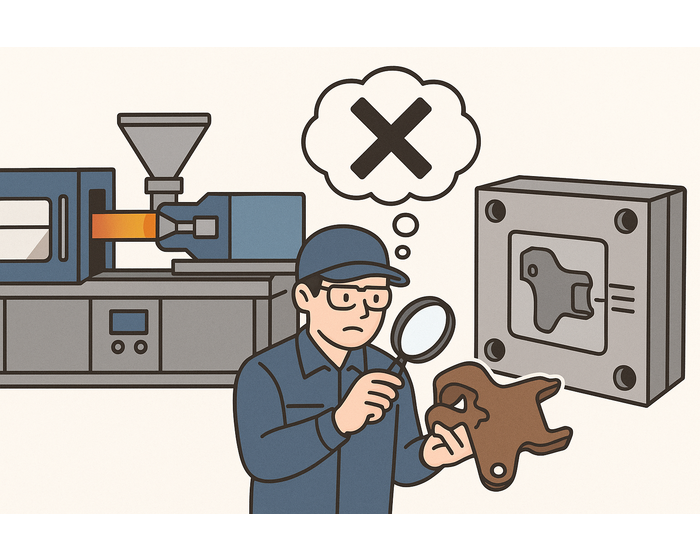
Improving product quality and cutting production costs starts with scrap reduction. This article explores practical ways to minimize defects in plastic injection molding by controlling key variables and improving mold design—alongside expert support from Muto (Thailand). 1. Common Causes of Scrap in Plastic Injection Molding Scrap—defective or unusable molded parts—directly affects your bottom line. Typical defects include warping, flash, short shots, voids, and burn marks. These issues often stem from: - Improper temperature settings during injection - Mold designs that don’t suit the material or part geometry - Inconsistent injection speed or pressure - Mold wear and reduced precision over time - Moisture in plastic pellets or unstable material quality Understanding these root causes is essential for sustainable scrap reduction. 2. Quality Control Strategies to Minimize Scrap Effective scrap reduction depends on controlling every part of the injection process. Key strategies include: - Accurate machine setup: Fine-tuning temperature, pressure, and injection speed for each material - Advanced mold design: Using CAD/CAE and mold flow simulations to eliminate weak points - In-process QC: Monitoring temperature and pressure in real time via sensors - Preventive maintenance: Ensuring the mold remains precise through scheduled upkeep - Proper material handling: Thorough drying of plastic pellets to avoid moisture-related defects 3. How Mold Design Impacts Defect Rates The mold itself is one of the biggest variables in scrap generation. Poor design or wear can lead to imbalances, uneven filling, and defect-prone parts. Key mold features that reduce scrap: - Balanced material flow in the cavity - Venting systems to eliminate trapped gas and burn marks - Strong structural design to withstand high injection pressures - Polished surfaces to ensure smooth part release Choosing high-precision, durable molds from the start is a long-term investment in quality and cost efficiency. 4. Muto (Thailand)’s Solutions to Help You Reduce Scrap With over 20 years of experience, Muto (Thailand) specializes in helping manufacturers reduce defect rates through mold engineering excellence: - CAD/CAM mold design with flow simulation for optimal cavity performance - Precision CNC machining using Japanese technology - Step-by-step QC at every phase of production - Technical consulting for machine settings tailored to each mold - Long-term maintenance plans to extend mold life and performance 5. Why Partner with Muto (Thailand)? Muto (Thailand) is more than a toolmaker—we are your technical partner in solving real-world manufacturing problems. - We identify root causes of defects on your line - We improve mold design and injection process settings - We offer post-delivery follow-up, including performance feedback and support Our clients consistently see lower scrap rates, faster production cycles, and improved part quality. 📥 Download our brochure or contact us for a technical consultation today. #InjectionMolding #ScrapReduction #MoldDesign #PlasticManufacturing #MutoThailand #ReduceDefects #QCInMolding #PreventiveMaintenance #PrecisionMold #OEMSupport
Plastic Injection Molding | Principles from Mold Design to High-Precision Production
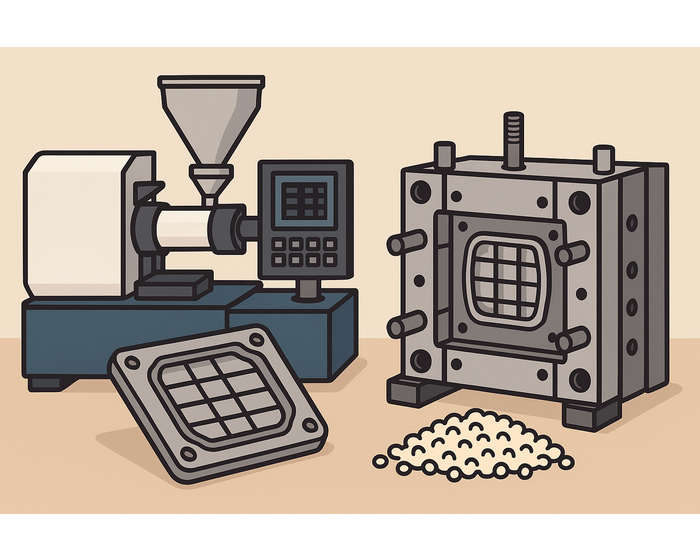
Learn the core principles of plastic injection molding — from professional mold design and material selection to production control — and discover why Muto(Thailand) is trusted for precision plastic parts. 1. Overview of the Injection Molding Process Plastic injection molding melts plastic pellets and injects them into a mold under high pressure. Once cooled, the material solidifies into complex shapes with high accuracy and repeatability. This method supports mass production in automotive, electronics, and consumer industries while ensuring cost efficiency. 2. Mold Design: The Foundation of Accuracy A well-designed mold determines the quality, consistency, and functionality of molded parts. Key considerations include: - Mold Material: Steel for high-volume, aluminum for prototyping - Flow Optimisation: Balanced structure for smooth material flow - Gate & Vent Placement: Prevents air traps and weld lines - Cooling System: Reduces cycle time and extends mold life *Mold Flow Analysis- using simulation software allows early detection of potential defects and enhances mold performance before manufacturing begins. 3. Choosing the Right Plastic Material Material selection depends on: - Mechanical Strength: Impact resistance, flexibility - Flow Characteristics: Ensures full cavity filling - Chemical Resistance: Withstands environmental exposure - Cost & Availability: Influences scalability and feasibility Common materials include ABS, PC, PP for thermoplastics, and UF, MF for thermosets. 4. Machine Settings & Process Optimization Precise machine setup ensures consistency and quality in every cycle: - Barrel and mold temperatures - Injection pressure and speed - Cooling time and holding pressure - Real-time process adjustments Defect prevention and dimensional control are supported by CMM (Coordinate Measuring Machines), sensors, and X-ray inspection. 5. Mold Maintenance for Long-Term Reliability Molds are high-value assets. Proper maintenance includes: - Cleaning after each production cycle - Lubricating moving parts - Scheduled wear inspection and repairs - Storing in humidity-controlled environments Digital mold tracking systems streamline preventive maintenance and reduce unplanned downtime. 6. Pros & Cons of Plastic Injection Molding Advantages: - Cost-effective for large-scale production - High dimensional precision and repeatability - Low material waste and fast production speed Challenges: - High initial mold fabrication cost - Longer development time for new designs - Less cost-effective for low-volume or prototype runs 7. Why Partner with Muto(Thailand)? Muto(Thailand) delivers complete, precision-focused injection molding services with strengths such as: - CAD/CAM-integrated mold development - High-precision molding machines - Complete in-house process control - Industry experience in automotive and electronics - Expert engineering support for fast solutions > ✅ Looking for scalable, high-precision plastic parts? Trust Muto(Thailand) as your manufacturing partner. #PlasticInjectionMolding #MoldDesign #InjectionMoldingThailand #PrecisionMolding #OEMServices #ManufacturingThailand #CMMInspection #ThermoplasticParts #AutomotivePlastics #MutoThailand
One-Stop Manufacturing | Faster Delivery & Total Quality Control in One Integrated Factory
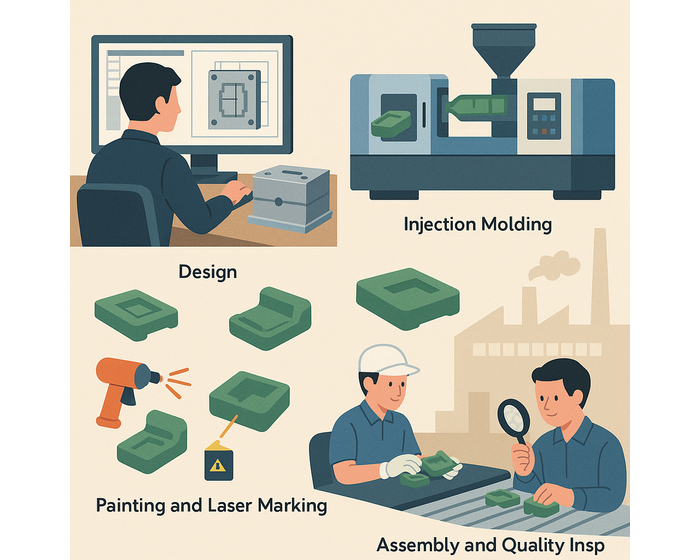
Muto(Thailand)’s one-stop manufacturing system consolidates mold making, injection molding, painting, assembly, and inspection — reducing lead time and ensuring consistent quality across all stages of production. 1. What is One-Stop Manufacturing? At Muto(Thailand), one-stop manufacturing means all core processes are managed in-house, including: - Mold & part design - Plastic injection molding - Painting & surface finishing - Laser marking and printing - Component assembly - Final quality inspection By eliminating external dependencies, Muto ensures better synchronization, shorter turnaround, and higher product consistency. 2. Faster Lead Time with Integrated Operations Compared to traditional subcontracting models, Muto’s internal process flow offers: - Instant communication between departments - Immediate corrections without external delays - Zero transport time between production steps - Rapid prototyping and faster mass production ramp-up This makes it ideal for high-speed production environments and urgent orders. 3. Total Quality Control and Full Traceability Muto maintains rigorous in-house inspection protocols: - In-process quality checks across all phases - Digital traceability from raw materials to final product - Uniform standards in every production cell - High-precision testing using certified equipment This minimises defect rates and supports high-spec applications like automotive and electronics. 4. High Flexibility for Changing Demands Integrated control enables quick adaptation to customer needs: - Mold adjustments for updated designs - Color and label changes done in-house - Flexible assembly support for various configurations - Fast sample creation and iteration This responsiveness is essential for competitive industries with short product lifecycles. 5. Lower Total Production Costs While initial setup investment may be higher, long-term benefits include: - No inter-facility transport costs - Less reliance on outside vendors - Fewer errors from miscommunication - Better resource utilization and lean scheduling Customers benefit from stable pricing, better ROI, and reduced operational risks. 6. Why Muto(Thailand) is Your Ideal Partner Muto(Thailand) specializes in fully integrated plastic part manufacturing — trusted by top-tier automotive and electronics brands: - Expert mold design using CAD/CAM/CAE - Internal control of molding, painting, and marking - End-to-end assembly and QC under one roof - ISO-compliant quality assurance systems - Veteran engineers supporting your project from start to finish > ✅ Looking for faster delivery, stronger quality control, and full-service production? #OneStopManufacturing #PlasticInjection #IntegratedProduction #MoldDesign #IndustrialManufacturing #OEMSupplier #ManufacturingThailand #AssemblyService #QualityControl #MutoThailand
Common Problems in Plastic Injection Molding | How to Analyze and Solve Them
Plastic injection moulding defects such as warping, short shot, and flash often lead to higher costs and wasted production time. This article explains how to analyse and solve these problems systematically, with insights from Muto (Thailand), a one-stop provider for injection moulding services. ■ Injection Molding is More Than Just “Injecting Plastic” While plastic injection moulding (Plastic Injection Moulding) may appear straightforward, the real complexity lies in the details. Small errors in mould design, injection parameters, cooling system, or material selection can create major defects. The most common issues include: - Warping: Part deformation after cooling - Short Shot: Incomplete filling of the mould - Flash: Excess plastic along parting lines Based on Muto (Thailand)’s experience, here are the most frequent problems, their causes, and effective countermeasures. 1. Warping – Deformation After Cooling Symptoms: Parts become bent, twisted, or dimensionally unstable. > Root Causes: - Inconsistent wall thickness - Uneven mould temperature - Poor cooling distribution - Variations in material shrinkage > Analysis Methods: - 3D measurement comparison - Mould flow simulation - Coolant flow rate inspection > Solutions: - Redesign mould for balanced cooling - Select materials with lower shrinkage - Use zone-based mould temperature control - Adjust packing pressure and cooling time 2. Short Shot – Incomplete Filling Symptoms: Parts are not completely filled, leaving voids or missing sections. > Root Causes: - Insufficient injection pressure - High flow resistance in runners or gates - The material is cooling too quickly - Poor venting is causing air traps > Analysis Methods: - Inspect repeated short shot locations - Use CAE software for flow simulation - Check flow balance in the runner system > Solutions: - Increase injection speed and pressure - Resize gate and runner dimensions - Improve mould venting design - Optimise barrel and mould temperature 3. Flash – Excess Plastic Along Parting Lines Symptoms: Thin, unwanted plastic forms along mould parting lines. > Root Causes: - Mould wear or poor alignment - Insufficient clamping force - Over-pressurisation during injection - Contaminants between mould surfaces > Analysis Methods: - Inspect mould parting line - Check mould flatness and surface conditions - Monitor injection pressure at flash-prone areas > Solutions: - Repair and maintain mould regularly - Adjust clamping force to match injection load - Lower injection pressure and holding time - Clean mould surfaces before each run 4. Preventing Defects Through Precision and Control Rather than fixing problems after they occur, Muto (Thailand) emphasises prevention at the design stage: - Mould design with flow simulation analysis - Accurate parameter setting by material type - High-precision injection moulding machines - Quality inspection at every stage of production ■ Why Choose Muto (Thailand) for Injection Moulding? Muto (Thailand) provides end-to-end plastic injection solutions, covering mould design, fabrication, injection, finishing, assembly, and inspection. Our key strengths include: - Advanced simulation and measurement technologies - Engineering expertise in both moulds and materials - In-house quality control to reduce defects - Flexible support for both prototype and mass production 👉 If your factory is facing defects or inconsistencies in plastic injection moulding, Muto (Thailand) can help analyse, solve, and optimise your process for better quality and efficiency. For more information, please [contact Muto (Thailand)](INSERT_LINK_HERE) or download our detailed service PDF. #PlasticInjectionMolding #InjectionMolding #PlasticParts #MoldDesign #ManufacturingSolutions #OEM #MutoThailand #IndustrialParts
Preventive Maintenance for Molds | Extend Service Life and Cut Long-Term Costs
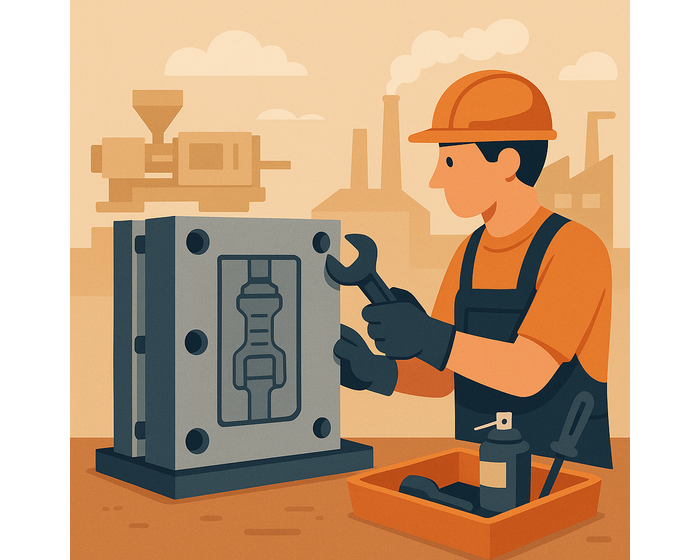
Preventive Maintenance (PM) for injection moulds reduces downtime, extends mold lifespan, improves product quality, and lowers long-term repair costs. This structured approach ensures factories maintain consistent production efficiency and customer satisfaction. ■ Introduction: Molds Are the Heart of Injection Molding In plastic injection moulding (Plastic Injection Moulding), the mould is the most critical asset. Even advanced injection machines cannot compensate for a mould that suffers from wear, contamination, or cracks. Factories relying only on Corrective Maintenance (repair after failure) face: - Higher unexpected downtime - Delayed deliveries - Higher repair expenses By implementing Preventive Maintenance (PM), factories can extend mold service life, reduce scrap, and control costs effectively. 1. Problems from Inadequate Mould Maintenance 1.1 Defective Parts Worn or dirty moulds cause: - Flash (excess plastic) - Short Shot (incomplete filling) - Sink Marks (surface depressions) - Dimensional errors 1.2 Unexpected Downtime Cracks, broken ejectors, or stuck parts may force sudden production stops. 1.3 High Repair Costs Unplanned emergency repairs are far more expensive than scheduled preventive checkups. 2. Preventive Maintenance Guidelines A structured PM program should include daily, periodic, and overhaul-level inspections. 2.1 Daily Checks - Clean mould surfaces before/after use - Inspect for cracks and abnormal wear - Check cooling channels and vents for blockages 2.2 Periodic Maintenance (Weekly/Monthly) - Inspect moving parts (ejector pins, slides, lifters) - Clean gates and runners from buildup - Descale cooling channels to prevent flow restrictions 2.3 Full Overhaul (Planned Shutdowns) - Disassemble the mould for deep inspection - Replace worn-out parts - Verify parting line alignment and clamp pressure balance 👉 Using maintenance logs, checklists, and history tracking ensures recurring issues are addressed systematically. 3. Key Benefits of Preventive Maintenance - ✅ Extended mould lifespan – reduces replacement frequency - ✅ Reduced downtime – ensures continuous production - ✅ Improved part quality – lower scrap and reject rate - ✅ Lower long-term maintenance costs – planned vs. emergency repairs - ✅ Audit readiness & customer trust – supports ISO and quality audits ■ Why Choose Muto (Thailand) for Injection Moulding Services? Muto (Thailand) is a one-stop plastic injection solution provider, covering: - Mould design & fabrication - Injection moulding - Decoration & assembly - Quality inspection We implement Preventive Maintenance systems across all moulds, with: - Skilled mould engineers and technicians per production line - Maintenance records & performance tracking per mould - Simulation and trend analysis to predict and prevent failures - Quick support for troubleshooting and servicing 👉 Whether your goal is higher production efficiency, defect reduction, or cost optimisation, Muto (Thailand) delivers reliable mould management solutions. #MoldMaintenance #PreventiveMaintenance #PlasticInjection #InjectionMolding #MoldCare #MutoThailand #IndustrialSolutions #OEM
CONTACT
Inquiry