
MUTO (THAILAND) CO., LTD.
SERVICE
Production Goods & Services
Plastic Injection Molding | Principles from Mold Design to High-Precision Production
Product Info
Learn the core principles of plastic injection molding — from professional mold design and material selection to production control — and discover why Muto(Thailand) is trusted for precision plastic parts.
1. Overview of the Injection Molding Process
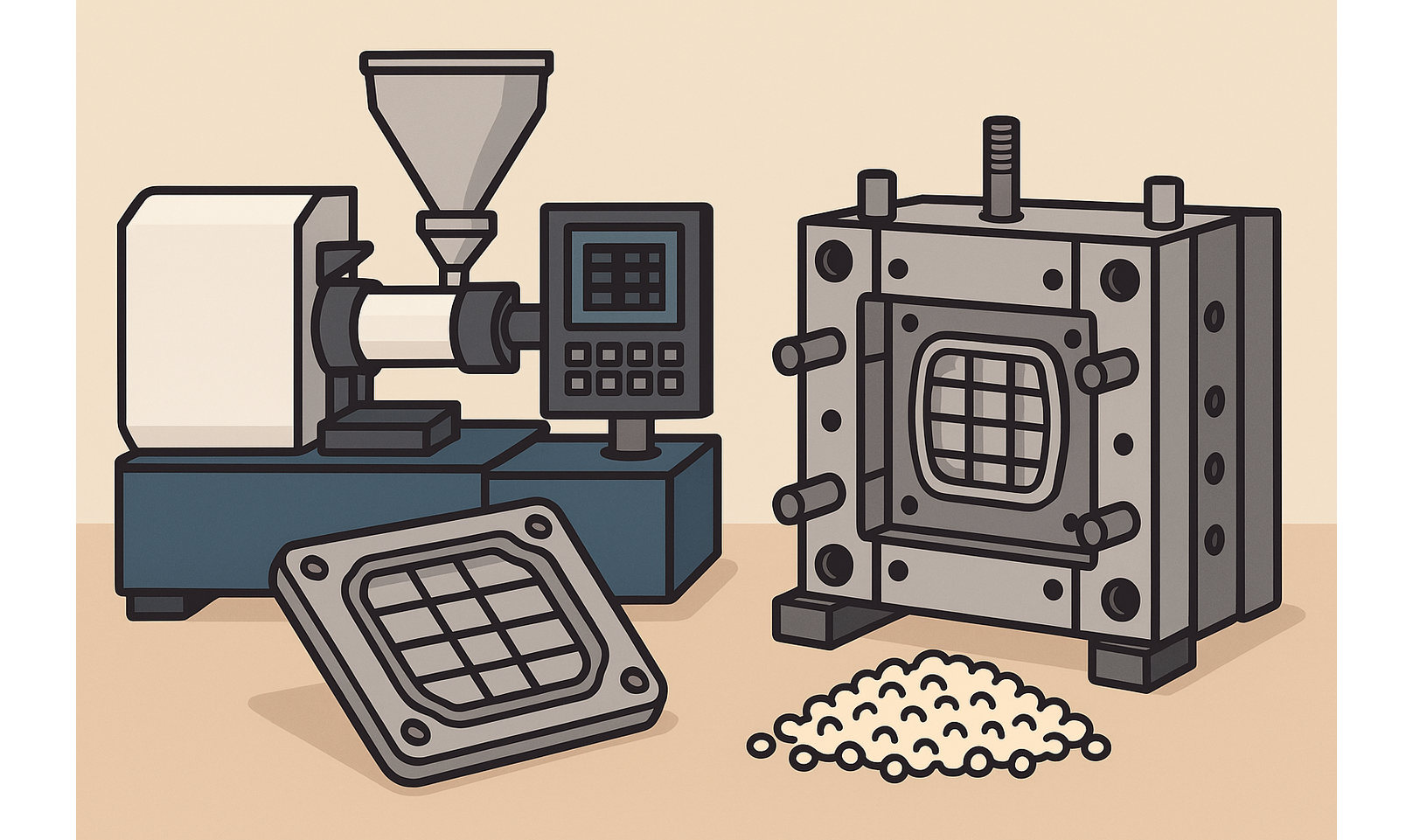
Plastic injection molding melts plastic pellets and injects them into a mold under high pressure. Once cooled, the material solidifies into complex shapes with high accuracy and repeatability. This method supports mass production in automotive, electronics, and consumer industries while ensuring cost efficiency.
2. Mold Design: The Foundation of Accuracy
A well-designed mold determines the quality, consistency, and functionality of molded parts. Key considerations include:
- Mold Material: Steel for high-volume, aluminum for prototyping
- Flow Optimisation: Balanced structure for smooth material flow
- Gate & Vent Placement: Prevents air traps and weld lines
- Cooling System: Reduces cycle time and extends mold life
*Mold Flow Analysis- using simulation software allows early detection of potential defects and enhances mold performance before manufacturing begins.
3. Choosing the Right Plastic Material
Material selection depends on:
- Mechanical Strength: Impact resistance, flexibility
- Flow Characteristics: Ensures full cavity filling
- Chemical Resistance: Withstands environmental exposure
- Cost & Availability: Influences scalability and feasibility
Common materials include ABS, PC, PP for thermoplastics, and UF, MF for thermosets.
4. Machine Settings & Process Optimization
Precise machine setup ensures consistency and quality in every cycle:
- Barrel and mold temperatures
- Injection pressure and speed
- Cooling time and holding pressure
- Real-time process adjustments
Defect prevention and dimensional control are supported by CMM (Coordinate Measuring Machines), sensors, and X-ray inspection.
5. Mold Maintenance for Long-Term Reliability
Molds are high-value assets. Proper maintenance includes:
- Cleaning after each production cycle
- Lubricating moving parts
- Scheduled wear inspection and repairs
- Storing in humidity-controlled environments
Digital mold tracking systems streamline preventive maintenance and reduce unplanned downtime.
6. Pros & Cons of Plastic Injection Molding
Advantages:
- Cost-effective for large-scale production
- High dimensional precision and repeatability
- Low material waste and fast production speed
Challenges:
- High initial mold fabrication cost
- Longer development time for new designs
- Less cost-effective for low-volume or prototype runs
7. Why Partner with Muto(Thailand)?
Muto(Thailand) delivers complete, precision-focused injection molding services with strengths such as:
- CAD/CAM-integrated mold development
- High-precision molding machines
- Complete in-house process control
- Industry experience in automotive and electronics
- Expert engineering support for fast solutions
> ✅ Looking for scalable, high-precision plastic parts? Trust Muto(Thailand) as your manufacturing partner.
#PlasticInjectionMolding #MoldDesign #InjectionMoldingThailand #PrecisionMolding #OEMServices #ManufacturingThailand #CMMInspection #ThermoplasticParts #AutomotivePlastics #MutoThailand
CONTACT
Inquiry