
MUTO (THAILAND) CO., LTD.
SERVICE
Production Goods & Services
How to Reduce Scrap in Plastic Injection Molding|Cut Defect Rate with Mold Optimization
Product Info
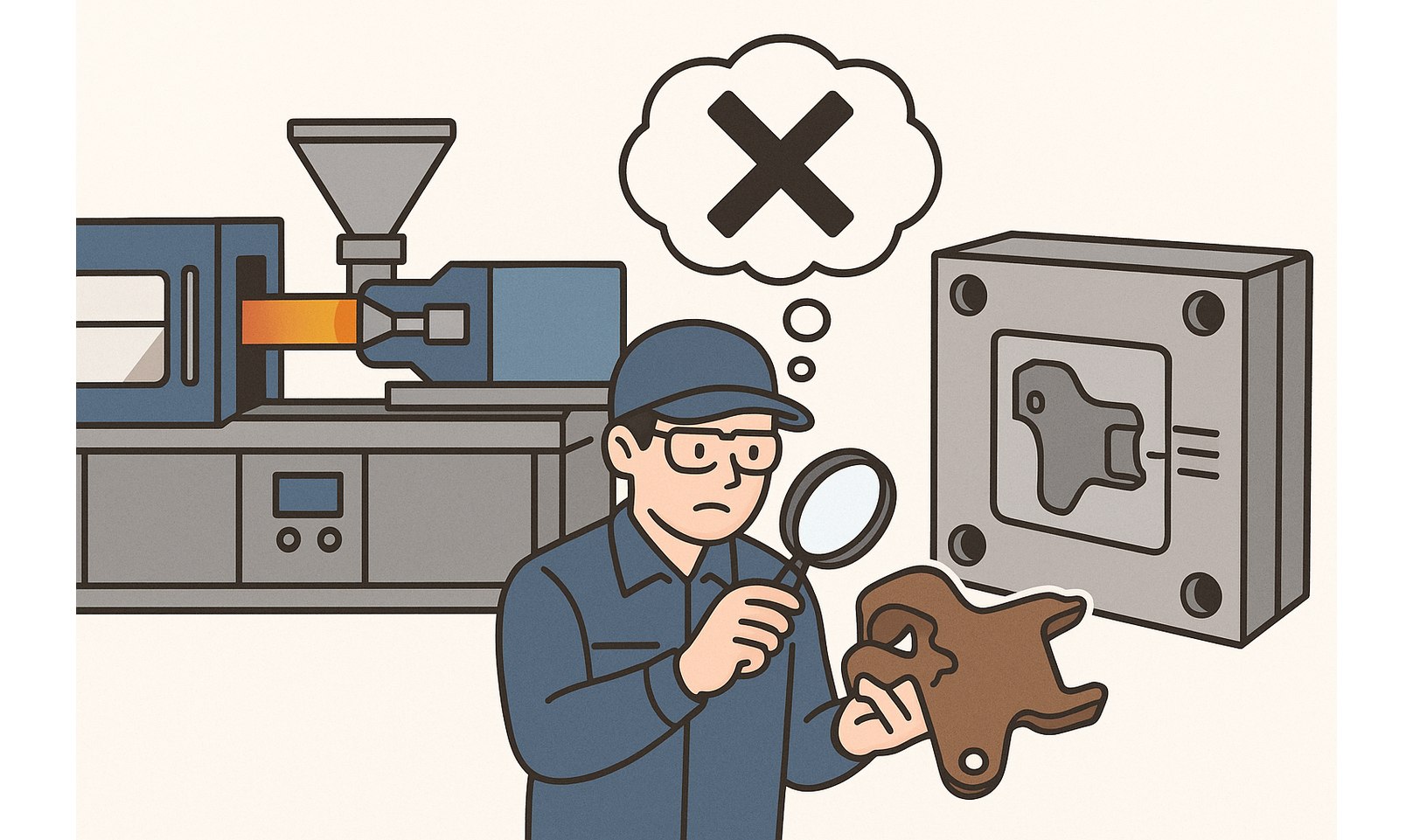
Improving product quality and cutting production costs starts with scrap reduction. This article explores practical ways to minimize defects in plastic injection molding by controlling key variables and improving mold design—alongside expert support from Muto (Thailand).
1. Common Causes of Scrap in Plastic Injection Molding
Scrap—defective or unusable molded parts—directly affects your bottom line. Typical defects include warping, flash, short shots, voids, and burn marks.
These issues often stem from:
- Improper temperature settings during injection
- Mold designs that don’t suit the material or part geometry
- Inconsistent injection speed or pressure
- Mold wear and reduced precision over time
- Moisture in plastic pellets or unstable material quality
Understanding these root causes is essential for sustainable scrap reduction.
2. Quality Control Strategies to Minimize Scrap
Effective scrap reduction depends on controlling every part of the injection process. Key strategies include:
- Accurate machine setup: Fine-tuning temperature, pressure, and injection speed for each material
- Advanced mold design: Using CAD/CAE and mold flow simulations to eliminate weak points
- In-process QC: Monitoring temperature and pressure in real time via sensors
- Preventive maintenance: Ensuring the mold remains precise through scheduled upkeep
- Proper material handling: Thorough drying of plastic pellets to avoid moisture-related defects
3. How Mold Design Impacts Defect Rates
The mold itself is one of the biggest variables in scrap generation. Poor design or wear can lead to imbalances, uneven filling, and defect-prone parts.
Key mold features that reduce scrap:
- Balanced material flow in the cavity
- Venting systems to eliminate trapped gas and burn marks
- Strong structural design to withstand high injection pressures
- Polished surfaces to ensure smooth part release
Choosing high-precision, durable molds from the start is a long-term investment in quality and cost efficiency.
4. Muto (Thailand)’s Solutions to Help You Reduce Scrap
With over 20 years of experience, Muto (Thailand) specializes in helping manufacturers reduce defect rates through mold engineering excellence:
- CAD/CAM mold design with flow simulation for optimal cavity performance
- Precision CNC machining using Japanese technology
- Step-by-step QC at every phase of production
- Technical consulting for machine settings tailored to each mold
- Long-term maintenance plans to extend mold life and performance
5. Why Partner with Muto (Thailand)?
Muto (Thailand) is more than a toolmaker—we are your technical partner in solving real-world manufacturing problems.
- We identify root causes of defects on your line
- We improve mold design and injection process settings
- We offer post-delivery follow-up, including performance feedback and support
Our clients consistently see lower scrap rates, faster production cycles, and improved part quality.
📥 Download our brochure or contact us for a technical consultation today.
#InjectionMolding #ScrapReduction #MoldDesign #PlasticManufacturing #MutoThailand #ReduceDefects #QCInMolding #PreventiveMaintenance #PrecisionMold #OEMSupport
CONTACT
Inquiry