
MUTO (THAILAND) CO., LTD.
SERVICE
Production Goods & Services
What is Plastic? A Guide to Injection Molding Materials | Types, Properties & Selection Tips
Product Info
■ Summary: Plastics are versatile materials used in injection molding across Thai industries. Understanding types, properties, and selection criteria can help manufacturers reduce defects and improve efficiency.
1. Definition and Structure of Plastics
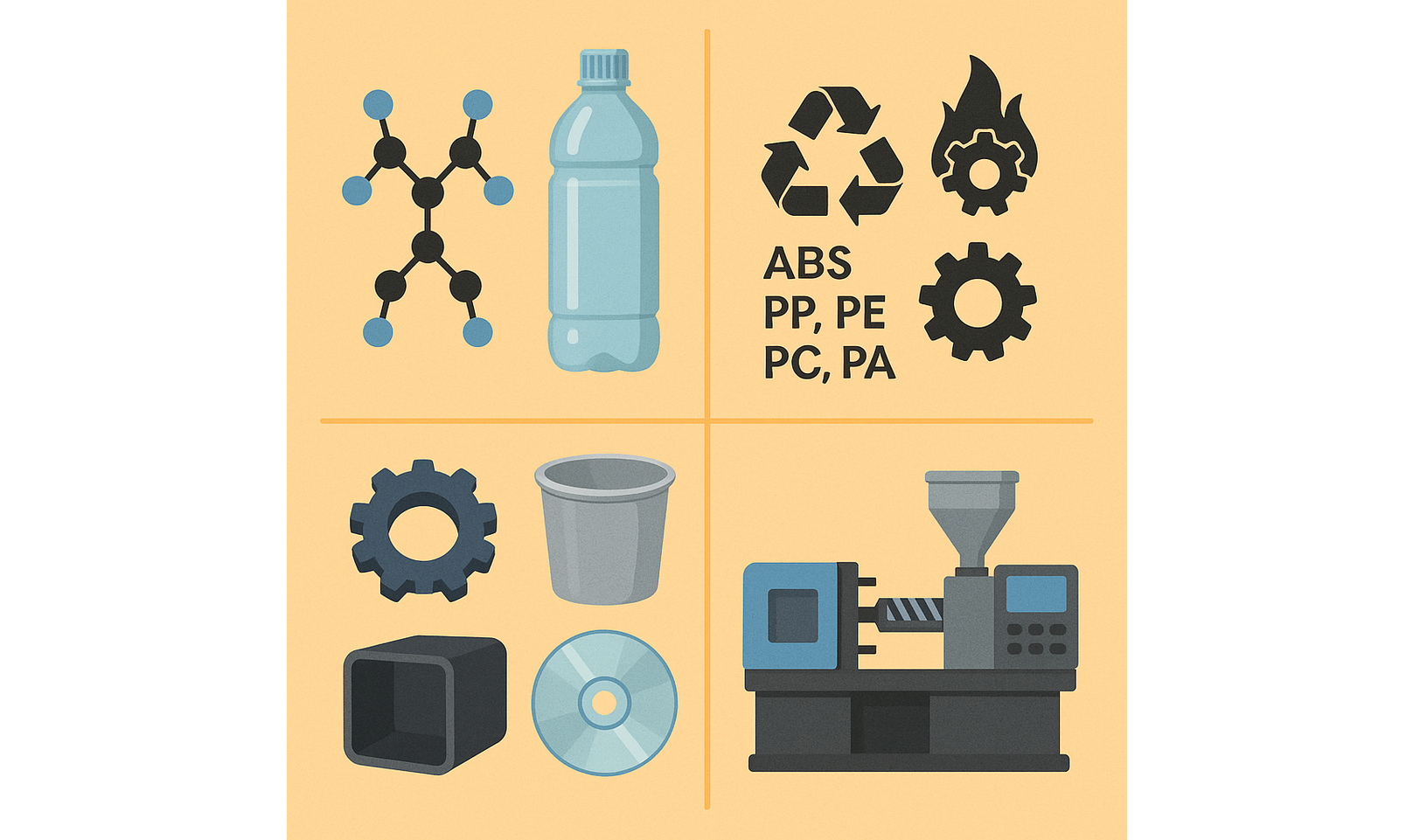
Plastics are synthetic materials primarily composed of polymers—long chains of repeating monomers—that soften when heated and harden when cooled. Their structure offers unique advantages like light weight, durability, and chemical resistance, making them essential in replacing metals or wood in industrial applications.
2. Classification: Thermoplastics vs Thermosets
- Thermoplastics: Can be repeatedly melted and reshaped. Widely used in injection molding. Examples include ABS, PP, PE, PC, and PA.
- Thermosets: Permanently harden after molding. Known for heat resistance and mechanical strength. Common types include epoxy and phenolic resins.
3. Common Plastics Used in Injection Molding
- ABS (Acrylonitrile Butadiene Styrene): Strong and impact-resistant. Ideal for automotive components and electronic housings.
- PP (Polypropylene): Lightweight and chemical-resistant. Used in packaging and medical devices.
- PA (Polyamide/Nylon): High tensile strength and wear resistance. Suitable for gears and mechanical parts.
- PC (Polycarbonate): Transparent with excellent impact strength. Common in optical lenses and precision instruments.
4. Key Factors When Selecting Plastic Materials
Manufacturers should assess:
- Mechanical properties: Strength, impact resistance
- Thermal properties: Heat deflection, melting point
- Molding behavior: Flow rate, shrinkage, cycle time
- Cost-effectiveness: Material yield and tooling
- Environmental fit: UV resistance, chemical compatibility
5. Applications in Thailand’s Manufacturing Industry
Thailand’s manufacturing sector relies heavily on plastic parts, particularly in:
- Automotive assembly
- Electronics and appliance manufacturing
- Medical device production
Its strategic location, skilled workforce, and competitive costs make Thailand a vital node in global plastic component supply chains. Key production challenges include:
- Material consistency and traceability
- Reducing molding scrap
- Adapting to flexible, high-mix production demands
6. Recommended: Injection Molding Machines from Muto (Thailand)
Muto (Thailand) provides advanced injection molding machines with precise control of pressure and temperature, reducing deformation and improving product quality. These machines are ideal for producing high-precision parts used in medical and electronic industries.
With localized technical support and responsive after-sales service, Muto ensures efficient and reliable operations across Thai factories.
📌 Download the detailed PDF or contact us directly for technical consultation.
#InjectionMolding #PlasticMaterials #Thermoplastics #ThailandManufacturing #ABSPlastic #NylonParts #EngineeringPlastics #PrecisionMolding #PlasticInjectionMachines #OEM
CONTACT
Inquiry