
DOWA THERMOTECH (THAILAND) CO., LTD.
SERVICE
Production Goods & Services
Common Failures in Steel Heat Treatment|Causes, Countermeasures, and Quality Control Best Practices
Product Info
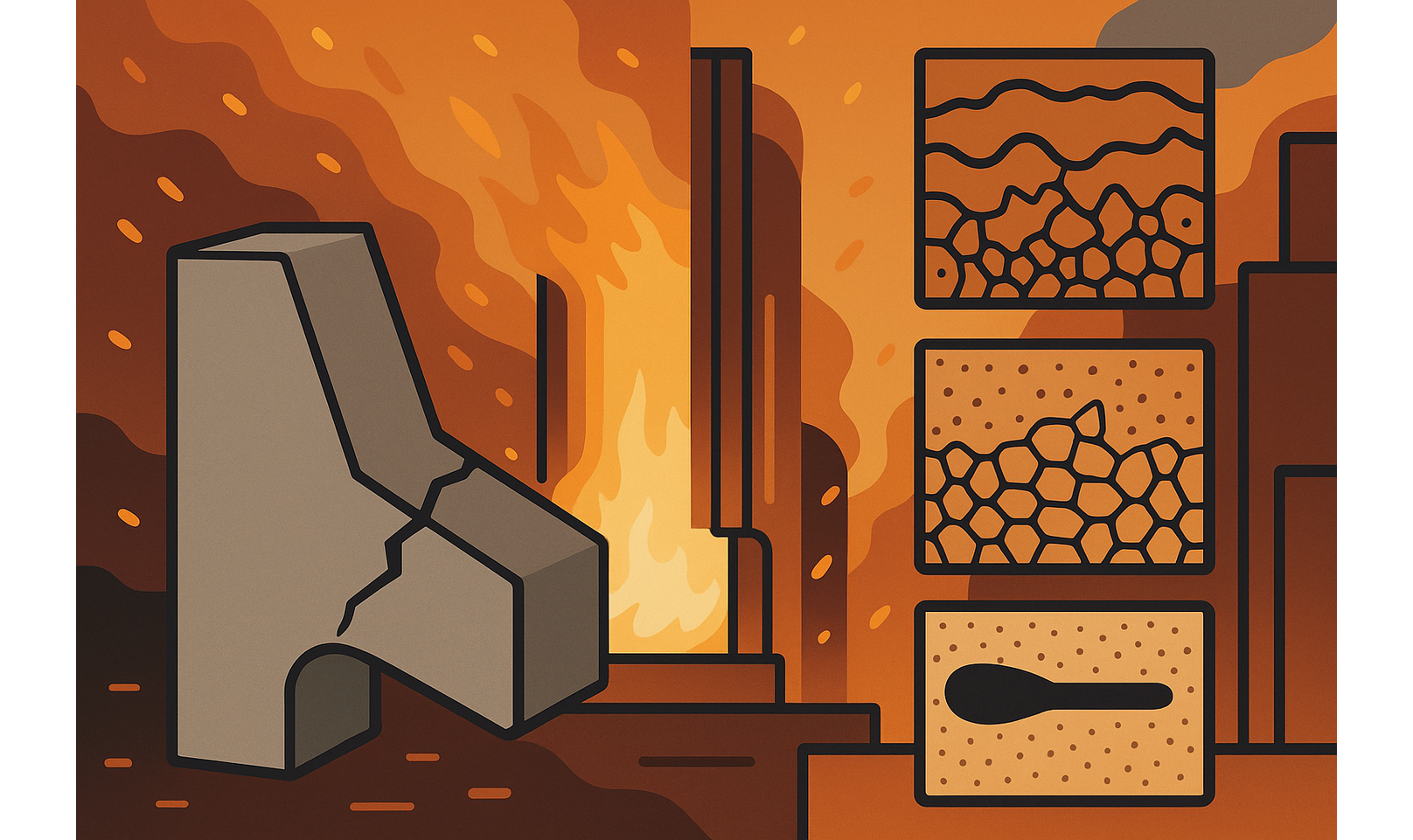
Steel heat treatment can lead to cracking, deformation, or inconsistent hardness if not carefully controlled. This article outlines common issues during heat treatment and practical technical countermeasures to help prevent failures in industrial production.
1. Why Heat Treatment Is Critical in Steel Processing
Heat treatment is essential for enhancing the mechanical properties of steel, including hardness, toughness, and ductility. The primary processes include:
- Quenching – Increases hardness through rapid cooling
- Tempering – Recovers toughness and adjusts hardness
- Annealing – Improves machinability and relieves internal stresses
- Normalizing – Refines grain structure and improves uniformity
Incorrect heat treatment parameters such as temperature, time, or cooling speed can result in severe quality defects. Therefore, precise control of every step is critical for stable performance in real-world applications.
2. Quenching: Typical Failures and Technical Countermeasures
Quenching rapidly cools steel to form martensite and enhance hardness. However, it commonly causes:
❗Crack Formation
- Cause: Thermal stress from rapid cooling or residual stress, especially in high-carbon steels
- Countermeasures:
- Use controlled-temperature quenching oil
- Consider step cooling or slow cooling techniques
- Perform pre-treatment like annealing to reduce internal stress
❗Deformation and Warping
- Cause: Uneven cooling, asymmetrical part geometry, poor fixture design
- Countermeasures:
- Design symmetrical workpieces
- Optimize jig/fixture placement
- Use cooling systems that ensure uniform flow and contact
3. Tempering: Common Issues and Their Solutions
Tempering relieves internal stress and adjusts the final mechanical properties. Key challenges include:
❗Tempering Brittleness
- Cause: Heating within the 300–400°C range can reduce toughness
- Countermeasures:
- Avoid critical temperature range
- Use rapid cooling to stabilize the microstructure
❗Inconsistent Hardness
- Cause: Non-uniform heating, insufficient holding time, furnace temperature fluctuations
- Countermeasures:
- Use furnaces with uniform temperature distribution
- Monitor and control holding time and ramp-up rate
- Calibrate equipment regularly
4. Surface Defects: Decarburization, Oxidation, and Discoloration
The furnace atmosphere plays a key role in maintaining surface quality.
❗Decarburization
- Cause: Carbon loss from the steel surface during exposure to air
- Countermeasures:
- Use vacuum or gas atmosphere furnaces
- Apply surface coatings
- Control furnace environment with inert gases (e.g., nitrogen or argon)
❗Oxidation and Discoloration
- Cause: Heating in oxygen-rich conditions
- Countermeasures:
- Use inert gas atmosphere
- Apply anti-oxidation coatings or barrier films before heating
5. Quality Control Systems That Prevent Failures
Implementing robust quality control measures ensures long-term reliability and consistency:
- Batch-level material management: Track chemical composition, hardness, and dimensional data
- Jig and fixture design: Allow for thermal expansion and conduct routine maintenance
- Furnace calibration: Perform regular temperature and uniformity calibration
- Traceability systems: Record processing parameters such as time, temperature, and atmosphere for each batch
#SteelHeatTreatment #Quenching #Tempering #HardnessControl #MetalProcessing #IndustrialFurnace #Decarburization #ProcessQuality #ManufacturingFailure #EMIDAS
CATALOG
Related Catalogs
CONTACT
Inquiry