
DOWA THERMOTECH (THAILAND) CO., LTD.
SERVICE
Production Goods & Services
Differences Between Carburizing, Nitriding, and Shot Peening|Surface Hardening for Metal Parts

Product Info
Carburizing, nitriding, and shot peening each enhance metal surface hardness through different mechanisms. This guide compares their benefits, mechanisms, and ideal applications to help you select the right treatment.
1. Purpose of Surface Hardening in Manufacturing
Surface hardening treatments are used to:
- Increase surface hardness
- Improve wear resistance
- Extend fatigue life
- Enhance corrosion resistance
Three widely used techniques are:
- Carburizing – deep hardening through carbon diffusion
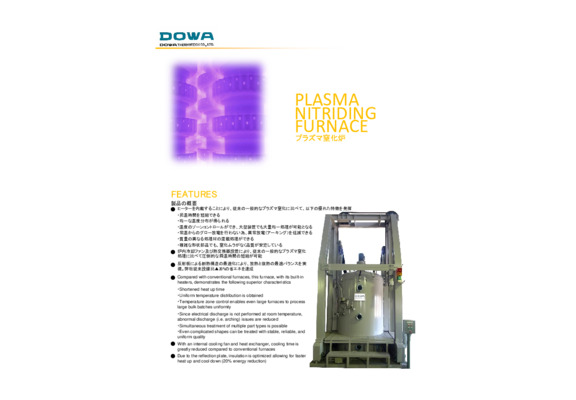
- Nitriding – precise, low-distortion hardening via nitrogen
- Shot Peening – mechanical strengthening by compressive stress
Each method serves a unique purpose depending on the part’s application and design tolerance.
2. Carburizing|Deep Hardening for Load-Bearing Surfaces
Mechanism:
Steel is heated in a carbon-rich atmosphere at 900–950°C, causing carbon to diffuse into the surface. Quenching creates a hard layer while the core remains tough.
Features:
- Hardened depth: approx. 0.5–2.0 mm
- Ideal for: gears, drive shafts, cams
- Drawbacks: potential distortion from high heat, higher cost due to long cycle time
3. Nitriding|Low-Distortion Hardening with Corrosion Resistance
Mechanism:
At 500–600°C, nitrogen diffuses into the surface to form iron and alloy nitrides, producing a highly hardened outer shell.
Features:
- Hardened depth: approx. 0.1–0.6 mm
- Minimal dimensional change
- Excellent fatigue, wear, and corrosion resistance
- Ideal for: molds, spindles, pneumatic cylinders
- Best with nitriding steels or alloy steels
4. Shot Peening|Boosting Fatigue Life with Compressive Stress
Mechanism:
High-speed steel balls impact the surface, inducing compressive residual stress that delays crack initiation and fatigue failure.
Features:
- Cold process → preserves dimensional accuracy
- Compatible with various metals
- Increases surface roughness – may need finishing
- Common for: springs, gears, aircraft parts, engine components
- Often combined with heat treatments (e.g., carburizing) for added strength
5. Choosing the Right Surface Hardening Method
- Use Carburizing when deep surface hardness is required for high-load parts.
- Use Nitriding when precision and corrosion resistance are critical.
- Use Shot Peening to enhance fatigue resistance and prevent cracking.
- Combine treatments like Carburizing + Shot Peening for dual benefits of wear and fatigue resistance.
#Carburizing #Nitriding #ShotPeening #SurfaceHardening #HeatTreatment #FatigueStrength #PrecisionMachining #WearResistance #MetalTreatment #OEM
CONTACT
Inquiry