
DOWA THERMOTECH (THAILAND) CO., LTD.
SERVICE
Production Goods & Services
Comprehensive Comparison of Nozzle-Type and Impeller-Type Shot Peening
Product Info
Shot peening introduces compressive stress to metal surfaces, improving fatigue life and surface strength. This article compares nozzle-type and impeller-type shot peening systems to help manufacturers choose the right method for their production needs.
What is Shot Peening?
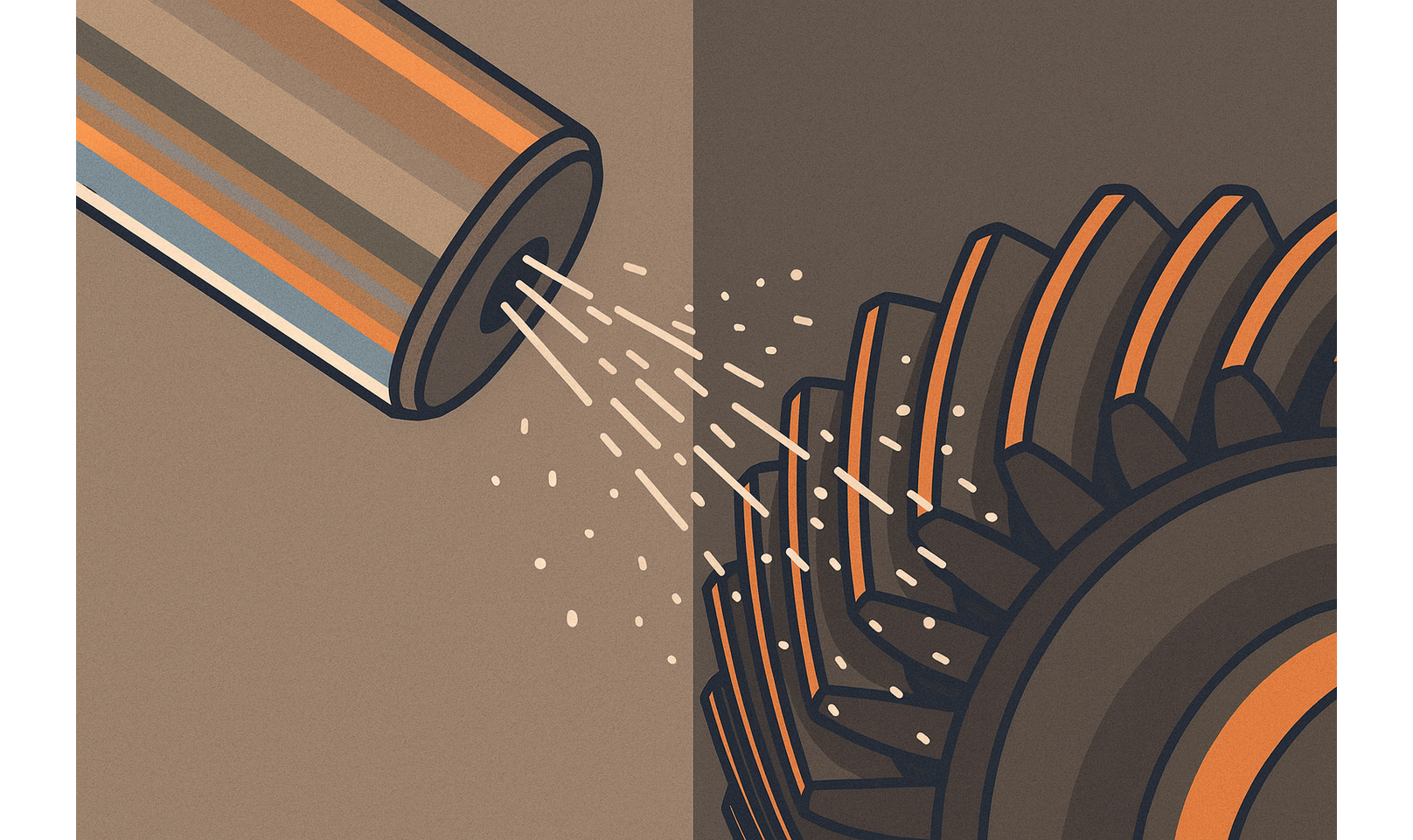
Shot peening is a mechanical surface enhancement process where spherical shot media—such as steel, ceramic, or glass beads—are propelled at high speed to strike metal surfaces. Each impact produces a small indentation, which leads to residual compressive stress in the surface layer.
This stress delays crack initiation and propagation under cyclic loading, improving fatigue strength and component longevity. Shot peening is widely applied in aerospace, automotive, tooling, and heavy industry.
Nozzle-Type Shot Peening: High Precision for Complex Parts
Nozzle-type systems use compressed air to accelerate shot media through a nozzle. This setup allows for multi-axis robotic control, making it highly flexible for parts with complex shapes or critical areas that require localized treatment.
Key Benefits:
- Precise control over shot velocity, angle, and coverage
- Supports real-time adjustment of pressure and media flow
- Ideal for intricate parts such as turbine blades, springs, and precision gears
This system is favored in industries like aerospace, precision tools, and medical device manufacturing, where part integrity and treatment accuracy are paramount.
Impeller-Type Shot Peening: High-Speed Efficiency for Mass Production
Impeller-type systems use centrifugal force from a high-speed rotating wheel to propel shot media. The design is mechanically simpler and operates continuously without needing compressed air.
Key Benefits:
- High processing speed for bulk components
- Lower energy consumption and maintenance costs
- Best suited for consistent, high-volume parts like automotive shafts and construction components
While impeller systems offer excellent throughput, they are less precise and not ideal for complex geometries or differential treatment areas.
Choosing the Right Shot Peening System
The optimal system depends on several key factors:
- Component Geometry: Nozzle-type is better for detailed parts; impeller suits simpler designs.
- Required Precision: Use nozzle-type for tight control and localized treatment.
- Production Volume: Choose impeller-type for high-output efficiency.
- Cost Considerations: Impeller systems offer lower operational costs; nozzle systems provide higher flexibility.
- Factory Constraints: Evaluate available space, automation needs, and integration with current lines.
Summary
Nozzle and impeller shot peening systems both provide valuable surface treatment benefits. Nozzle-type excels in precision and adaptability, while impeller-type shines in productivity and cost efficiency. Selecting the right method ensures enhanced fatigue resistance, optimal surface quality, and long-term durability.
#ShotPeening #SurfaceTreatment #NozzleType #ImpellerType #FatigueStrength #PrecisionMachining #AutomotiveParts #AerospaceComponents #CompressiveStress #SurfaceEngineering
CATALOG
Related Catalogs
CONTACT
Inquiry