PRODUCTS
Technology / Product Information
Technology / product information
13hits
Narrow by Industry Category
Narrow by material Category
Narrow by accuracy
Narrow by lot number
Heat Treatment and Cam Angle Control Ensuring the Safety Performance of Parking Rods
The parking rod is a safety-critical component responsible for holding an automatic transmission (AT) vehicle in a stationary condition. As a safety part, its heat treatment conditions and cam angle accuracy are strictly specified. These requirements are essential to ensure that the vehicle remains securely stopped in the P range and does not move due to malfunction or misoperation. ■ Safety Requirements for the Rod The rod undergoes high-frequency induction hardening followed by tempering. During this process, precise control of surface hardness and case depth is required. In addition, the hardening pattern must never penetrate into non-designated areas. If the hardness is too low, wear progresses rapidly and the locking function may be lost. If the hardness is too high, the risk of brittle fracture increases. Proper management of the localized heat treatment pattern, which hardens only the specified areas, is the key to maintaining safety performance. ■ Safety Requirements for the Cam The cam requires a higher hardness than the rod, achieved through carburizing heat treatment, as it functions as a sliding contact surface repeatedly engaging with the rod and therefore demands high wear resistance. The case depth is strictly specified, and the cam angle is managed as a critical safety characteristic. Even a slight deviation in cam angle can alter engagement with the parking pawl, potentially causing a situation where the vehicle does not fully stop despite being in the P range. ■ Risks When Safety Characteristics Are Not Maintained Abnormal wear Part fracture Deformation due to improper heat treatment Cam angle deviation If any of these occur, the vehicle may begin to move even when the transmission is in the P range, directly leading to serious accidents and personal injury. ■ Manufacturing Control to Ensure Safety Performance To protect safety performance, the following controls are essential: Process assurance of heat treatment conditions (temperature, case depth, hardness) Visual inspection and hardness testing to verify hardening patterns High-precision cam angle measurement and lot variation control Measurement of deformation after heat treatment (straightness, dimensional changes) In-process checks for abnormal wear These activities are not merely quality control measures, but safety management practices aimed at accident prevention. ■ Strengths of Ohashi Tekko Vietnam At Ohashi Tekko Vietnam, heat treatment of rods and cams, as well as cam angle control, are managed as special safety characteristics in accordance with standards established by the Japanese headquarters. Through precise measurement of hardness, case depth, and cam angle, along with comprehensive evaluation of post–heat treatment deformation, the company ensures stable supply of high-reliability parking rods and related components that support vehicle safety. For more details, please download the PDF or feel free to contact us.
Typical Defects in Parking Rod Manufacturing and Countermeasures
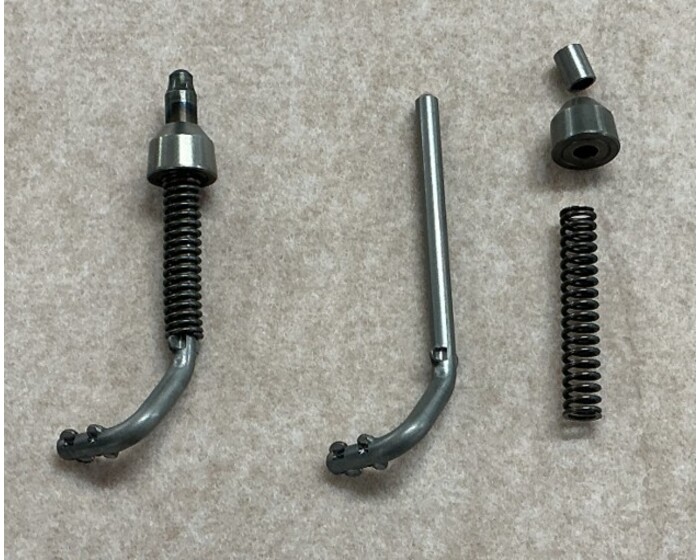
■ What Is a Parking Rod? A parking rod is a critical safety component in the parking lock mechanism of automatic transmission (AT) vehicles. It operates the parking pawl via the shift lever to securely hold the vehicle in the P range. Even minor shape or surface defects can cause poor locking performance, abnormal noise, or AT malfunction. ■ Applications Parking rods are used in parking lock mechanisms of AT vehicles. Rod geometry and cam angle vary by vehicle model, and the parts are installed in AT units for mini vehicles, passenger cars, and trucks. ■ Typical Defects Foreign material contamination (chips, lint) – May damage the parking lock gear and cause vehicle immobilization. Dimensional errors – Prevent proper assembly with the manual valve lever and may block engagement of the P range. Cam damage, burrs, or improper pin angle – Cause poor movement and shift lever malfunction. Bending defects or uneven hardening – Lead to stress concentration and possible rod breakage. Assembly or welding defects – May result in loss of parking lock function, especially on slopes. ■ Preventive Measures Control glove replacement, cleaning solution condition, and implement strict 2S in welding processes. Regularly inspect jigs, reference positions, and measuring equipment. Standardize handling and deburring methods. Inspect bent areas by comparison with approved samples. Use visual controls to prevent assembly errors. Verify inspection equipment accuracy and perform full weld inspections. ■ Key Points for Customers As a safety-critical component, parking rods require clear specification at the ordering stage: Tolerances for dimensions, cam angle, and R geometry End-face finishing requirements Bending evaluation methods Foreign material control standards Welding specifications Assembly orientation and identification Inspection items and frequency ■ Ohashi Tekko Vietnam’s Strengths Ohashi Tekko Vietnam specializes in mass production of shafts and rods, with integrated capabilities for bending and end-face finishing. By applying Japanese quality standards, improving jigs, and standardizing processes, the company delivers stable, high-quality parking rods with minimized defect risk. For details, please download the PDF or contact us.
Mass Production of Safety-Critical Towing Hooks | Future Vietnam Production Capability
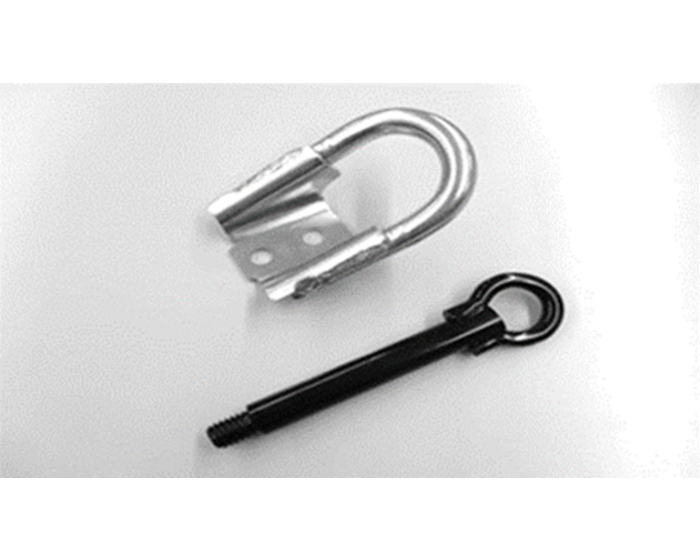
Mass Production of Safety-Critical Towing Hooks | Future Vietnam Production Capability Towing hooks are vital safety components that ensure vehicle security during towing operations. Our company has established mass production capabilities at our Japan facility and is preparing to expand production to our Vietnam plant in the future. - Overview Towing hooks are indispensable safety parts used during vehicle breakdowns and transport. It must exhibit high load-bearing capacity and impact resistance, and is therefore managed under the most stringent quality standards. At our Japan facility, we have established an integrated production system covering pressing, welding, and surface treatment. Looking ahead, we are preparing to introduce the same quality standards at our Vietnam site to build a stable local supply system. - Key Features • High strength ensured through arc welding • Enhanced corrosion resistance with cationic coating and zinc alloy plating • Automated production line covering bending, coating, and inspection • Future-ready production capability at the Vietnam base • As towing hooks are designated as critical safety components, they are manufactured under the strictest quality control to prevent failures that could lead to serious accidents - Processing Details • Material: High-strength steel • Processes: Pressing, bending, arc welding, projection welding • Surface treatment: Cationic coating, zinc plating • Inspection: Dimensional check, appearance inspection, strength testing Applications • Automotive towing hooks • Safety-related components Industries Served • Automobile manufacturers (e.g., Toyota, Daihatsu) • Automotive parts suppliers specializing in safety components Although towing hooks are not visible in daily use, they play a crucial role in ensuring safety during emergencies. We are preparing a production system at our Vietnam facility to meet growing demand with the same high standards of quality and reliability. ■ For more details, please download the PDF or contact us directly for consultation.
Mass Production System for Hood Support Rods with Excellent Corrosion Resistance
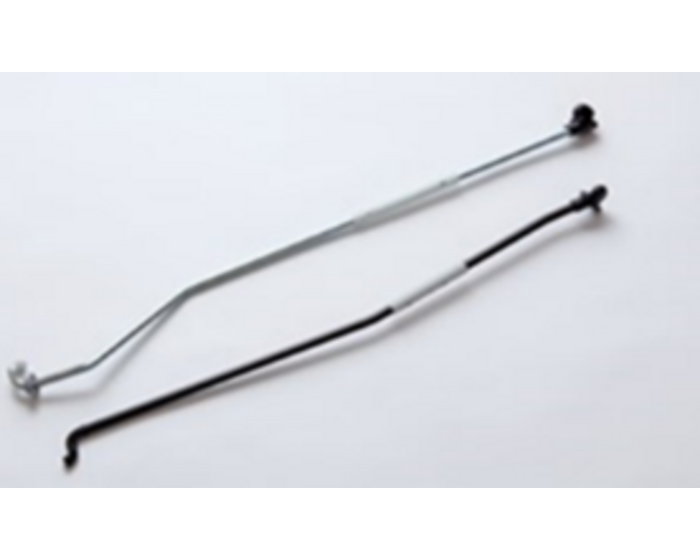
Mass Production System for Hood Support Rods with Excellent Corrosion Resistance We mass-produce hood support rods that combine both corrosion resistance and appearance quality at our Japan base. In the future, equivalent-quality production will also be available at our Vietnam plant. - Overview Hood support rods are critical components that safely hold a vehicle’s hood open. Because they are constantly exposed to external environments, they require exceptional corrosion resistance and surface finish quality. At our Japan facility, we carry out all processes in-house—from pressing and bending to cationic coating and resin component assembly—for stable mass production and supply. Going forward, we are preparing to implement the same quality standards at our Vietnam plant to establish a reliable local production system. - Key Features • Excellent corrosion resistance ensured through cationic coating and zinc plating • Integrated production covering pressing, bending, and resin component assembly (proven at our Japan facility) • Rigorous in-process quality control to maintain surface appearance • Preparation for equivalent-quality production capability at the Vietnam facility in the future Through this system, we achieve both practicality and superior appearance quality. - Processing Details • Material: Steel rods (φ7–8 mm) • Processes: Bending, end finishing • Surface treatment: Cationic coating, zinc plating • Assembly: Resin component assembly - Applications • Automotive hood support rods • General body support components Industries Served • Automobile manufacturers • Automotive exterior component suppliers Although small in size, hood support rods play an essential role in ensuring safety and convenience. Our Vietnam factory is also capable of building a stable mass production system to meet diverse customer needs. ■ For more details, please download the PDF or contact us directly for consultation.
Integrated Production from Pressing to Coating | Mass Production of Automotive Components
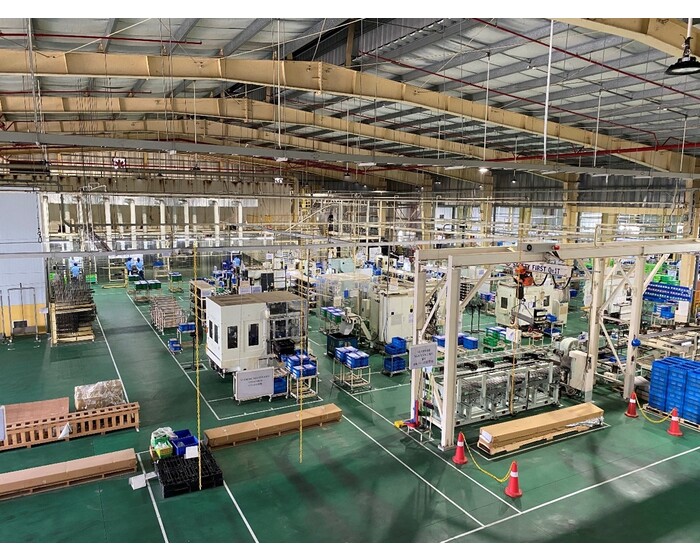
Integrated Production from Pressing to Coating | Mass Production of Automotive Components At our Vietnam facility, we carry out an integrated process that includes bar cutting, chamfering, pressing, press-fitting, and coating. Our production system achieves both efficiency and high quality in the mass production of automotive components. Overview Manufacturing automotive parts typically involves combining multiple processes. By handling pressing, press fitting, and coating in an integrated manner at our Vietnam factory, we simultaneously achieve stable quality, short lead times, and cost reduction. We reduce reliance on external outsourcing and maintain a self-contained system, enabling us to reliably supply components, including Critical Safety Parts. Key Features • Streamlined production through integrated process management • Cost reduction by eliminating outsourcing • High dimensional accuracy by preventing transport loss • Flexible response from prototyping to mass production This system allows us to deliver diverse components with stable, high-quality performance. Processing Details • Bar cutting and chamfering • Press processing • High-precision assembly through press-fitting • Cationic coating for superior anti-corrosion performance Applications • Accelerator pedal rods • Body components (hood supports, hooks, etc.) Industries Served • Automobile manufacturers • Automotive parts suppliers By unifying the coordination of each process internally, we achieve both shorter lead times and quality stability. This provides us with a significant advantage in the mass production of automotive parts. Please download the PDF for more details or feel free to contact us.
Mass Production of Automotive Accelerator Pedal Components | Supported by Our Vietnam Plant
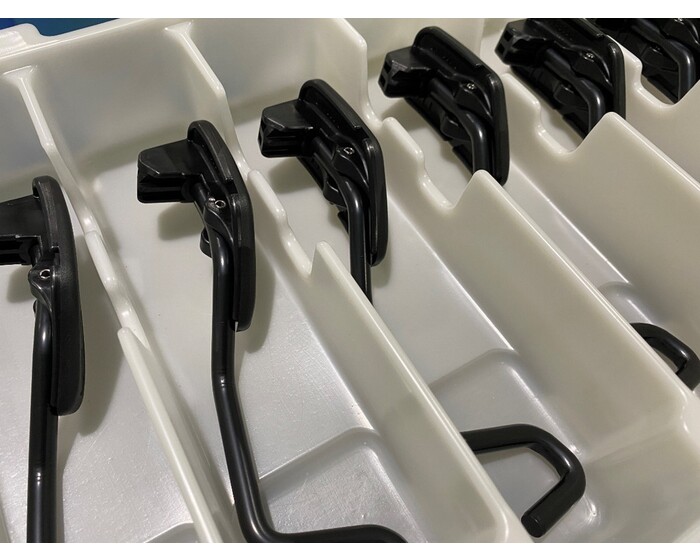
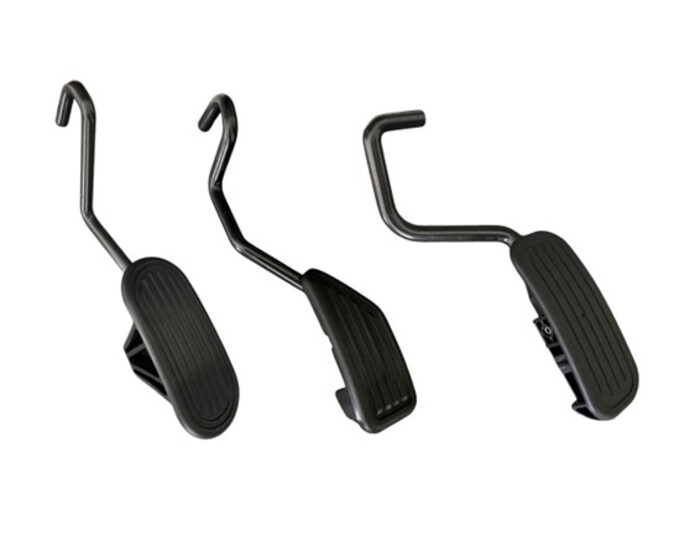
Mass Production of Automotive Accelerator Pedal Components | Supported by Our Vietnam Plant At our manufacturing facility in Vietnam, we conduct fully integrated production of automotive accelerator pedal components—centered on accelerator pedal rods—covering every stage from cutting, pressing, and bending to cation electrophoretic coating. We have established a stable local supply system that achieves both cost reduction and quality assurance in line with Japanese standards. Overview The accelerator pedal rod is a key component that accurately transmits the driver’s control input to the vehicle’s system. At our Vietnam facility, all processes—from cutting steel bars, chamfering, pressing, and bending to cation electrophoretic coating—are completed in-house. Through strict in-process quality control, we maintain stable product quality while leveraging local procurement to reduce production costs and ensure consistent output. - Key Features • Fully integrated production line: Complete in-house control from cutting, pressing, and bending to surface coating • Corrosion resistance: Long-term durability and rust prevention ensured by cation coating • Stable supply record: Mass production capacity of several hundred thousand units per month • Quality assurance: Strict inspections for dimensional accuracy, coating thickness (sampling), and 100% visual checks ensure consistent quality As a result, we have earned the trust of global automakers and established long-term partnerships as a reliable supplier. - Processing Details • Material: Steel (e.g., SS400), diameter φ8–φ10 • Production process: Bar cutting → Chamfering → Pressing → Bending → Cation electrophoretic coating → Assembly • Quality control: 100% visual inspection, coating thickness management, dimensional checks - Typical Application Industries • Automobile manufacturers • Chassis component suppliers • General automotive parts manufacturers Powertrain components directly transmit driver input to the vehicle, requiring the highest standards of safety, durability, and reliability. At our Vietnam plant, our integrated production process and stringent quality control system allow us to deliver products that combine cost competitiveness with Japanese-standard quality. ■ Please download the PDF for more details or contact us for further consultation.
Introduction of the Cation Coating Line at Our Vietnam Facility
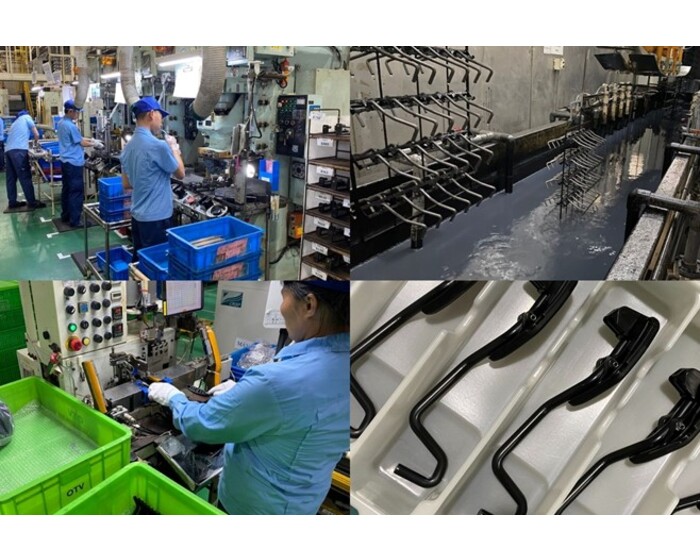
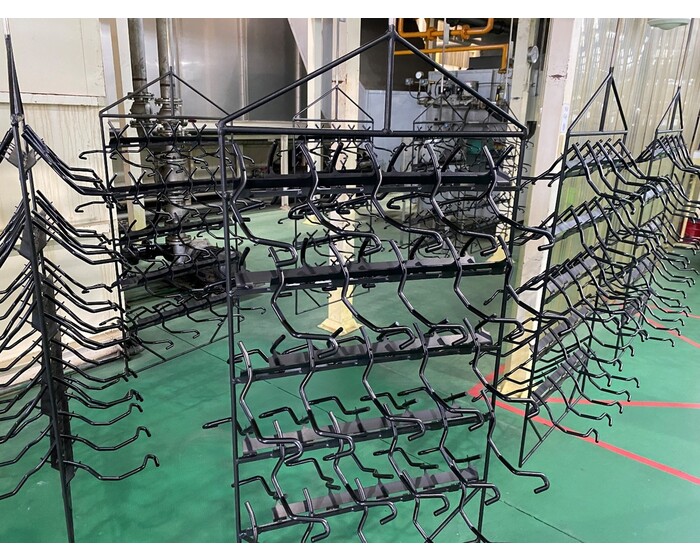
【Introduction of the Cation Coating Line at Our Vietnam Facility】 At our Vietnam facility, we ensure the corrosion resistance of automotive components through the use of our in-house cation coating line. We have established a flexible production system capable of handling parts from small to large sizes, achieving a stable supply based on local, physical production. - Overview Cation electrophoretic coating is an essential surface treatment technology for ensuring the corrosion resistance of automotive components. At our Vietnam facility, we have introduced a dedicated coating line for accelerator pedal rods, brackets, and related parts, establishing a full-scale mass production system. In Southeast Asia, where only a limited number of plants can perform such processes, completing all coating steps in-house with our own equipment provides a significant competitive advantage. - Features • Corrosion resistance: Consistent anti-rust performance essential for automotive underbody components • Support for large parts: Broad line design enables flexible handling of large components • Quality assurance: Film thickness and adhesion controlled in-process with sampling inspections; 100% visual inspection for appearance • Shorter lead times: In-house coating process shortens delivery time and reduces production costs - Processing Capabilities • Coating method: Cation electrophoretic coating • Line specifications: Total length 200 m, conveyor speed 1.2 m/min • Supported part sizes: From small components to large brackets • Inspection process: Film thickness measurement and adhesion testing (sampling), full visual inspection • Applicable parts: Accelerator pedal rods, brackets, hood support rods Applications • Automotive underbody components • Vehicle body brackets • General metal parts requiring corrosion resistance - Industries Served • Automakers • Automotive parts suppliers • Transportation equipment industries Our cation coating line in Vietnam is capable of handling a wide variety of automotive parts, including large components. We ensure stable coating quality and achieve shorter lead times and cost reduction through an integrated local production system. As a key production base in Southeast Asia, we are committed to meeting our customers’ expectations through reliable quality and flexible response.
Mass Production of Automotive Safety Components | Vietnam Facility
Mass Production of Automotive Safety Components | Vietnam Facility We provide a stable supply of Critical Safety Components, primarily accelerator pedal rods, from our Vietnam facility. Based on the principle of "Safety and Quality First," we deliver products trusted by the global market. - Overview Among the essential components that support a vehicle’s fundamental functions—driving, stopping, and turning—the accelerator pedal rod is classified as a critical safety component. Our Vietnam facility has adopted the same equipment and quality standards as our Japanese facilities and strictly enforces in-process quality control. We contribute to the resilience of the global supply chain by achieving cost reduction and stable supply through local production. - Features • Safety Focus: Process design and quality management that meet the performance requirements of critical safety components • Corrosion resistance: Long-term anti-rust performance ensured by cation coating • Stable supply track record: Continuous mass-production deliveries to automakers and parts manufacturers • Business Continuity Plan readiness: Split production with Japan facility for a supply framework resilient to disasters and market fluctuations - Processing Details • Target parts: Accelerator pedal rods (Future capability includes tow hooks, hood support rods, parking rods, etc.) • Process flow: Bar cutting → Pressing → Bending → Press fitting → Cation coating • Inspection: Dimensional confirmation, film thickness measurement (sampling), 100% visual inspection • Materials: Ferrous materials (e.g., SS400); alloy steel also available depending on application - Applications • Accelerator pedal rods, crucial for controlling engine speed • Tow hooks used when towing vehicles, etc. Industries Served • Automakers • Automotive parts manufacturers (safety components, critical safety parts) At our Vietnam facility, we have established a production system that prioritizes safety just as at our Japan facility. By supporting the mass production of critical safety parts, we provide products that combine cost competitiveness with global quality, ensuring a reliable supply for the automotive industry. ■ For further details, please download the PDF or feel free to contact us.
Mass production of Pedal Rods in Vietnam/Integrated Production Including Coating
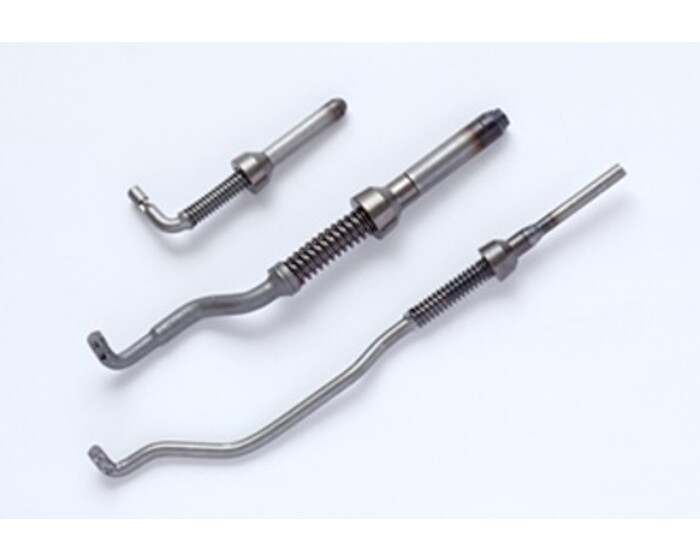
Mass production of Pedal Rods in Vietnam/Integrated Production Including Coating Our Vietnam facility handles the integrated production of accelerator pedal rods, from bar cutting to pressing, bending, and cation coating. We have established a stable local supply framework that achieves both cost reduction and quality assurance. - Overview The accelerator pedal rod is a critical safety component that reliably transmits driver input to the vehicle. At our Vietnam facility, all processes—from bar cutting, pressing, and bending to cation coating—are completed in-house. This enables shorter lead times and cost reduction while ensuring stable supply under the same quality standards as our Japan facility. - Features • Integrated production system: Cutting, pressing, bending, and coating all completed in-house • Corrosion resistance: Guaranteed anti-rust performance through cation coating • Stable supply: Reliable production based on a track record of mass production deliveries to automotive parts manufacturers. • Quality assurance: Film thickness and adhesion controlled in-process with sampling inspections; 100% visual inspection ensures consistent quality - Processing Capabilities • Target part: Accelerator pedal rod • Processing steps: Bar material cutting → Pressing → Bending → Surface treatment (cation coating) • Inspection process: Film thickness measurement & adhesion verification (sampling), 100% visual inspection • Production capacity: Over 300,000 units per month - Applications • Automobile accelerator pedal rods • Chassis-related components requiring corrosion resistance At our Vietnam facility, mass production of accelerator pedal rods through integrated in-house processes achieves both shorter lead times and cost reductions. With high-quality surface treatment and a stable supply framework, we contribute to strengthening the resilience of the global supply chain. ■ For more details, please download the PDF or feel free to contact us.
Cation Coating-Compatible Accelerator Pedal | Mass Production in Vietnam
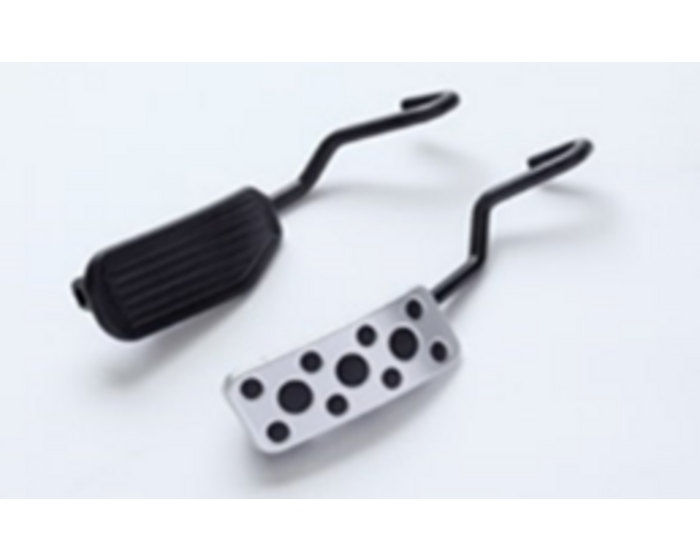
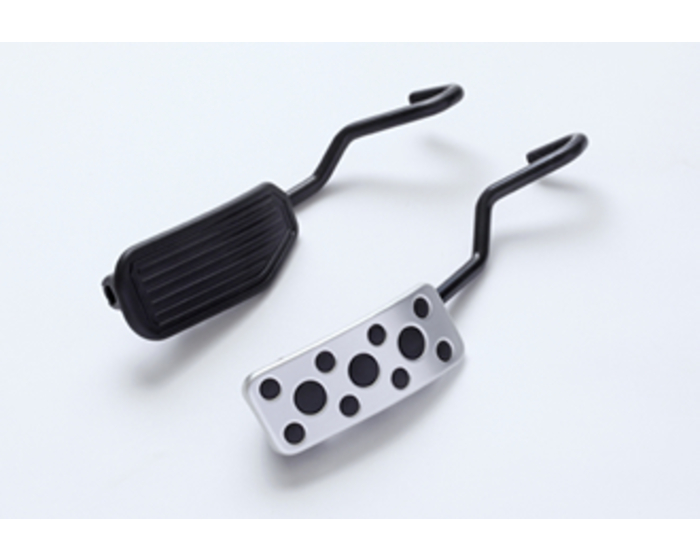
【Cation Coating-Compatible Accelerator Pedal | Mass Production in Vietnam】 Our Vietnam facility provides a stable supply of accelerator pedals with anti-rust performance achieved through cation coating. We have recreated the same quality standards as our Japan facility locally, with rigorous in-process quality control, establishing a system that contributes to strengthening our customers’ supply chains. - Overview Accelerator pedals are located at the driver’s feet and are constantly exposed to harsh environments such as moisture, mud, and salt damage, making high corrosion resistance essential. Our Vietnam facility ensures a stable supply of accelerator pedals with cation coating. By managing critical characteristics such as film thickness and adhesion during production, and reproducing the same quality standards as in Japan, we contribute to reinforcing the resilience of the global supply chain. - Features • Thorough in-process quality control ensures stable anti-rust performance even for complex shapes • Balances cost reduction and stable supply through local production at our Vietnam facility • High reliability based on a track record of mass production delivery to automotive parts manufacturers. • Thorough quality assurance: film thickness and adhesion are managed in-process and via sampling inspection; appearance is 100% checked. - Processing Capabilities • Round bar cutting, chamfering, bending (press) • Drilling • Cation coating • Assembly (press fitting) - Applications • Automotive accelerator pedal rods • Automotive-related components (brackets, hood support rods) • Functional parts requiring both surface quality and corrosion resistance * We widely supply to the automotive industry, including car manufacturers and automotive parts suppliers. At our Vietnam plant, through stable mass production of accelerator pedals with cation coating, we achieve both cost competitiveness and assured quality. Going forward, we will continue expanding our coverage to a wide range of automotive components, providing trusted supply from Vietnam to the global market. For further details, please download the PDF or feel free to contact us.
Cationic coating / Vietnam
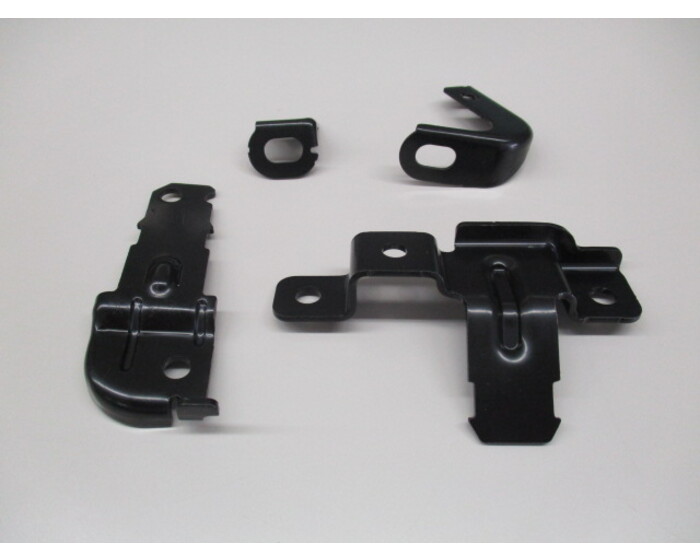
We carry out cation coating of brackets for automobile parts and home appliances. We can handle small lots and we are confident in the quality, so please contact us if you are interested. (Size for objects to be coated) 550 mm x 1000 mm x 200 mm (Film thickness) 20 ± 5 µm (Production lead time) 3 days
Bar press + cation coating + assembly / Vietnam
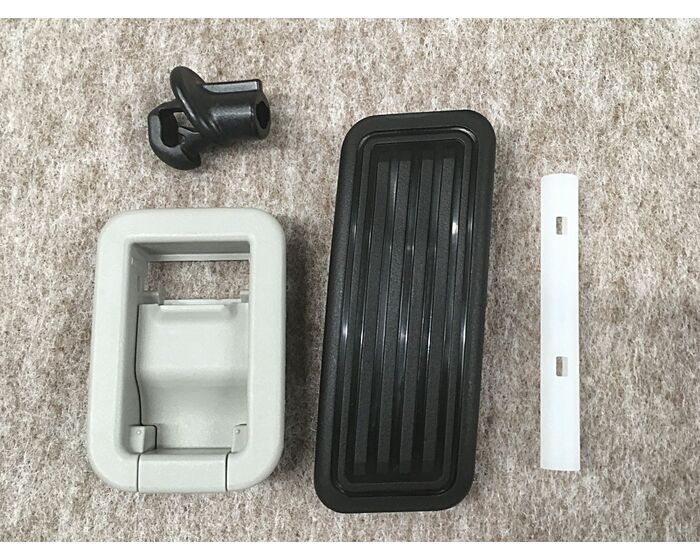
We perform bending of steel strips and pipes, cation coating, and assembly of resin molded products.
CONTACT
Inquiry