
FUJILLOY (THAILAND) CO., LTD.
SERVICE
Production Goods & Services
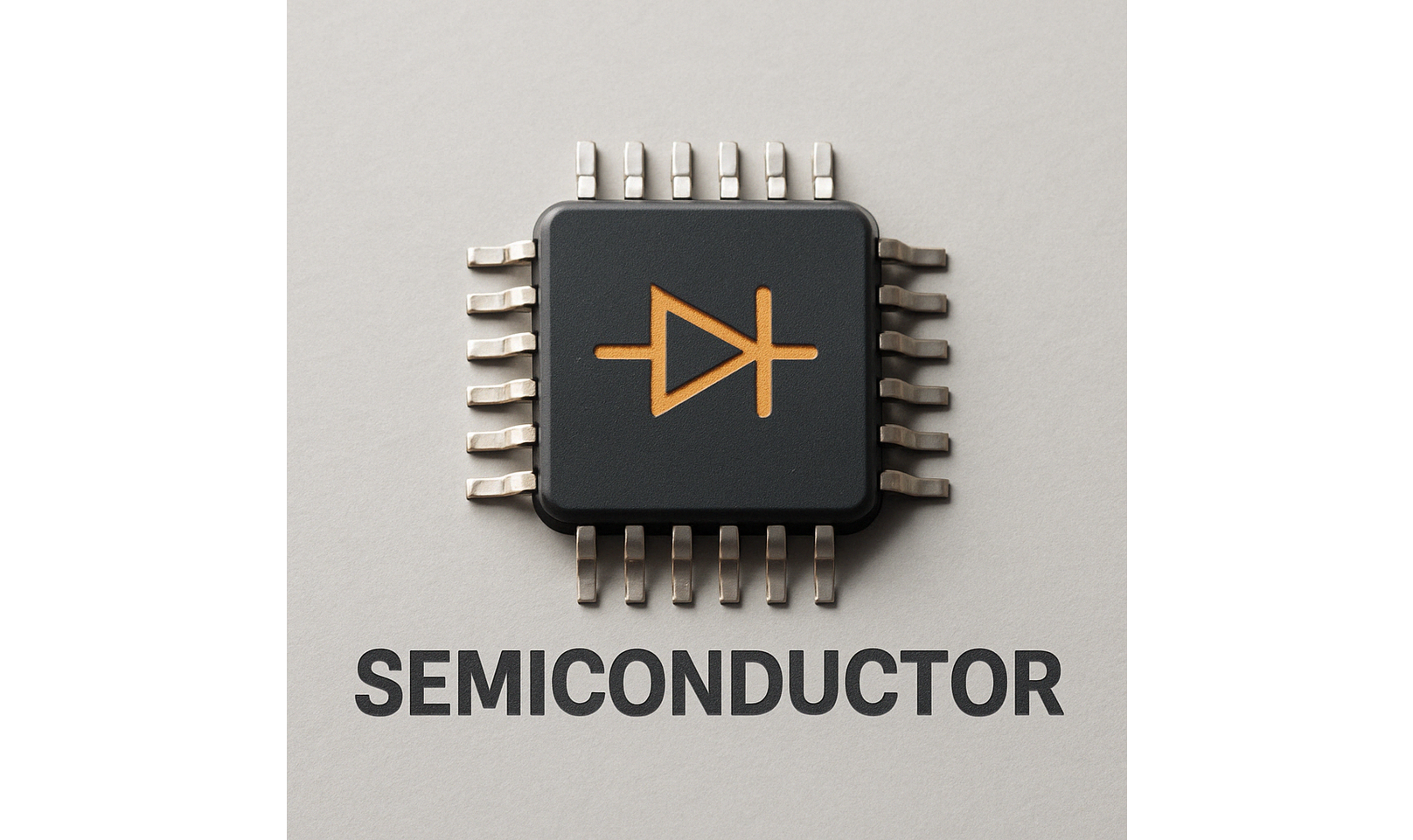
What Is a Semiconductor?|Discover the Heart of the Digital World
Product Info
Semiconductors are the foundation of all modern electronics—enabling everything from CPUs to EVs. This article explains how they work, why they matter, and what the future holds.
■ What Is a Semiconductor?
A semiconductor is a material with electrical conductivity between that of a conductor and an insulator. Common examples include silicon (Si) and germanium (Ge). These materials can change their conductivity depending on external conditions such as temperature, light, or voltage.
This unique property allows semiconductors to control and manipulate electrical signals, making them indispensable in computers, smartphones, home appliances, vehicles, and industrial machinery.
■ How Do Semiconductors Work?
The core mechanism of semiconductors lies in the pn junction, created by combining a p-type (hole-rich) and an n-type (electron-rich) semiconductor.
・ P-type: Contains "holes" or positive charge carriers
・ N-type: Contains free electrons or negative charge carriers
At the junction, a potential barrier is formed. Whether current can pass through depends on how voltage is applied:
・ Forward bias allows current flow
・ Reverse bias blocks current
This principle powers diodes and transistors. Transistors, in particular, act as both switches and amplifiers, and are critical components in logic circuits, CPUs, and memory chips.
■ Why Are Semiconductors Important?
Semiconductors play a crucial role in the evolution of technology for several reasons:
1. Miniaturization and High Performance
Advanced semiconductor processes (e.g., 5nm, 3nm) enable compact, high-speed, and energy-efficient devices.
2. Cross-Industry Applications
They power not just IT, but also automotive, medical, energy, aerospace, and defense systems.
3. Energy Efficiency
Power semiconductors increase the efficiency of motor control and power conversion, supporting eco-friendly innovations like EVs and smart grids.
In essence, semiconductors are not just components, but the digital infrastructure of modern life.
■ Challenges and the Future of Semiconductor Technology
Despite remarkable progress, the semiconductor industry faces growing challenges:
・ Physical limits of transistor miniaturization
・ Rising R\&D and production costs
・ Material supply constraints (e.g., rare metals)
However, emerging technologies such as:
・ Quantum computing
・ Optoelectronics (light-based semiconductors)
・ GAAFETs and new transistor architectures
are paving the way for continued breakthroughs. The future of semiconductors remains highly dynamic and full of potential.
■ Featured Product: Semiconductor Molds by FUJILLOY (THAILAND) CO., LTD.
In semiconductor manufacturing, precision is everything.
FUJILLOY (THAILAND) CO., LTD. offers high-performance molds for resin forming, cutting, and bending, purpose-built for producing semiconductor chips and electronic modules.
Key Features of FUJILLOY Molds:
・ Made from special-grade materials resistant to pressure and wear
・ Designed with micron-level precision using cutting-edge technology
・ Boost productivity and reduce costs across the production line
・ Proven performance in global automotive and electronics industries
Our molds comply with strict production standards and are ideal for applications requiring high reliability and repeatability.
■ For more details, please download the pdf or feel free to contact us.
#Semiconductor #Electronics #Transistor #CPUs #PowerSemiconductors #DigitalTechnology #PrecisionMold #Fujilloy #SemiconductorManufacturing #GAAFET
CATALOG
Related Catalogs

CONTACT
Inquiry