
YAMAGUCHI VIETNAM JSC
PRODUCTS
Technology / Product Information
Measures against casting porosity defects in Aluminum Die casting - Utilizing Vacuum Systems and Spray Robots

Technology / product information
What Is Porosity Defect?
Porosity defects in aluminum die-casting refer to the formation of bubbles or voids inside the metal during the casting process. These defects reduce the strength and durability of components, negatively impacting performance and lifespan. Minimizing porosity is particularly crucial for aluminum die-cast components that require high reliability, such as those used in automotive and electronic applications.
Main Causes of Porosity Defects
Air Entrapment: Air can be trapped during the inflow of molten aluminum into the mold, forming bubbles inside the metal.
Gas Generation: Moisture and impurities in the molten aluminum can produce gas, which becomes trapped within the metal.
Uneven Cooling: Differences in cooling speed within the mold can lead to shrinkage voids.
Improper Use of Mold Release Agent: Insufficient agent worsens metal flow, while excess leaves residues that contribute to porosity.
Our Porosity Reduction Solutions
We combine advanced technologies and process controls to minimize porosity:
✔Optimization and Standardization of Casting Conditions
By setting the appropriate temperature, pressure, and injection speed based on material properties and product specifications, we ensure stable quality and reduce the risk of porosity.
✔Utilization of Vacuum Equipment
Creating a vacuum inside the mold helps efficiently evacuate air and gas, suppressing the formation of porosity and voids. This method is particularly effective for complex-shaped products.
✔Improved Vent Design
Optimizing the vent grooves in the mold allows for more efficient gas escape, improves molten metal flow, and prevents porosity.
✔Addition of Overflow Sections
By adding overflow channels, excess gas can be discharged more effectively, preventing air pockets during casting. This improves internal product quality by reducing voids.
Features of Yamaguchi’s Aluminum Die-Casting
Supports products up to 6.5 kg
Capable of thin-wall casting as small as 2–3 mm
Equipped with die-casting machines from 420t to 800t, meeting a wide range of manufacturing needs
Integrated in-house production, including post-casting precision machining, ensures both high quality and short delivery times
Flexible production capabilities for both small-lot and mass production
Supplies components for a wide variety of industries, including automotive
Quality Assurance & Production System
Quality Control System
For each product number, a process quality control sheet (QC plan) is created to properly manage product quality.
Advanced Equipment
Shot blasting machines and precision tools guarantee uniform quality, even for intricate designs.
Rapid Turnaround
End-to-end production streamlines scheduling for on-time deliveries.
Reducing porosity defects in aluminum die-casting is essential to ensure product strength, durability, and overall quality. At our company, we implement advanced technologies—including optimization of casting conditions, vacuum systems, improved vent designs, and added overflow sections—to minimize porosity.
Furthermore, with die-casting machines ranging from 420t to 800t, we support flexible production for thin-walled (2–3 mm) and up to 6.5 kg products. Our integrated production system—from design to casting and precision machining—enables us to achieve stable quality and short delivery times.
PICKUP
Technology / Product Information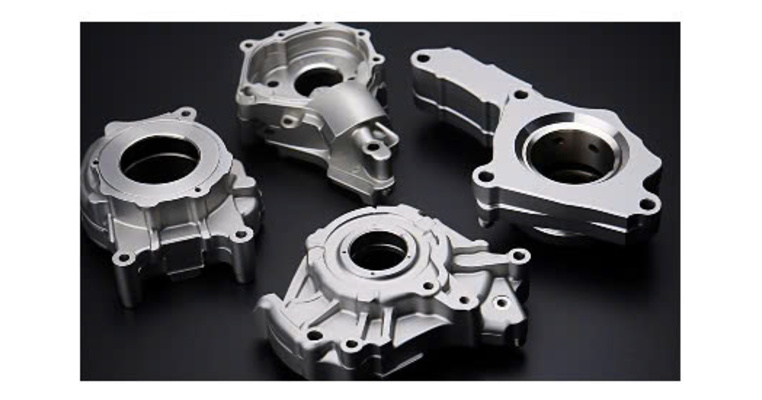
CONTACT
Inquiry