
YAMAGUCHI VIETNAM JSC
PRODUCTS
Technology / Product Information
What Determines the Accuracy of Aluminum Die Casting?
Technology / product information
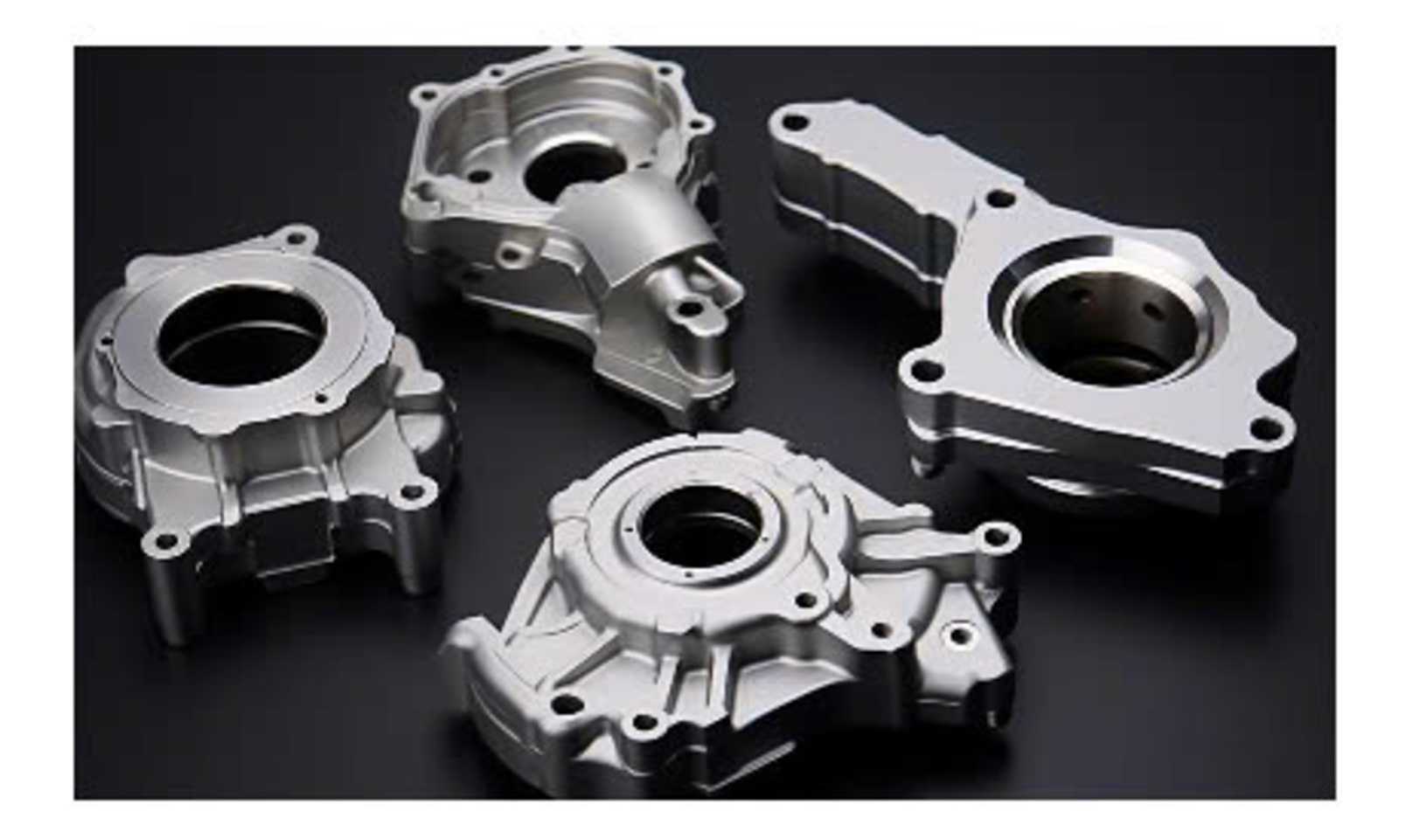
In the production of metal components, aluminum die casting is one of the most efficient methods for achieving high precision, excellent surface quality, and high productivity. However, maintaining consistent quality across production lots requires strict control over every element of the casting process.
Below are the five main factors that directly affect die casting accuracy, along with how Yamaguchi Vietnam manages them to ensure exceptional consistency for every product.
1. Temperature Control of Molten Metal
If the temperature is too high, oxidation, gas defects, and dimensional errors can occur. Conversely, if it’s too low, the molten metal cannot fully fill the mold, resulting in insufficient filling and imcomplete parts.
The ideal casting temperature for aluminum alloys is 660–700°C.
At Yamaguchi Vietnam, temperature is automatically controlled by electric furnaces equipped with sensors to maintain optimal fluidity of the molten metal during injection.
→ This system allows the company to keep dimensional errors within ±0.1 mm, even during mass production.
2. Injection Pressure
Pressure determines both the mold filling rate and the mechanical strength of the cast product.
If the pressure is too low, thin or detailed sections may not fill properly. If too high, it could cause mold damage or deformation.
Yamaguchi Vietnam utilizes 420–800 ton die casting machines (manufactured by Shibaura, Toyo, and TBC) and applies optimal pressure settings tailored to each mold and product specification.
→ This improves density and dimensional accuracy, minimizing geometric deviations.
3. Mold Degassing (Air Venting)
If gas is not adequately vented during injection, air bubbles can form, leading to surface and internal defects.
To prevent this, Yamaguchi Vietnam operates a dedicated vacuum degassing system in parallel with the die casting machines, removing air from inside the mold before injection.
→ This minimizes bubble formation and greatly enhances surface quality.
4. Mold Filling Speed
The filling speed directly affects metal structure formation and dimensional accuracy.
If too slow, cold shuts (poor fusion) can occur; if too fast, it can cause turbulence, bubbles, or surface defects.
Yamaguchi Vietnam’s 350–800 ton die casting machines (Shibaura, Toyo, TBC) maintain stable control over pressure and speed to ensure uniform mold filling and reduced internal stress, resulting in highly precise product geometry.
5. Cooling Process
Cooling speed affects shrinkage, residual stress, and surface flatness.
Uneven cooling may lead to warping or fine cracks.
Yamaguchi Vietnam manages temperature control and uniform heating/cooling of molds to suppress temperature variations, especially in thin-walled components.
→ This ensures high dimensional stability even during continuous casting.
🏭 Yamaguchi Vietnam’s Quality Control System
With over 10 years of experience in aluminum die casting and post-processing,Yamaguchi Vietnam has established a fully integrated production system covering:
Mold design → Casting → CNC machining → Dimensional inspection
Main Equipment:
Die casting machines: 420–800 tons (Shibaura / Toyo / TBC)
Vacuum degassing and robotic spray systems (FANUC)
CNC milling and turning (accuracy: ±0.01 mm)
CMM, form measuring machines, roundness and roughness testers
ISO 9001:2015 certified, with 100% inspection system
By consistently managing these five key factors, Yamaguchi Vietnam achieves ±0.05–0.1 mm precision and excellent shape stability, meeting strict quality standards for both Japanese and international clients.
📩 Contact Us
If you are seeking a reliable partner capable of delivering high-precision, high-quality aluminum die-cast products consistently, please contact Yamaguchi Vietnam.
We will propose optimal casting and machining solutions tailored to your drawing specifications.
PICKUP
Technology / Product Information
CONTACT
Inquiry