
SHOWA SOKKI CORPORATION
PRODUCTS
Technology / Product Information
Why machine-tool motors fail unexpectedly | From instinct to vibration numbers you can act on
Technology / product information
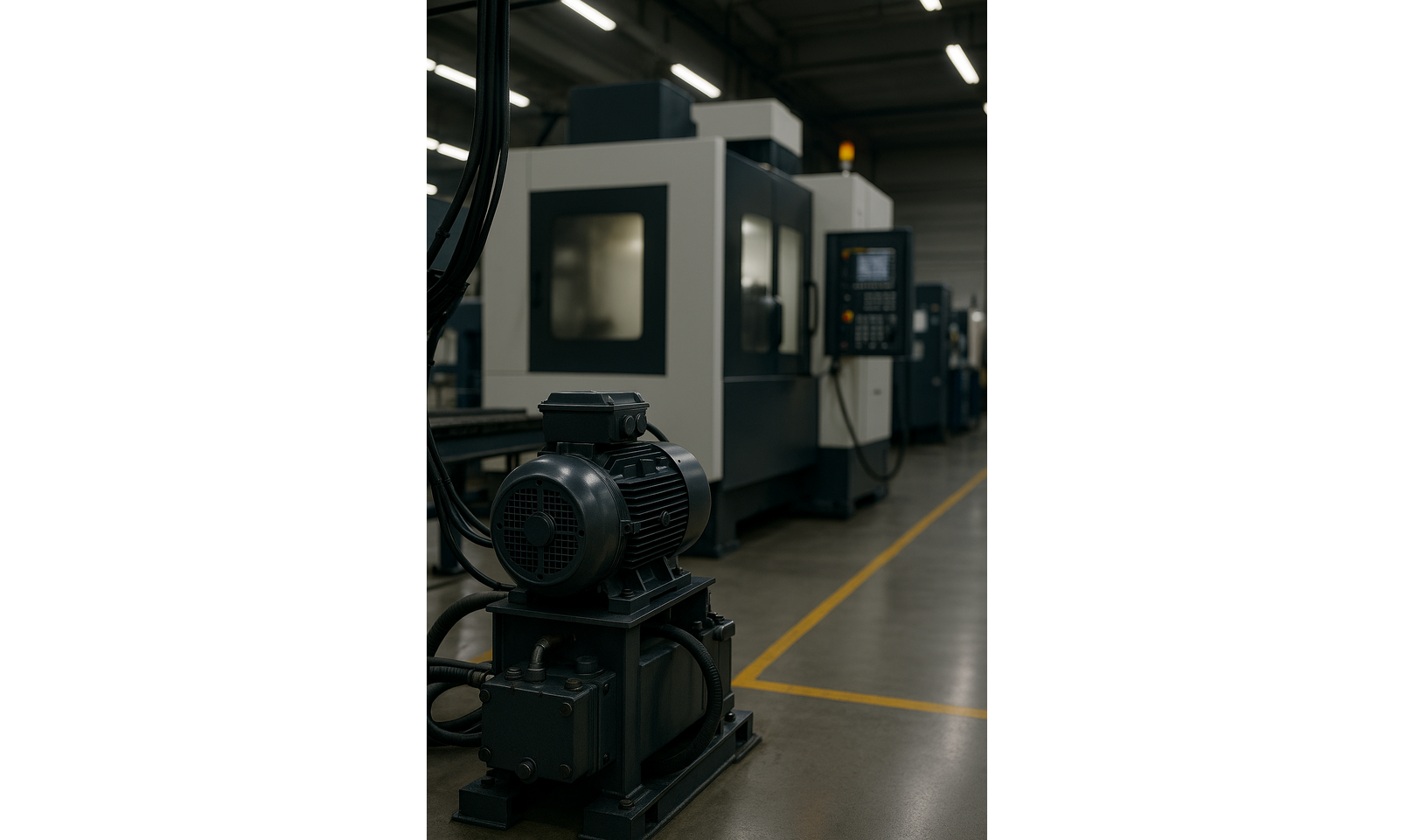
On a night shift in Chonburi, a machining center spindle slowed slightly and a warning light blinked. The operator sensed “something’s off” and paused, but after restart the spindle-drive motor overheated and the line was down for half a day. Cases like this show a common pattern: instinct notices changes, but without vibration numbers it’s hard to make timely decisions.
■ Why it matters now
CNC automation is expanding in the EEC, driven by EV upgrades and shifting demand. Plants are asked not just to “avoid downtime,” but to “choose when to stop.” Heat, humidity, and varying cut loads make motors show misalignment, unbalance, looseness, or failing cooling fans as subtle vibration patterns—too fine for the ear. Frequent tool and fixture changes also blur whether differences come from the process or the machine.
■ From feelings to numbers
The core is RMS vibration velocity as the primary KPI, supported by spectrum and trend analysis:
- Unbalance: dominant 1× growing with speed
- Misalignment: strong 2× plus higher axial vibration
- Looseness: broad spectrum with sub-harmonics
- Bearings: high-frequency signatures, revealed via envelope analysis
To avoid false alerts, apply two-level alarms with dwell time and set thresholds from on-site baselines, not generic values.
Practical tools:
- MODEL-1332B: Handheld meter for fast baseline and spot checks
https://prime.nc-net.com/105994/en/product_others/detail_goods/25249
- MODEL-2502: 4–20 mA transmitter for continuous monitoring into PLC/SCADA
https://prime.nc-net.com/105994/en/product_others/detail_goods/25250
- MODEL-2590C: Panel display with configurable alarms
https://prime.nc-net.com/105994/en/product_others/detail_goods/25338
■ Applying in the field
First, “learn the normal numbers” by capturing baselines during real jobs, across typical speeds and loads. This helps teams distinguish between process changes and machine anomalies.
Confirm suspected issues with MODEL-1332B, then fix monitoring points with MODEL-2502, and configure MODEL-2590C alarms that focus on persistent trends rather than momentary spikes. Plants adopting this approach often:
- Detect faults before audible noise
- Cut unplanned stoppages
- Move repairs into scheduled windows
■ Summary & Showa Sokki’s recommendation
Ears differ, numbers agree. Start with baselines everyone can read the same way. Use MODEL-1332B for a fast start, expand with MODEL-2502 for continuous monitoring, and add MODEL-2590C for in-panel alerts. Showa Sokki and our Thailand partners are ready to help you pick the best-fit unit and get practical training for a smooth first phase.
For more details, contact us or download the product PDF.
------------------------------------------------------------------
Download :
- MODEL-1332B (Free Download): https://prime.nc-net.com/105994/en/catalog/detail/7285
- MODEL-2502 (Free Download): https://prime.nc-net.com/105994/en/catalog/detail/7541
- MODEL-2590C (Free Download): https://prime.nc-net.com/105994/en/catalog/detail/7540
------------------------------------------------------------------
【Glossary】
‐ RMS vibration velocity: Key health metric (mm/s RMS)
‐ Two-level alarm: Trend vs Action with dwell
‐ Threshold: Derived from on-site baseline
‐ Misalignment: Adds strong 2× and axial content
‐ Unbalance: Dominant 1×, grows with speed
‐ Mechanical looseness: Broad spectrum, sub-harmonics
‐ Envelope analysis: Bearing high-frequency detection
‐ FFT: Fast Fourier Transform
‐ RMS / Peak / P-P: Common units
【References】
‐ CNC automation investment trends in Thailand & EEC
‐ ISO 10816/20816 motor vibration assessment
‐ Envelope & FFT analysis for bearing diagnostics
‐ Communication frameworks for production and maintenance teams
#CNC #MachineTool #MotorVibration #PredictiveMaintenance #ISO10816 #ShowaSokki #EEC #ConditionMonitoring #SpindleMotor #EnvelopeAnalysis
(Last update : 2025-09-10)
PICKUP
Technology / Product Information
CONTACT
Inquiry