
TAPYRUS (THAILAND) CO., LTD.
SERVICE
Production Goods & Services
Melt Blown Nonwoven Fabric|Micron-Level Filtration for Medical and Industrial Applications
Product Info
Melt blown nonwoven fabric features fibers 50 times thinner than human hair, yet captures particles smaller than bacteria. Created by extruding molten polymer through tiny nozzles while high-velocity hot air blows the material into ultrafine fibers (0.1-10 micrometers), it forms a dense, maze-like structure.
The Science of Protection
Filtration operates through three mechanisms: Inertial Impaction (large particles collide with fibers), Interception (medium particles caught near fiber surfaces), and Diffusion (smallest particles trapped by Brownian motion). This achieves 95%+ efficiency for 0.3-micrometer particles.
Revolutionary Applications
- Medical: Critical middle layer in N95 masks and respirators, providing primary filtration protection during COVID-19 pandemic.
- Environmental: Absorbs up to 10 pounds of oil per pound of fabric in spill cleanup while repelling water.
- Industrial: HVAC filters in hospitals, cleanroom air filters, automotive cabin filters removing allergens and pollutants.
- Liquid Filtration: Clarifies beverages without taste impact, removes bacteria and viruses in water treatment.
Manufacturing Process
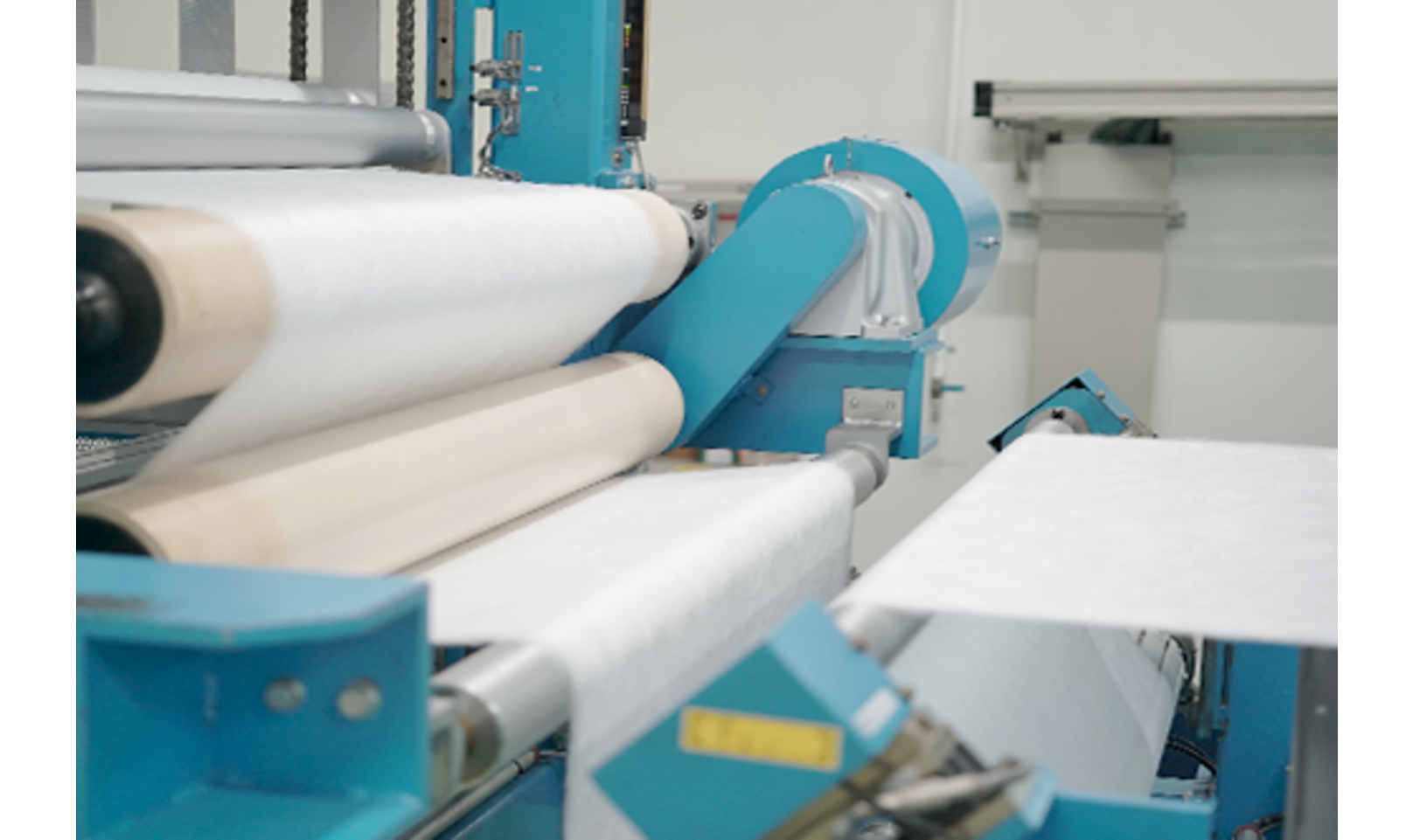
Polymer pellets heated to 200-300°C are forced through spinnerets while 300-400°C air creates ultrafine fibers collected on conveyor belts. Production reaches hundreds of meters per minute with widths exceeding 8 meters.
Future Innovations
Developments include biodegradable polymers, recycling methods, antimicrobial additives, and nanotechnology integration. Emerging applications span smart textiles, wound dressings, energy storage, sound dampening, and agriculture. The market grew from $1.2 billion (2020) to $4 billion (2021), highlighting strategic importance.
This invisible material quietly protects our health and environment daily, proving that microscopic innovations make the biggest difference.
ーーーーーーーーーーーーーーーーーーーーーーーーーーーーーーーーーーーーーーーーーーーーーーーーーーーーーーーーー
❓ FAQ
Q: How fine are melt-blown fibers?
A: They range from 0.1–10 microns, depending on production conditions.
Q: Why does melt-blown fabric filter so effectively?
A: Because of its ultrafine fibers, high surface area, and the combined action of three filtration mechanisms.
Q: Can melt-blown fabric be reused?
A: Sometimes, but filtration performance may decrease as electrostatic charge dissipates.
📚 Glossary
Inertial Impaction: Filtration by particle collision
Interception: Filtration by surface trapping
Diffusion: Filtration of ultrafine particles via Brownian motion
#MeltBlown #Nonwoven #FiltrationMedia #Microfiber #HVAC #N95 #OilAbsorbent #WaterTreatment #Cleanroom #AdvancedMaterials

CONTACT
Inquiry