
TAPYRUS (THAILAND) CO., LTD.
SERVICE
Production Goods & Services
Fine Fiber Formation by Meltblown Process|Technology and Industrial Applications
Product Info
The meltblown process enables the production of ultrafine nonwoven fibers (0.5–5μm), crucial for high-performance filters, medical masks, and environmental applications. This article explains its technology, advantages, and industries using it.
What is the Meltblown Process?
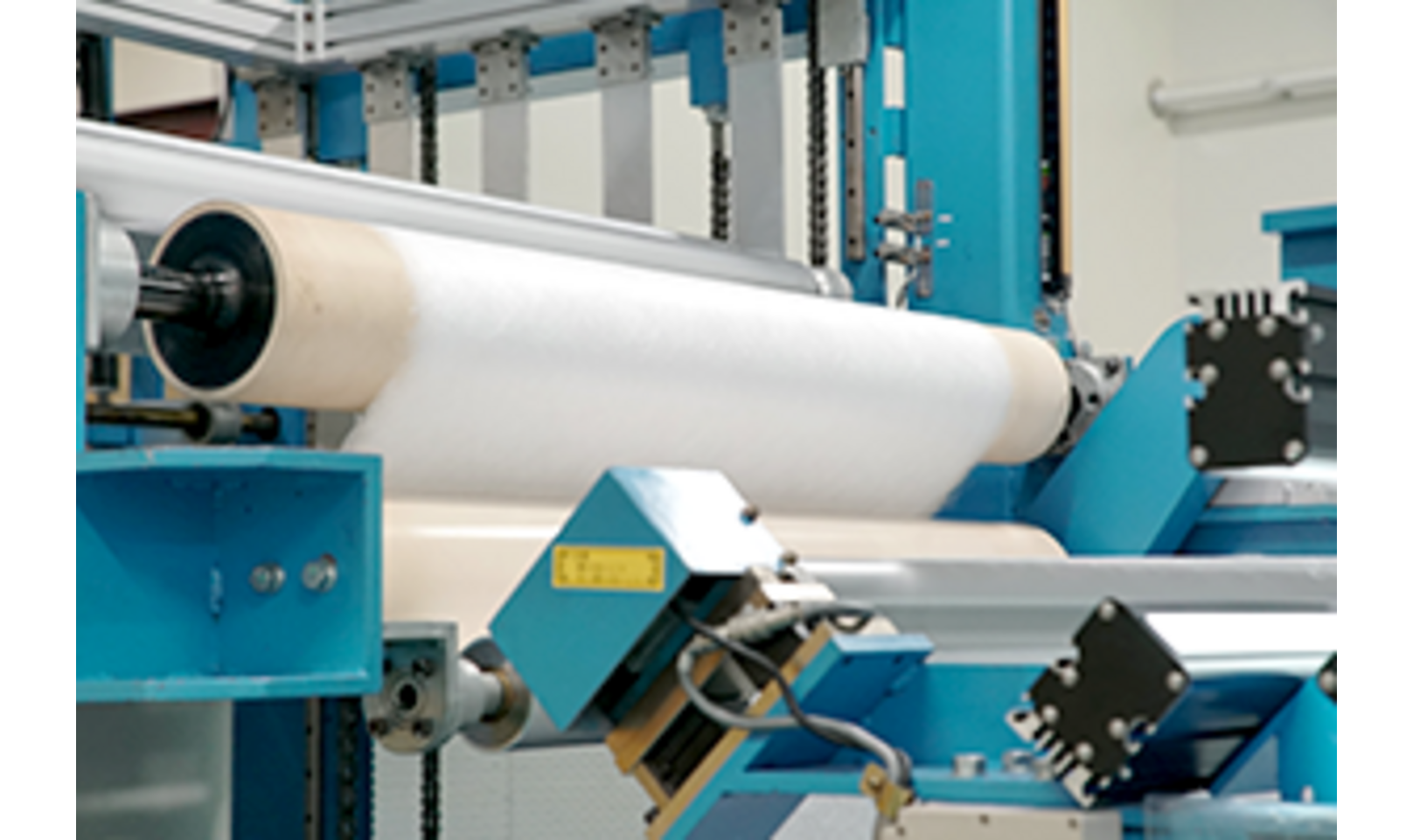
The meltblown process involves melting thermoplastic resins such as polypropylene (PP) and extruding them through fine nozzles, where high-speed hot air stretches the molten polymer into ultrafine fibers. These fibers are then deposited onto a conveyor belt to form nonwoven fabric.
Compared to spunbond, meltblown produces much finer fibers, making it ideal for functional materials requiring high filtration or absorption efficiency.
Process Mechanism of Fine Fiber Formation
- Polymer Melting: Thermoplastics like PP are heated and melted.
- Extrusion: Molten resin is forced through micro-nozzles.
- Air Attenuation: Hot air stretches the resin into micro/nano-scale fibers.
- Deposition: Fibers are collected on a conveyor belt to form fabric.
This structure allows high porosity and large surface area, key for capturing particles and absorbing liquids.
Characteristics and Advantages
- High Filtration Efficiency: Excellent particle and bacteria capture (e.g., BFE, PFE).
- Lightweight and Breathable: Soft, comfortable material ideal for masks and apparel.
- Thermal & Acoustic Insulation: Useful in automotive and industrial sectors.
- Electret Treatment: Enhances electrostatic filtration efficiency.
- Customizable Fiber Diameter: Adjustable to match application requirements.
Industrial Applications
- Medical Field: N95 and surgical masks, medical gowns, hygiene caps.
- Air & Liquid Filtration: HVAC systems, HEPA filters, oil-water separators.
- Environmental: Oil absorbent mats, water filtration media.
- Apparel: Waterproof yet breathable layers in textiles.
- Agriculture: Frost protection covers, insect-proof sheets.
Eco-friendly meltblown nonwovens using PLA (biodegradable polymer) are gaining traction for sustainability.
ーーーーーーーーーーーーーーーーーーーーーーーーーーーーーーーーーーーーーーーーーーーーーーーーーーーーーーーーー
❓ FAQ
Q: What is the fiber size range of Meltblown material?
A: Approximately 0.5–5 microns, depending on processing conditions.
Q: Why is Meltblown used in masks?
A: It provides excellent fine-particle filtration while remaining breathable.
Q: What is bio-based Meltblown?
A: Meltblown fabric made from PLA, a bioplastic that reduces environmental impact.
📚 Glossary
Meltblown: Fiber-forming process producing nano–micron nonwoven fibers
Electret: Electrically charged material that enhances filtration
Die Head: Nozzle assembly controlling fiber size in Meltblown
#nonwovenfabric #meltblown #filtration #medicalsupplies #HVACfilters #bioplastics #sustainability #Tapyrus #ultrafinefibers #cleanroom

CONTACT
Inquiry