
TAPYRUS (THAILAND) CO., LTD.
SERVICE
Production Goods & Services
What Is the Melt Blown Process?|Ultrafine Fiber Tech for High‑Performance Filters
Product Info
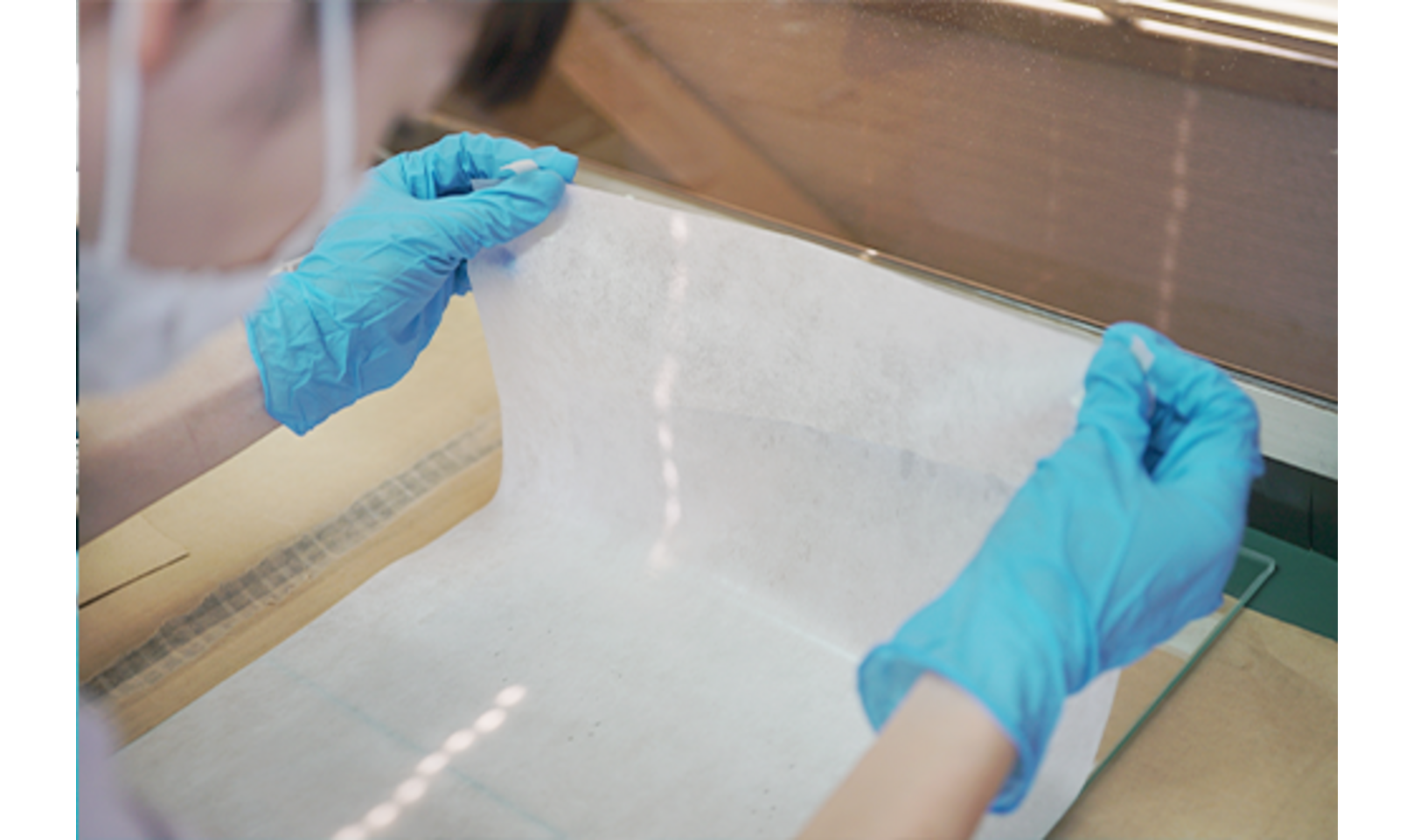
The melt‑blown process transforms molten thermoplastics into ultrafine microfibers (1–5 μm), enabling dense, electrostatic nonwoven materials with exceptional filtration and barrier performance. It’s vital for masks, purifiers, medical textiles, absorbents, and battery separators.
What Is the Melt‑Blown Process?
This method extrudes molten polymer (e.g., PP, PET, TPU) through micro‑nozzles, then uses high‑speed, hot air to stretch them into ultrafine fibers. The result is a nonwoven web with unmatched filtration capability, especially compared to traditional spunbond methods.
Key Steps in Melt‑Blown Fabrication
1. Polymer Melting: Thermoplastics are heated until fully molten.
2. Extrusion Through Micro‑Nozzles: Molten resin flows through hundreds of micro-scale nozzles (die head).
3. Fiber Formation via Hot Air: High-temperature airflow draws and cools the filaments into ultrafine fibers.
4. Fiber Deposition & Bonding: Random fiber deposition on a conveyor, then bonding via heat or electrostatic treatment to form a durable nonwoven web.
This continuous, efficient process supports mass production of specialized filtration materials.
Characteristics of Melt‑Blown Fibers
- Ultrafine Diameter (1–5 μm): Produces dense, high‑efficiency filter webs.
- High Surface Area & Porosity: Offers exceptional filtration with low pressure drops.
- Electret Retention: Fibers can be charged to enhance particle capture.
- Lightweight & Flexible: Random fiber structure yields soft, breathable fabrics.
These traits make melt‑blown nonwovens essential in medical, industrial, and consumer applications.
Challenges & Improvement Trends
- Nozzle Clogging: Resin filters and automatic die cleaning improve yield.
- Electrostatic Degradation: Use of charge-stable additives and multi-layer structures like SMS help retain performance in humid environments.
- Recycling Complexity: Composite nonwovens limit recyclability. Solutions include mono-material designs and biodegradable resins.
Addressing these issues is essential to maintain quality and enhance sustainability.
ーーーーーーーーーーーーーーーーーーーーーーーーーーーーーーーーーーーーーーーーーーーーーーーーーーーーーーーーー
❓ FAQ
Q: How fine are melt-blown fibers?
A: They are typically 1–5 microns, making them suitable for fine filtration.
Q: Why is melt-blown used as the filter layer in masks?
A: Because it has high surface area, can retain electrostatic charge, and captures fine particles effectively while maintaining low airflow resistance.
Q: Why does electrostatic charge degrade over time?
A: Exposure to moisture and heat reduces charge retention, requiring additives or multilayer designs to maintain efficiency.
📚 Glossary
Melt Blown: A microfiber-forming process using high-pressure hot air
Electret: Charge-retaining fibers that enhance particle capture
Die Head: The nozzle assembly that forms micro-scale fibers
#MeltBlown #UltrafineFiber #FilterTechnology #ElectretNonwoven #MaskFilter #NonwovenManufacturing #SMSComposite #MedicalTextiles #SustainableNonwoven #IndustrialFilters

CONTACT
Inquiry