
TS COATING (THAILAND) CO., LTD.
SERVICE
Production Goods & Services
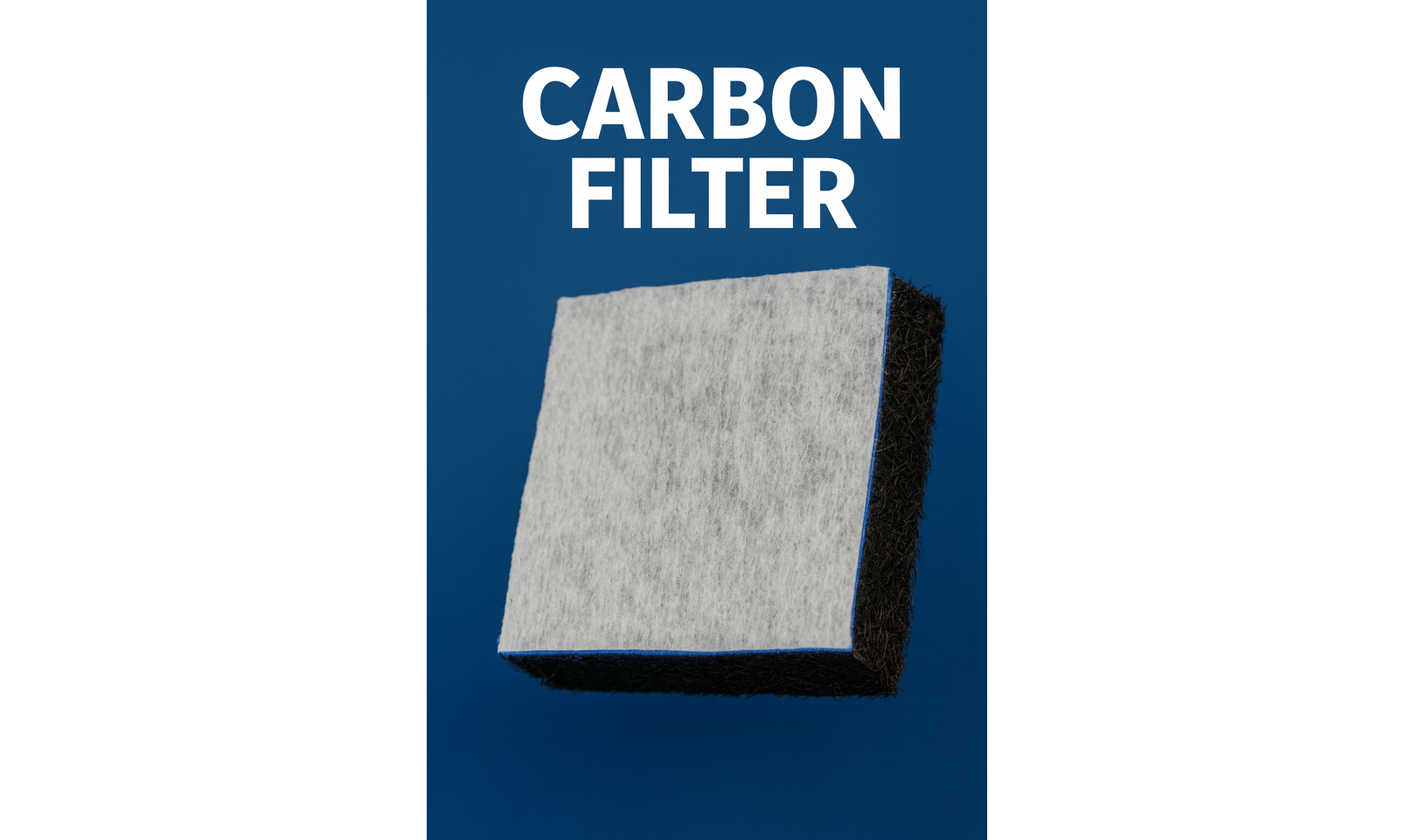
Carbon Filter | How It Works & Why Paint Shops Need VOC Control
Product Info
🌟 Key Takeaways
- A Carbon Filter uses activated carbon to capture VOCs and odors through micro-porous adsorption.
- Paint shops rely on Carbon Filters to stabilize booth pressure, protect surface quality, and comply with environmental regulations.
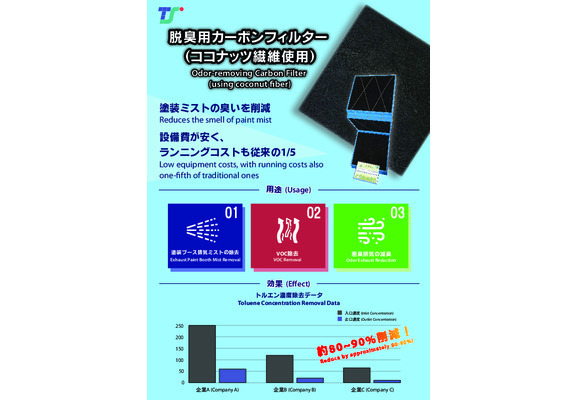
- Coconut-fiber activated carbon typically removes 80–90% of VOCs based on real test data.
- ASHRAE-rated Carbon Filters often deliver 85%+ efficiency with low initial pressure drop for stable airflow.
ーーーーーーーーーーーーーーーーーーーーーーーーーー
In industrial painting environments, VOCs, strong odors, and overspray are common issues across automotive, metal, electronics, and plastic production lines. Poor air quality affects worker health, process safety, coating appearance, and environmental compliance.
A widely used solution to manage these pollutants is the Carbon Filter, which efficiently absorbs VOCs and reduces odor during paint operations.
🔶 Concept — How a Carbon Filter Works
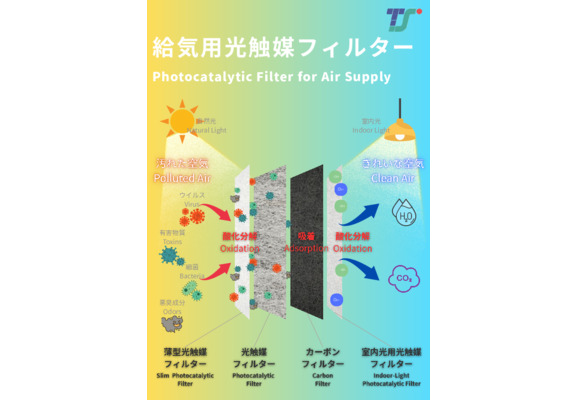
A Carbon Filter removes VOCs through adsorption, a process where VOC molecules are drawn into the highly porous structure of activated carbon.
Coconut-fiber activated carbon is widely used in paint shops because its high pore volume allows continuous VOC absorption during operation.
Real-world testing confirms that it can reduce VOCs such as toluene and xylene by approximately 80–90%, making it suitable for paint booths with high solvent concentration.
🔶 Practical Guideline — What Makes a Good Carbon Filter
A Carbon Filter designed for paint-shop exhaust should demonstrate reliable performance indicators such as:
- Efficiency ≥ 85% (ASHRAE)
- Dust Holding Capacity of 1300 g/m² to extend service life
- Low Initial Pressure Drop (≈59 Pa) for stable booth airflow
- Heat resistance up to 80°C suitable for exhaust systems
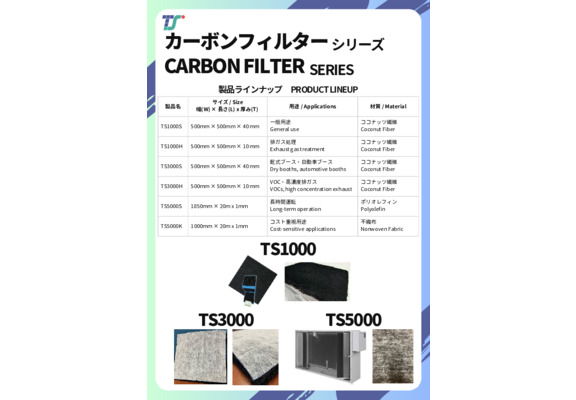
(Data sourced from the TS3000 Technical Data Sheet and Carbon Filter Series from TS COATING.)
🔶 Example — Real Applications in Paint Shops
In typical paint lines, air passes through a pre-filter before entering the Carbon Filter layer, where VOCs are captured before air is released outside.
This process helps reduce odor, lower VOC emissions, and maintain booth pressure stability.
High-volume facilities such as automotive and electronics plants often choose Carbon Filters with integrated pre-filters to reduce clogging and extend replacement intervals.
📘 Summary
A Carbon Filter is a fundamental solution for VOC and odor control in paint operations. Its high adsorption efficiency and low pressure drop help maintain booth stability and improve coating quality. Understanding its characteristics enables better design and optimization of exhaust systems.
📥 Download Catalogue
Looking for full specifications and detailed Carbon Filter information?
Click to download the Product Catalogue for filter selection and exhaust-system planning.
ーーーーーーーーーーーーーーーーーーーー
❓ FAQ
Q1: How is activated carbon different from regular charcoal?
A: It has micro-sized pores and a significantly larger surface area, allowing far greater VOC adsorption capacity.
Q2: Can it be used with all types of paint?
A: Yes. It is suitable for solvent-based, water-based, and UV paints because most VOCs can be effectively adsorbed.
Q3: How often does the Carbon Filter need replacement?
A: It depends on VOC load, but filters with higher dust capacity (e.g., 1300 g/m²) generally provide a longer service life.
ーーーーーーーーーーーーーーーーーーーー
🔗 Cluster Internal Link
Core Content: https://prime.nc-net.com/100377/en/product_others/detail_goods/27576
Advance Knowledge: https://prime.nc-net.com/100377/en/product_others/detail_goods/27598
---
📚 Glossary (Key Terms)
- Carbon Filter: A filter using activated carbon to absorb VOCs and odors.
- Activated Carbon: Porous carbon material used for VOC adsorption.
- VOC (Volatile Organic Compounds): Solvent-based chemical vapors produced during painting.
- Adsorption: Process where molecules adhere to a material’s surface.
- ASHRAE Efficiency: Standardized filtration efficiency rating.
- Pressure Drop: Airflow resistance when passing through a filter.
- Dust Holding Capacity: Ability of a filter to retain particulate matter.
📖 Reference
- Carbon Filter Series – Product Catalogue
- TS3000 – Technical Data Sheet
🤝 Trust
Content reviewed by Yuki Okuno – Project Leader, TS COATING (THAILLAND) CO., LTD.
Information based on internal documents.
#CarbonFilter #AirFiltration #VOCControl #PaintBooth #ActivatedCarbon #IndustrialAirQuality #CoatingProcess #ExhaustSystem #OdorControl #TS3000
Updated: 2025-11-27
CATALOG
Related Catalogs
CONTACT
Inquiry