PRODUCTS
Technology / Product Information
Technology / product information
12hits
Narrow by Industry Category
Narrow by material Category
Summary: Put an End to “Cloudy Oil is Normal” Oil cloudiness is a sign that "contamination is not being prevented." Maintaining performance without relying on replacement is the new standard. With Miracle Boy, you can protect both oil cleanliness and your equipment.
Equipment Problems Caused by Moisture and Emulsion Contamination, and their Countermeasures Can “Just a Little Water” Damage Equipment? Oil is supposed to repel water, yet many operators report: “Oil looks milky and foamy.” “Valves and cylinders malfunction.” “Pumps seize up and the equipment stops.” Most of these issues are caused by invisible levels of moisture or emulsified water inside the oil. Mechanism of Moisture and Emulsion Contamination Cause | Description Humidity in air | Condensation inside tank breathing, water droplets entering Coolant leakage | Pipe deterioration or heat exchanger infiltration High temperature & agitation | Small amounts of water emulsify (milky state) and become hard to remove → Once water enters, it mixes with oil, leading to “invisible degradation” that progresses beyond visual detection. Main Problems Caused by Moisture and Emulsion Problem | Description | Result Oil film rupture | Decreased lubricating performance | Pump seizure, accelerated wear Valve malfunction | Viscosity change due to emulsion | Control failure, time lag occurrence Rust & corrosion | Metal reaction with moisture | Internal damage, increased maintenance cost Accelerated oxidation | Chemical reaction due to water and heat | Greatly shortened oil lifespan Principle of Countermeasure: Not just "Prevent water" but "Remove it if it enters" Completely blocking water entry is unrealistic. Therefore, the key is to remove any entered water immediately and maintain oil performance. Fundamental Solution: Water Removal and Purification by “Miracle Boy” What is Miracle Boy? A high-performance adsorptive oil purification system that removes moisture, emulsion, fine particles, and oxidation sludge — all at once. Water & Emulsion Removal Performance Function | Technology | Effect Water removal | Adsorptive filter absorbs down to ppm levels | Prevents whitening, corrosion, stabilizes viscosity Emulsion removal | Unique adsorption layers absorb even hard-to-separate emulsified water | Ensures stable control equipment operation Particle removal | Deep filtration (focused on 3 µm) | Prevents clogging and wear → Many real-world cases report: “Cloudy oil becomes clear again!” Case Study (Automotive Parts Factory) Measurement Item | Before | After Moisture content | 1,100 ppm | 68 ppm Oil appearance | Milky, foamy | Clear and colorless Valve malfunctions | 5 cases/month | 0 cases in 6 months Oil replacement | Once per year | Over 3 years continuous use without replacement Summary: "It's not over when water gets in" The key is not to prevent water entry completely, but to remove it immediately. With Miracle Boy, you can eliminate invisible moisture and emulsions, keeping oil performance stable for the long term. Ideal for Sites Facing These Problems Oil appearance deteriorates due to cloudiness/foaming. Recurring control malfunctions with no clear cause Equipment must run continuously without shutdown Existing water-removal filters are ineffective Toward “Water-Free” Equipment Operation With Miracle Boy, dry, clear oil becomes the new normal.
Why Does Oil Turn Cloudy So Quickly?
Performance Deterioration Caused by Contamination and Moisture, and Fundamental Countermeasures Visible “Cloudiness” — A Warning Sign of Abnormality “The oil turns white and cloudy soon after adding new oil.” “The oil quickly loses its transparency.” “Valves are malfunctioning, but the cause is unknown.” Such phenomena are important signs indicating the beginning of oil quality degradation. Cloudiness is the visible form of contamination. Leaving this unaddressed leads to risks of performance decline, failure, and equipment stoppage. Contamination Source | Cause | Main Effect Moisture | Condensation, humidity, or coolant leakage | Cloudiness, emulsification, corrosion, oil film breakdown Emulsion | Mixing of oil and water | Viscosity change, foaming, machine malfunction Foreign particles | Wear debris, dust, or scale | Filter clogging, valve sticking Oxidation products | Sludge from thermal degradation | Darkening, viscosity increase, operation failure ➡ Even slight contamination can significantly affect performance. On-Site Problems Caused by Decreased Oil Cleanliness Symptom | Cause | Result Valve sticking | Sludge accumulation | Operational abnormality, control failure Pump seizure | Oil film rupture | Expensive parts replacement Sensor misdetection | Moisture or fine particles | Possible production line stoppage Frequent oil changes | Inability to maintain cleanliness | Increased cost, waste oil, and workload Countermeasure: From “Replace When Dirty” → “Keep It Clean” Traditionally, oil was simply replaced when it became dirty. However, in recent years, the concept of protecting, regenerating, and continuously using the oil itself is gaining attention. Fundamental Solution: Maintaining Oil Cleanliness with “Miracle Boy” What is Miracle Boy? A multi-functional adsorptive oil purification unit that simultaneously removes the three main contaminants — moisture, particles, and oxidation products. Three Purification Mechanisms Contaminant | Removal Technology | Effect Moisture & Emulsion | Physical adsorption by special material (down to ppm level) | Prevents cloudiness, foaming, and corrosion Fine Particles / Foreign Matter | Deep filtration structure (effective below 3 µm) | Protects valves and pumps Oxidized sludge | Decomposes and adsorbs sludge via multi-layer structure | Suppresses darkening, viscosity increase → Restores transparency and maintains new-oil-level cleanliness over the long term Dưới đây là phiên bản chuyển đổi dữ liệu từ bảng về "Example: Changes after introduction (Press Processing Factory)" thành định dạng văn bản có phân tách bằng dấu **dọc (pipe)** (`|`): **Cấu trúc bảng:** | Indicator | Before Introduction | After | | :--- | :--- | :--- | | Moisture content (ppm) | 1,200 | 75 | | Contamination (mg/100ml) | 5.7 | 0.1 | | Valve malfunctions | 2–3 times/month | 0 times / 6 months | **Phiên bản chuyển đổi (dùng dấu `|`):** ``` Example: Changes after introduction (Press Processing Factory) Indicator | Before Introduction | After Moisture content (ppm) | 1,200 | 75 Contamination (mg/100ml) | 5.7 | 0.1 Valve malfunctions | 2–3 times/month | 0 times / 6 months → Cloudiness and whitening were eliminated, achieving stable operation without oil replacement. Summary: Put an End to “Cloudy Oil is Normal” Oil cloudiness is a sign that "contamination is not being prevented." Maintaining performance without relying on replacement is the new standard. With Miracle Boy, you can protect both oil cleanliness and your equipment.
“No More Waste Oil” — A Revolution in Zero-Disposal Operations
Next-generation oil management that eliminates cost, labor, and risk The Current Issue: The Growing Problem of Waste Oil Changing oil inevitably produces waste oil. The costs and procedures involved in its disposal are becoming increasingly burdensome year by year. Stricter regulations on storage and legal management of waste oil Rising costs for treatment and transportation Environmental and reputational risks from CO₂ emissions Administrative penalties due to disposal errors Mental and operational burden on staff These issues have been accepted as "unavoidable." But what if operation without generating waste oil were possible? The Hidden Costs Behind Waste Oil Type | Details | Frequency Disposal cost | Incineration, collection, or outsourcing | Once or several times a year (hundreds of thousands of yen each time) Administrative work | Creation and storage of manifests | Every disposal cycle Storage risk | Leakage, odor, or deterioration | Constant CO₂ emissions | Approx. 2.5 kg of CO₂ generated per 1 L of waste oil incineration | Several tons per year ➡ These costs, though not immediately visible, accumulate steadily over time, adding up to major financial and environmental burdens. The Solution: A New Standard — “Don’t Replace the Oil” Oil becomes contaminated and requires replacement because of the accumulation of contaminants such as: Particles (metal wear debris, dust) Moisture (humidity, condensation, cooling water leaks) Oxidation sludge (degradation from heat and air contact) If these contaminants are continuously removed, the oil never needs to be replaced, and no waste oil is generated. The Key to the Technology: “Miracle Boy” What is Miracle Boy? A high-performance, multi-functional oil purification device designed to let you use oil continuously without disposal. Contaminant | Removal Method | Effect Particles (≤3µm) | Deep-absorption filtration | Prevents pump and valve damage Water | Adsorption (handles emulsified water) | Prevents cloudiness and corrosion Oxidation sludge | Decomposes and adsorbs via patented adsorption structure | Maintains viscosity and extends oil life It removes only impurities while retaining essential additives — restoring oil performance rather than resetting it. Case Study: Factory That Achieved Zero Waste Oil Industry: Automotive parts manufacturing (turbine oil system) Annual waste oil: 4,500L → 0L Waste oil treatment cost: ¥480,000 → ¥0 Annual oil purchase: ¥600,000 → only a few tens of thousands (for refills) Reduced all tasks, paperwork, and training related to waste oil handling Annual CO₂ emissions reduced by approx. 11 tons Summary: “Not Disposing = The Future’s Common Practice” The old beliefs — “Oil must be replaced.” “Waste oil is inevitable.” — can now be eliminated. By discarding the "common practices" of "oil is to be replaced" and "waste oil is unavoidable" , costs, environmental load, and on-site work are all significantly lightened. Recommended for Companies That: Are overwhelmed by waste oil disposal and legal compliance for waste oil treatment Are under pressure to reduce CO₂ emissions or meet audit standards Operational sites that want to use expensive oil for a longer period Seek to boost corporate reputation by achieving zero waste oil Now is the time to transition to "non-discarding" oil management Miracle Boy introduces a next-generation, sustainable oil management approach — one that protects oil for continued use
How Can We Change the “Annual Oil Replacement” Mindset?
~ Achieving “Zero Oil Changes” Operation to Cuts Costs, Labor, and Waste Introduction: Why Do We Replace Oil Every Year? In many factories and equipment sites, it’s still common practice to replace oil once a year. This is based on the following perceptions: Oil is a consumable that naturally deteriorates with use. Cleanliness and viscosity cannot be maintained, so we reset them by changing the oil Equipment manufacturers recommend a fixed replacement interval. But is this really the most effective approach? The Hidden Losses Behind Regular Oil Changes At first glance, regular oil replacement may seem systematic and rational. However, in reality, it leads to hidden costs and burdens, such as: - Category | Details Cost Oil | purchase cost, labor, production loss during equipment downtime Effort | Scheduling, performing the replacement, and ensuring safety Waste burden | Disposal cost, CO₂ emissions, and paperwork for environmental compliance Dependency | Tendency to rely on the skills of veteran operators All of these stem from the long-held belief that “dirty oil must be replaced.” A Shift in Thinking: From “Replacing” to “Preventing Contamination” What’s truly needed is a system that maintains oil performance so it can be used continuously without replacement. The Solution: Achieving Oil Change Zero with “Miracle Boy” What is Miracle Boy? It’s a high-performance oil purification device with a patented structure that removes the three main causes of oil deterioration: "Fine particles," "Water," and "Oxidation Sludge". - Problem | How Miracle Boy Solves It Particle contamination | Removes impurities smaller than 3µm through deep absorption Moisture & emulsification | Adsorption layer removes moisture down to ppm level Oxidized sludge & varnish | Prevents chemical degradation with adsorption + decomposition technology Additive retention | Removes only impurities while retaining necessary components → Result: Oil cleanliness and performance are maintained for extended periods, making regular replacement unnecessary. Case Study: Company That Achieved “Zero Oil Changes” Oil usage period: Turbine oil — over 30 years without replacement Annual waste oil volume: Reduced from 4,000L → 0L Annual cost savings: Approx. ¥800,000 (oil purchase + waste disposal) Equipment issues: Zero pump seizures or valve sticking incidents Summary: Changing the “Common Practice” “Oil should be replaced annually” “Oil is disposable” Such “common sense” can now be changed with technology. By introducing Miracle Boy, companies can achieve a zero oil change system, reducing labor, cost, and downtime — a true shift toward proactive maintenance.
What happens when water mixes with oil?
Equipment Issues Caused by Water/Emulsion Contamination, and Their Solutions Can “just a little water” damage equipment? Oil is supposed to have a natural property of not mixing with water. However, field reports consistently highlight issues such as: - “The oil has turned milky white and foamy.” - “Valves and cylinders are malfunctioning.” - “The pump seized up, and the equipment stopped.” These problems are often caused by invisible levels of water or emulsion (an emulsified state). Mechanism of Water/Emulsion Contamination When water mixes into the oil, it triggers hidden deterioration that cannot be visually detected. Major Problems Caused by Water and Emulsions Problem Oil Film Breakdown Valve malfunction Rust/Corrosion Cause Reduced lubrication performance Viscosity changes due to emulsions Metal reactions caused by water Result Pump seizure, accelerated wear Control failure, time lag occurence Internal damage, increased maintenance costs Problem Accelerated Oxidation Cause Chemical reaction from water and heat Result Significant reduction in oil life The Key Principle: Focus on "Removing water" rather than "Preventing its entry" It is practically impossible to completely prevent water contamination. That is why the key is to have a technology that can remove the water quickly once it enters to maintain the oil's performance. The Fundamental Solution: Moisture Removal and Purification with Miracle Boy What is Miracle Boy? It is a high-performance adsorption-type oil purification device that can simultaneously remove water, emulsions, fine particles, and oxidation sludge from oil. Effective Against Water and Emulsion Issues Subject Water Removal Emulsion Removal Particle Removal Technology Adsorption filter absorbs down to ppm level Unique adsorption layer absorbs even stubborn emulsified water Deep filtration centered at 3 µm Effect Prevents cloudiness, corrosion, and stabilizes viscosity Stabilizes the operation of control equipment Prevents clogging and wear caused by contaminants ➡ Numerous on-site reports confirm results such as: “Cloudy oil became clear again.” Case Study: Automotive Parts Factory Measurement Item Water Content (ppm) Oil Appearance Valve Malfunctions Oil Replacement Frequency Before Introduction 1,100 ppm Cloudy/Foamy 5 times/month Once per year After Introduction 68 ppm Colorless & transparent 0 times (over 6 months) Over 3 years without replacement Summary: It's not "The End" just because water got in The key issue with water contamination in oil is not prevention, but whether it can be removed quickly. With Miracle Boy, even invisible moisture and emulsions can be eliminated, enabling long-term maintenance of oil performance. Recommended for Sites Facing These Issues: - Oil appearance deteriorating due to cloudiness or foaming - Repeated control malfunctions with unknown causes - Desire to operate equipment stably without shutdowns - Dissatisfaction with the effectiveness of water-absorbing filters Toward Operations with Zero Residual Water With Miracle Boy, “dry oil” becomes the new standard.
Why does oil become cloudy so quickly?
~ Performance Degradation due to Contaminants/Water Ingress and Fundamental Countermeasures ~ Cloudiness in Appearance is a Warning Sign - “The oil turns cloudy shortly after being replaced.” - “Transparency deteriorates rapidly” - “Valves malfunction without clear cause.” These are critical early signs of oil quality degradation. Cloudiness = visible evidence of contamination. If left untreated, it can lead to performance decline, equipment failure, and equipment shutdown. Why Does Oil Become Cloudy So Quickly? The cause of cloudiness mainly comes from the following contaminants: Contaminant Water Emulsion Foreign matter / Fine particles Oxidation Byproducts Causes Condensation, Humidity, Coolant Leakage Mixing of Water and Oil Wear Debris, Dust, Scale Sludge from Thermal Degradation Main Effect Clouding, Emulsification, Corrosion, Oil Film Failure Viscosity Changes, Foaming, Mechanical Malfunctions Filter Clogging, Valve Seizing Darkening, Viscosity Increase, Malfunction ➡ Even small amounts of these contaminants have a major impact on oil performance. Troubles Caused by Reduced Oil Cleanliness Phenomenon Valve sticking Pump seizure Sensor malfunction Increased oil change frequency Background Sludge Accumulation Oil Film Failure Caused by Moisture or Fine Particles Inability to Maintain Cleanliness Result Abnormal operation, poor control Costly component replacement required Possibility of production line stoppage Rising Costs, Waste Oil, and Labor Conventional Countermeasure: Replace When Dirty → New Approach: Protect from Getting Dirty Traditionally, the common approach has been to replace oil once it gets dirty. But in recent years, the focus has shifted to protecting and regenerating oil itself, enabling longer continuous use. The Fundamental Solution: Maintain Cleanliness with “Miracle Boy” What is Miracle Boy? It is a multifunctional adsorption-type oil purification device that simultaneously removes the three main contaminants that degrade oil: water, foreign particles, and oxidation by-products. Three Mechanisms of Purification Contaminant Moisture/ Emulsion Fine particles/ Foreign Matter Oxidation sludge Removal Method Physical adsorption with absorbent (ppm level) Deep-layer filtration structure (compatible with ≤ 3 μm) Multi-layer structure for sludge decomposition and absorption Effect Prevents cloudiness, foaming, and corrosion Protects valves and pumps Stabilizes viscosity, suppresses darkening ➡ Restores transparency and maintains a cleanliness level exceeding new oil, over a long period. Case Example: Changes After Installation (Press Processing Plant) Indicator Water Content (ppm) Contamination (mg/100ml) Valve Troubles Before Introduction 1,200 5.7 2-3 times per month After Introduction 75 0.1 0 times in 6 months → Cloudiness and milkiness were eliminated, and stable operation was achieved without oil replacement. Summary: Ending the era of “Cloudiness is Inevitable” - Cloudy oil is a sign that contamination is not being prevented. - The new standard is to maintain performance without relying on frequent replacement. - With Miracle Boy, oil cleanliness is preserved, and equipment is protected. Moving Toward an Era of “Protective Oil Management.” With Miracle Boy, achieve an oil environment free of cloudiness.
"No More Disposal" - The operational revolution of Zero waste oil
~ The Next-Generation Oil Management that Eliminates Waste Oil Costs, Labor, and Risks ~ The “Waste Oil” Problem Facing Workplaces Today Waste oil is an inevitable byproduct of oil changes. However, the costs and procedures associated with its disposal are becoming increasingly burdensome: - Stricter requirements for storage and legal management of waste oil - Rising costs for disposal services and transportation - Environmental impact and external risks due to CO₂ emissions - Risk of administrative penalties due to disposal errors - Mental and operational burdens on responsible staff Until now, these issues were simply accepted as “unavoidable.” But what if an operation with no waste oil were possible? The “Hidden Costs” of Waste Oil Category Waste Oil Disposal Cost Document Management Storage Risks CO₂ Emissions ➡ Even if they are not visible at once, expenses, labor, and risks are steadily piling up. The Solution: The new standard of “No more oil changes” Oil becomes contaminated and requires replacement due to: - Debris (wear particles, etc.) - Water (condensation from humidity or temperature changes) - Oxidation sludge (high-temperature degradation) If these contaminants are removed and the oil is protected, waste oil will not occur. The Key to the Solution: Miracle Boy What is Miracle Boy? A high-performance, multifunctional oil purification device that makes it possible to keep using oil without discarding it. What kind of contaminants can it remove? Details Incineration, collection, outsourcing fees Manifest Creation and Storage Environmental risks due to leakage, odor, or deterioration About 2.5 kg of CO₂ emitted per 1L of waste oil incinerated Frequency of Occurrence 1 to several times per year (¥100,000~) Every time Constant Several tons per year ➡ Even if they are not visible at once, expenses, labor, and risks are steadily piling up. The Solution: The new standard of “No more oil changes” Oil becomes contaminated and requires replacement due to: - Debris (wear particles, etc.) - Water (condensation from humidity or temperature changes) - Oxidation sludge (high-temperature degradation) If these contaminants are removed and the oil is protected, waste oil will not occur. The Key to the Solution: Miracle Boy What is Miracle Boy? A high-performance, multifunctional oil purification device that makes it possible to keep using oil without discarding it. What kind of contaminants can it remove? Contaminant Fine particles (≤ 3 μm) Water Oxidation sludge Removal Method Deep-layer adsorption filtration Adsorption removal (emulsion-compatible) Decomposed and adsorbed by patented adsorption structure Effect Prevents damage to pumps and valves Prevents clouding and corrosion Stabilizes viscosity, extends oil life Restores oil performance while leaving additives intact! Results of Implementation: Cases of Zero Waste Oil Example: Automobile Parts Factory / Turbine Oil - Annual waste oil volume: 4,500L → 0L - Waste oil disposal cost: ≈ ¥480,000 → ¥0 - Oil purchase cost: ≈ ¥600,000/year → only a few tens of thousands (for top-up only) - All tasks, paperwork, and training related to waste oil eliminated - CO₂ emissions reduced: ≈ 11 tons/year Conclusion: "No Disposal = The New Standard for the Future" The assumptions that "oil must be changed" and "waste oil is unavoidable" are outdated. Abandoning these "norms" drastically reduces costs, environmental impact, and on-site workloads. Recommended For: - Those weary of waste oil disposal procedures and compliance - Companies urgently addressing CO₂ reduction and environmental audits - Operations seeking to extend the life of expensive oils - Management aiming to enhance external evaluations by eliminating waste oil Now is the Time to Shift to “Non-Disposable” Oil Management What Miracle Boy proposes is: “Protect oil and keep using it.” A sustainable, next-generation oil management system.
How Can We Change the Notion That "Annual Oil Changes Are Standard"?
~Achieving "Zero Oil Changes" to Reduce Costs, Labor, and Waste~ Introduction: Why Do We Change Oil Every Year? In many factories and equipment sites, it is common practice to change oil annually. This practice is based on the following assumptions: - Oil is a consumable that deteriorates with use. - Oil is replaced to reset its cleanliness and viscosity, which cannot be maintained otherwise. - Equipment manufacturers recommend a specific replacement cycle. But is this truly the best approach? The "Hidden Losses" Behind Oil Changes At first glance, regularly scheduled oil replacement seems planned and reasonable. However, they actually incur hidden costs and burdens, such as: - Labor and downtime for replacement - Costs of new oil - Expenses and environmental impact of waste oil disposal All these stem from the premise that "oil must be replaced when dirty." A Shift in Mindset: From "Replacing" to "Preventing Contamination" What is truly needed is a system that maintains oil performance, eliminating the need for replacement. ◆The Solution: "Miracle Boy" for Zero Oil Changes What is Miracle Boy? It is a high-performance oil purification device with a patented structure that removes the three major causes of oil degradation: - Fine particles - Water - Oxidation sludge Features and Benefits of Miracle Boy: - Maintains oil cleanliness and performance over extended periods, eliminating the need for replacement. Case Study: Companies That Achieved Zero Oil Changes - Oil usage period: Over 30 years without replacement (Turbine oil) - Annual waste oil reduction: 4,000L → 0L - Annual cost savings: Approximately ¥800,000 saved on waste oil disposal and new oil purchases - Equipment issues: Zero pump seizures or valve sticking Conclusion: "Common Practices" Can Be Changed The notions that "oil should be changed every year" and "oil is disposable" are no longer absolute truths. With the introduction of Miracle Boy, zero oil changes become a reality. Now is the time to transition to proactive maintenance that reduces labor, costs, and trouble.
High-Performance Filter System for Lubricating and Hydraulic Oil – Zero Replacement
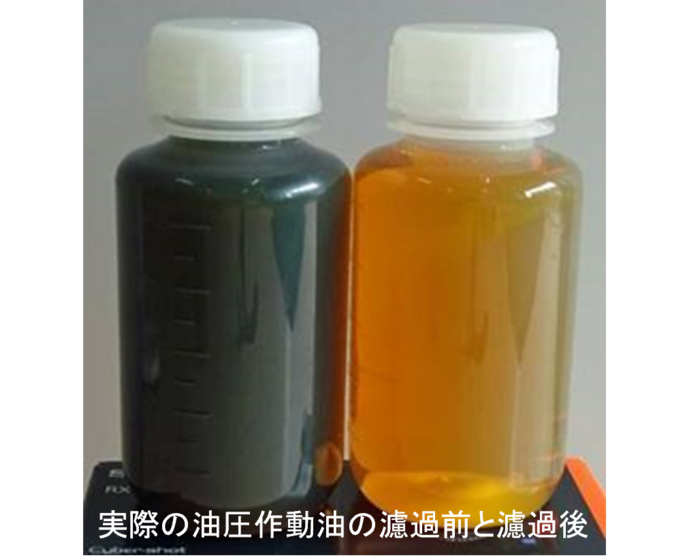
It can purify oil from NAS grade 11 down to NAS 5–6,which is far cleaner than the standard new oil (typically NAS 9–10). This ensures the oil inside your equipment is always cleaner than new, resulting in up to 80% fewer equipment failures. Beyond removing dissolved contaminants, MIRACLE BOY also cleans out residue and adheres grime inside machinery, improving heat exchange efficiency and enabling smoother, more stable operation. Noise reduction. Improved and stabilized product quality. Reduced power consumption No oil replacement required (virtually zero new oil purchases), and no oil disposal needed (zero waste). While other filtration systems may offer slight extensions to oil life, regular oil changes remain necessary. MIRACLE BOY is compact, easy to operate, and features filter elements that can be disposed of as general combustible waste (similar to industrial wipes), with zero hazardous emissions. [Why MIRACLE BOY Achieves Higher Cleanliness Than New Oil] Fresh oil may seem pure—but contamination starts the moment it leaves the refinery. As soon as oil is transferred into tank trucks, drums, pails, or cans, it comes into contact with air. This introduces moisture, airborne particles, and residue into the oil. Even though containers are sealed, they are exposed to temperature changes, humidity fluctuations, transport vibrations, and other environmental factors. During storage, the container “breathes,” causing further contamination over time. That’s why even new oil contains dissolved contaminants, moisture, and oxidized compounds and the cleanliness standards for new oil are defined with this in mind. MIRACLE BOY features a unique 4-layer absolute filtration structure. Thanks to this advanced design, it can perfectly remove all particles, moisture, and oxidized substances, achieving a cleanliness level beyond that of new oil.
The Ultimate Solution for Sludge Collection and Dewatering!
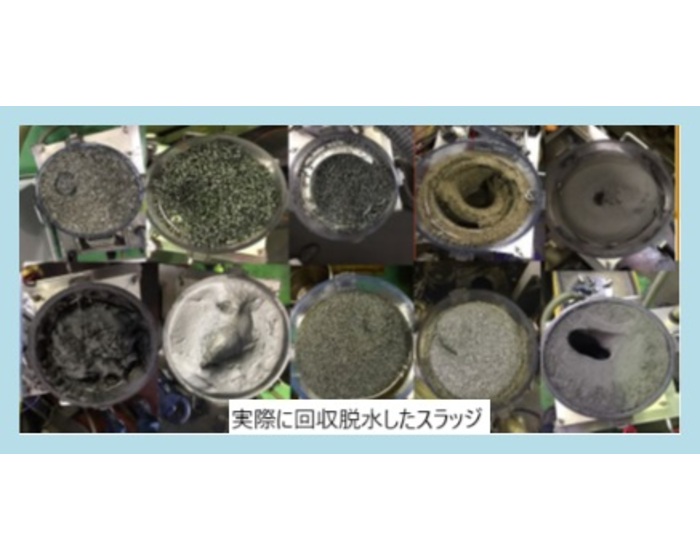
The Ultimate Solution for Sludge Collection and Dewatering! One unit can handle both water-based and oil-based coolants!!! The Sludge Vacuum that Extends Coolant Life 【Are You Ignoring the Sludge Problems in Your Metalworking Operations?】 In metalworking processes such as cutting and grinding, metal particles and machining debris mix into the coolant, accumulating as sludge at the bottom of the tank. If left untreated, this sludge accelerates coolant deterioration, leading to serious operational issues such as foul odors, pump clogging, and reduced machining accuracy. This is where the Sludge Vacuum comes in. Equipped with a patented cyclone stainless steel mesh, it powerfully suctions and dewaters sludge. The effectiveness is immediately evident when you see the recovered sludge. Sludge settling at the bottom of the coolant tank may not be visible, but its accumulation reduces the coolant volume, lowering cooling efficiency. Circulating coolant mixed with sludge causes various problems, making it crucial to address these issues proactively. 【Incredible Results After Sludge Collection and Dewatering】 At sites where the Sludge Vacuum was used, thick sludge that had been accumulating for years at the tank bottom was completely collected within minutes. The collected sludge is dewatered to an unprecedented level, significantly reducing disposal volume and weight. 【Challenges of Traditional Sludge Handling】 - Coolant tanks accumulate large amounts of sludge, frequently clogging filters. - Manual sludge removal is time-consuming and labor-intensive. - Collected sludge contains high moisture content, leading to high disposal costs. 【Improvements After Introducing the Sludge Vacuum】 - Complete sludge removal in a short time, leaving the tank clean. - Dewatering functionality reduces sludge volume, drastically cutting disposal costs. - Maintains coolant cleanliness, reducing replacement frequency. 【Features and Benefits of the Sludge Vacuum】 <Powerful Suction for Thorough Sludge Removal> - Recovers sludge from tank bottoms and corners with high-power suction (8-meter lift, 50 liters per minute). - Quickly suctions even mud-like sludge that is difficult to remove manually. <Fast Dewatering Reduces Sludge Disposal Costs> - Patented cyclone stainless steel mesh instantly dewaters the sludge. - Removing moisture and oil significantly reduces the sludge disposal volume. <Extends Coolant Life by More Than Double> - Prevents sludge buildup, slowing coolant deterioration. - Prevents pump and pipe clogging, reducing equipment maintenance frequency. <Environmental and Workplace Safety Benefits> - Completely removes foul-smelling sludge, keeping the workplace clean. - Air-powered operation requires no electricity, ensuring safe use with no fire risk. 【Optimize Coolant Management Through Complete Sludge Control】 When sludge is left untreated, coolant degradation accelerates, eventually leading to equipment failure. By introducing the Sludge Vacuum, sludge can be regularly removed, ensuring long-term coolant performance. - Sludge collection and dewatering reduce disposal costs. - Extends coolant life, cutting down on replacement frequency. - Prevents odors and machine issues, improving the working environment. - Clean coolant reduces wear on expensive cutting tools and grinding wheels, directly contributing to cost savings. - Significantly contributes to improved and stabilized product quality. Why not enhance your factory's productivity by optimizing sludge management?
High-Performance Oil Filtration device - MIRACLE BOY
High-Performance Oil Filtration device - MIRACLE BOY Product Information High-performance oil filtration device [MIRACLE BOY] "MIRACLE BOY" by Saitama Eco Tech is an advanced filtration device that helps prevent oil degradation, continuously maintaining it at an optimal condition, significantly reducing equipment failures and preventing issues such as clogging and the need for oil changes. ■ Overview “MIRACLE BOY” is a high-performance oil filtration device that helps prevent the degradation of lubricating and hydraulic oils in mechanical equipment. It can be easily connected offline to an oil tank and the filter element can be replaced even while the production machine is operating. Since its launch in 1970, over 20,000 units have been sold and trusted in various industrial fields worldwide. ■ Features Contaminant Removal: Thoroughly removes fine dust particles (0.01~10~100μm, with a central filtration precision of 3μm) in oil, achieving cleanliness comparable to new oil. Moisture Removal: Removes moisture at the ppm level (0.0001% parts per million). Emulsions also become transparent in one cycle. Oxide removal: Patented technology safely absorbs oxidized sludge and prevents acid value from increasing. *By removing all contaminants, the viscosity of the oil is preserved. ■ Technical specifications ・Oil Viscosity Compatibility: Suitable for a wide range of viscosities from low-viscosity hydraulic oil to high-viscosity gear oil (VG2~VG260). ・Compatible oil types: hydraulic oil, lubricating oil, turbine oil, heat transfer oil, fire-resistant casting oil, etc. ・Central filtration precision: 3μm (special deep filtration from ultra-fine particles to visually perceivable sizes). ・Installation method: Offline connection. ・Maintenance: Only requires replacement of the filter element once a year. "MIRACLE BOY" prevents equipment malfunctions and sudden machine stoppages, improves operational efficiency, and eliminates the need for oil changes. This greatly contributes to enhancing product quality, reducing costs, and being environmentally friendly. ■ For more details, download the PDF or feel free to contact us.
Prolong the Life of Water-Based Coolant with Floating Oil Recovery
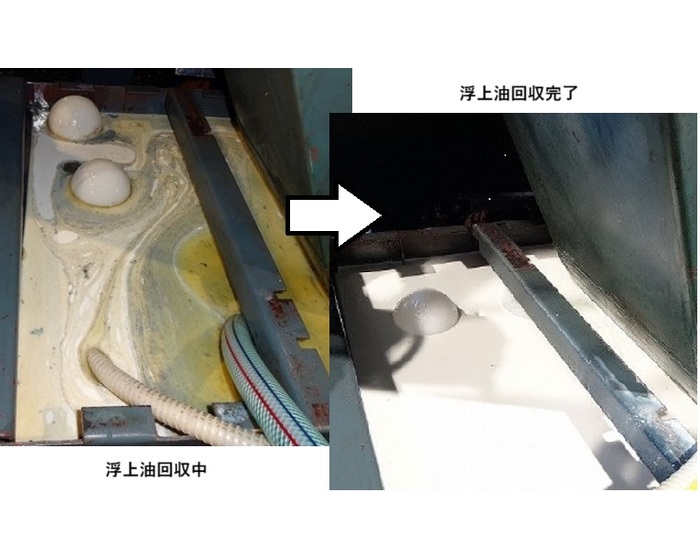
【Prolong the Life of Water-Based Coolant with Floating Oil Recovery! Purifying Coolant Fluid Contributes to Quality Improvement and Cost Reduction】 In metalworking processes such as grinding and polishing, floating oil accumulates on the surface of the coolant, forming oil films and scum. If left untreated, the water-based coolant deteriorates, bacteria proliferate, unpleasant odors develop, and the coolant’s original performance deteriorates, leading to reduced machining accuracy. However, by properly recovering and removing floating oil, the coolant’s quality can be maintained over a longer period, contributing to cost reduction and improved working conditions. 【If You Experience Any of the Following, Please Contact Us】 - There’s a distinct anaerobic odor at your worksite. - There’s scum or foam containing fine sludge and floating oil on the coolant surface. - You’re already using other equipment, but it mostly sucks up coolant instead of effectively removing floating oil. - You are using a belt-type skimmer, but while it’s not entirely ineffective, the balance between the amount of floating oil and its removal is poor. - You’re using other methods (disc-type, coalescer, screw-type, float-type) but with low effectiveness. - The equipment, worksite, and products feel greasy. 【Changes in Coolant After Floating Oil Recovery】 Once sludge and oil are removed, the water-based coolant regains its cleanliness and retains its cooling and cleaning performance. In actual cases where floating oil was recovered, the following effects have been observed: - Prevents coolant deterioration, reducing replacement frequency. - Prevents pump and pipe clogging, ensuring stable machine operation. - Eliminates odors caused by floating oil, improving the work environment. - Maintains cutting fluid quality, contributing to stable machining accuracy. - Reduces stickiness in equipment and surrounding areas, leading to more stable product quality. - Reduces the frequency of coolant replacement, making work much easier. - Extends the lifespan of cutting tools and grinding wheels. - Contributes to increased production output. 【Importance and Benefits of Floating Oil Recovery】 1. Extends Coolant Life Water-based coolant deteriorates more quickly when floating oil is present, requiring frequent replacement. However, removing floating oil can more than double the coolant’s lifespan. 2. Reduce Maintenance Costs Accumulated floating oil causes pumps and pipes to clog, increasing maintenance costs. Recovering floating oil significantly reduces equipment failure risks and repair expenses. 3. Prevent Odors and Bacterial Growth, Improves Work Environment Floating oil becomes a breeding ground for bacteria, leading to coolant decay and unpleasant odors. Removing it helps maintain a comfortable work environment. 4. Improve Machining Precision and Product Quality Cleaner coolant reduces tool wear and helps stabilize machining precision, which in turn improves product quality. 【Optimize Water-Based Coolant Management with Floating Oil Recovery】 By installing the right floating oil recovery system, you can maintain coolant quality while achieving cost reductions and higher productivity. - Extends coolant life and reduces replacement costs - Lowers equipment failure risks and ensures stable operation - Prevents odors and maintains a comfortable work environment Why not optimize floating oil management to boost overall factory productivity? You can also view photos showing actual floating oil recovery in progress and after recovery. https://prime.nc-net.com/100338/ja/product/detail/244550
CONTACT
Inquiry