
KEM (THAILAND) CO.,LTD.
SERVICE
Production Goods & Services
Tension vs. Compression Springs | Differences and How to Select the Right Type
Product Info
Springs are essential components in machines and mechanical systems. Among various spring types, two of the most common are compression springs and tension springs. Although they may look similar, their working principles, applications, and design considerations are quite different.
This article explores the differences between compression and tension springs and how to choose the right type based on application requirements.
========================
🔧 What Is a Compression Spring?
A compression spring works when compressed. It pushes back against the force that shortens it and tries to return to its original length.
📌 Key Features:
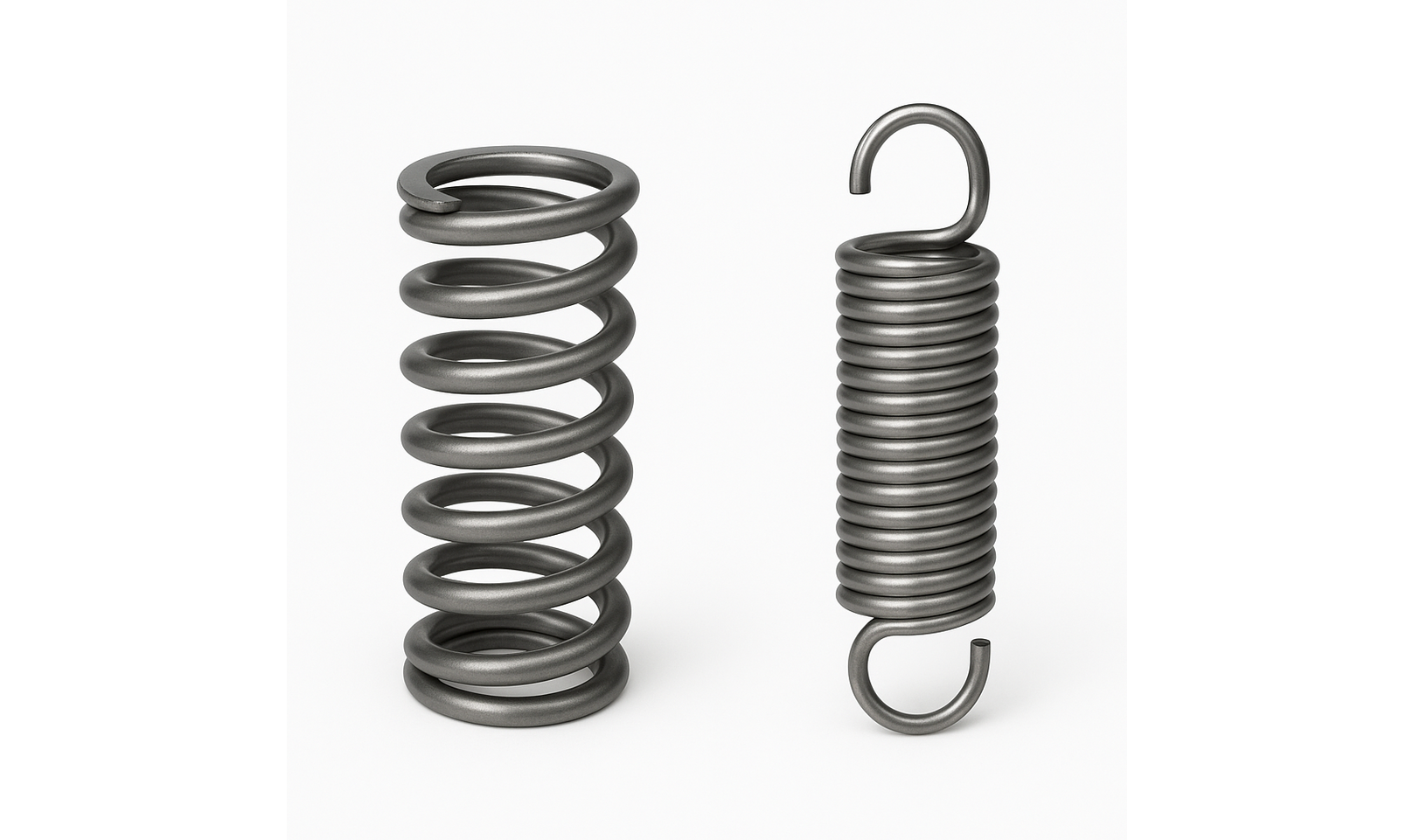
- Typically cylindrical in shape
- Coils are compressed under load
- Generates outward pushing force
📌 Common Applications:
- Retractable pens
- Shock absorption in machinery
- Keyboards and buttons
- Industrial tools and mechanical assemblies
========================
🪝 What Is a Tension Spring?
A tension spring works when pulled apart. It stores energy when stretched and pulls the connected parts back together.
📌 Key Features:
- Has hooks or loops at both ends
- Coils stretch under load
- Generates pulling force to return to original length
📌 Common Applications:
- Washing machine lids
- Self-closing doors
- Cable-operated systems
- Exercise equipment or toys
========================
⚙️ Comparison: Compression vs. Tension Springs
🌀 Working Principle
- Compression Spring: Resists compression and pushes back
- Tension Spring: Resists stretching and pulls back
🔩 Physical Appearance
- Compression Spring: Cylindrical without end hooks
- Tension Spring: Includes loops or hooks at both ends
📍 Force Direction
- Compression Spring: Pushes outward when compressed
- Tension Spring: Pulls inward when stretched
🔧 Installation Position
- Compression Spring: Placed between components pushing together
- Tension Spring: Installed between components pulling apart
📦 Typical Uses
- Compression: Pens, bumpers, switches
- Tension: Hinges, closures, mechanical pulls
========================
🎯 Which Spring Should You Use?
Choose compression springs when your system needs force to push components apart (such as in shock absorption).
Use tension springs when your mechanism needs force to pull components back together (such as in returning motions).
Also consider:
- Spring constant (stiffness)
- Required range of motion
- Load frequency and durability
- Material selection (e.g. stainless steel, carbon steel)
========================
✅ Why Choose KEM (THAILAND) CO., LTD. for Custom Springs?
KEM (THAILAND) CO., LTD. specializes in precision spring manufacturing for industrial, consumer, and electronic applications. Whether you need small-batch prototypes or mass production, we offer full support.
👉 For more information, please download our product catalog (PDF) or contact our team directly.
========================
#CompressionSpring #TensionSpring #IndustrialParts #MechanicalEngineering #PrecisionManufacturing #OEM #ThailandIndustry
CATALOG
Related Catalogs

CONTACT
Inquiry