
C NET (THAILAND) CO., LTD.
SERVICE
Production Goods & Services
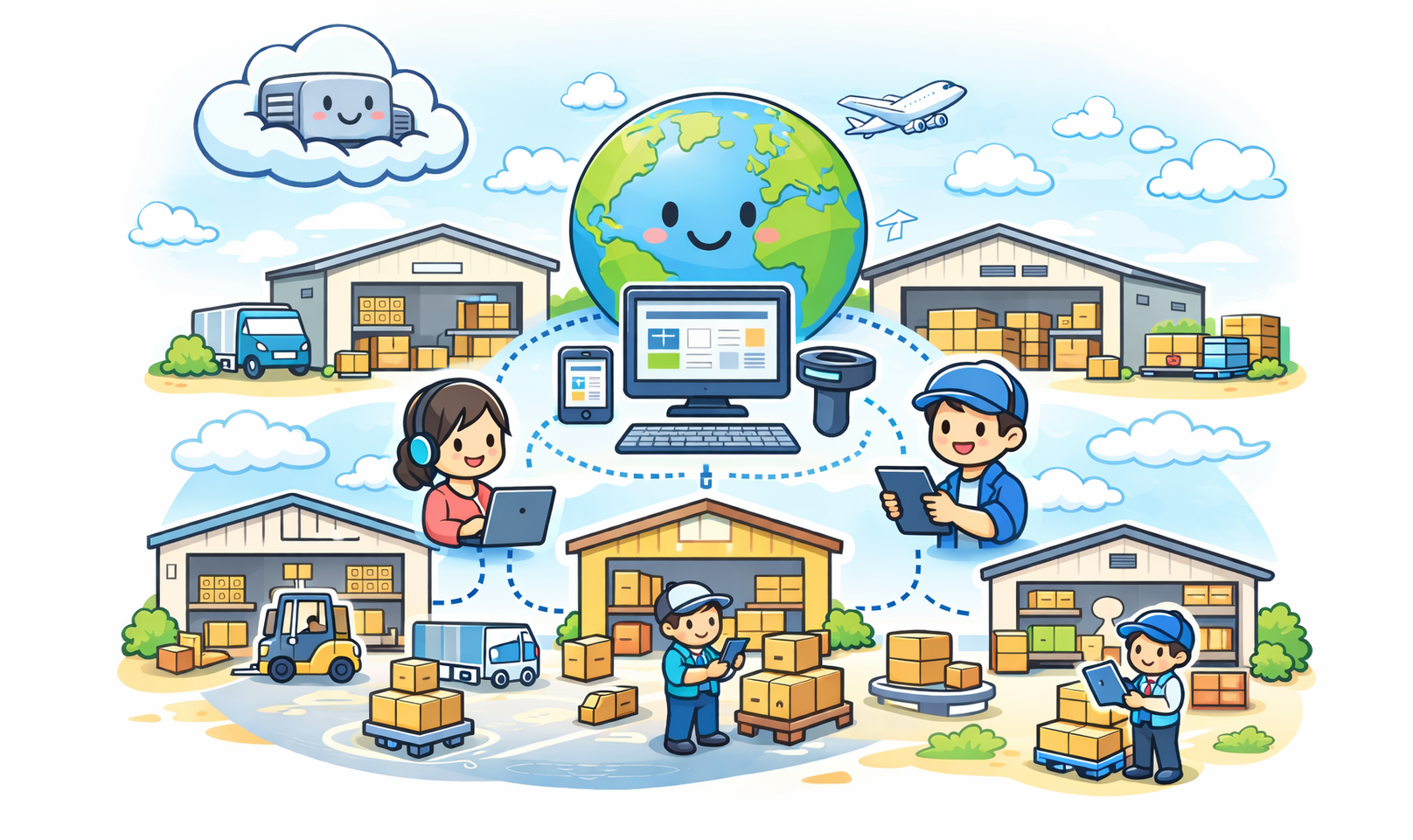
Multilingual WMS | for Standardized Warehouse Management Across Multiple Countries
Product Info
🌟 Key Takeaways
• A multilingual WMS suitable for multi-country warehouses must be designed at the system architecture level, not just by translating screens.
• Cloud-based Global WMS enables multiple countries to truly operate on a single system over the long term.
• A centralized data model reduces data inconsistency across countries.
• Suitable for organizations with multiple warehouses, multiple languages, and future expansion plans.
ーーーーーーーーーーーーーーーーーーーーーーーーーーーーーーー
When organizations expand warehouse operations across multiple countries, the core challenge is not only language but system fragmentation. Many local WMS platforms evolve independently, resulting in inconsistent data models and workflows that prevent true integration.
The main architectural issue is that most WMS solutions were originally designed for single-country use. Multilingual support is often added later, limited to screen translation rather than decoupling language from business logic. In some cases, each country uses separate databases, creating complexity and high long-term maintenance.
A multilingual WMS for global use must start with a unified architecture. Core logic and master data—such as products, warehouse structure, and inventory status—should be centralized. Language should exist only at the presentation layer, while access rights are controlled by role and region. This design allows one platform to support multiple languages and local practices without splitting the system.
Compared with country-specific systems, a global WMS reduces duplicated maintenance and enables consistent data structures. New countries can be added through system extension rather than redevelopment, improving scalability and reducing cost.
Cloud-based global WMS platforms increasingly adopt this model—central core, multilingual UI, and clear separation between standard and localized functions. Systems such as ci.Himalayas/GLOBAL apply these principles to support operations across ASEAN and China.
Organizations running separate WMS platforms per country face repeated training, duplicated enhancements, and rising complexity. Selecting a true multilingual WMS minimizes those risks and ensures readiness for future expansion.
📘 Summary
A multilingual WMS is not simply a system that can be translated into multiple languages. It is an architecture designed from the outset for multi-country warehouse operations. Choosing the right system structure significantly reduces long-term complexity and operational risk.
ーーーーーーーーーーーーーーーーーーーーーーーーーーーーーーー
❓ FAQ
Q: How is a multilingual WMS different from a standard WMS?
A: The difference lies in architectural design, with built-in support for multi-country operations from the start.
Q: Is it necessary to already operate in multiple countries?
A: No. It is also suitable for organizations planning future expansion.
Q: Is cloud mandatory for a global WMS?
A: Not mandatory, but it simplifies system maintenance and scalability.
📚 Glossary
• Multilingual WMS: A warehouse management system that supports multiple languages within a single architecture.
• Global WMS: A WMS designed to manage warehouses across multiple countries in one system.
• Core Logic: The central operational logic shared across all countries.
• Presentation Layer: The system layer responsible for user interface and language display, separated from business logic.
• Master Data: Centralized data for products, warehouse structures, and inventory status.
📖 Reference
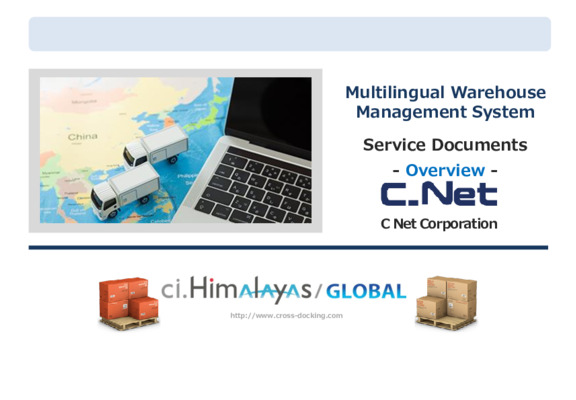
[1] •Multilingual Warehouse Management System Overview• – CNET Corporation (2025)
[http://www.cross-docking.com](http://www.cross-docking.com)
🔗 Cluster Internal Link
• Core Content: https://prime.nc-net.com/106185/en/product_others/detail_service/2420
• Basic Knowledge: https://prime.nc-net.com/106185/th/product_others/detail_service/2571
#MultilingualWMS #GlobalWMS #CloudArchitecture #WarehouseSystem #MultiCountryWarehouse #LogisticsIT #SupplyChainTechnology #EnterpriseWMS #IndustrialSoftware
📆 Updated: 2025-12-19
CATALOG
Related Catalogs
CONTACT
Inquiry