
RYOHSHIN Co., Ltd.
SERVICE
Production Goods & Services
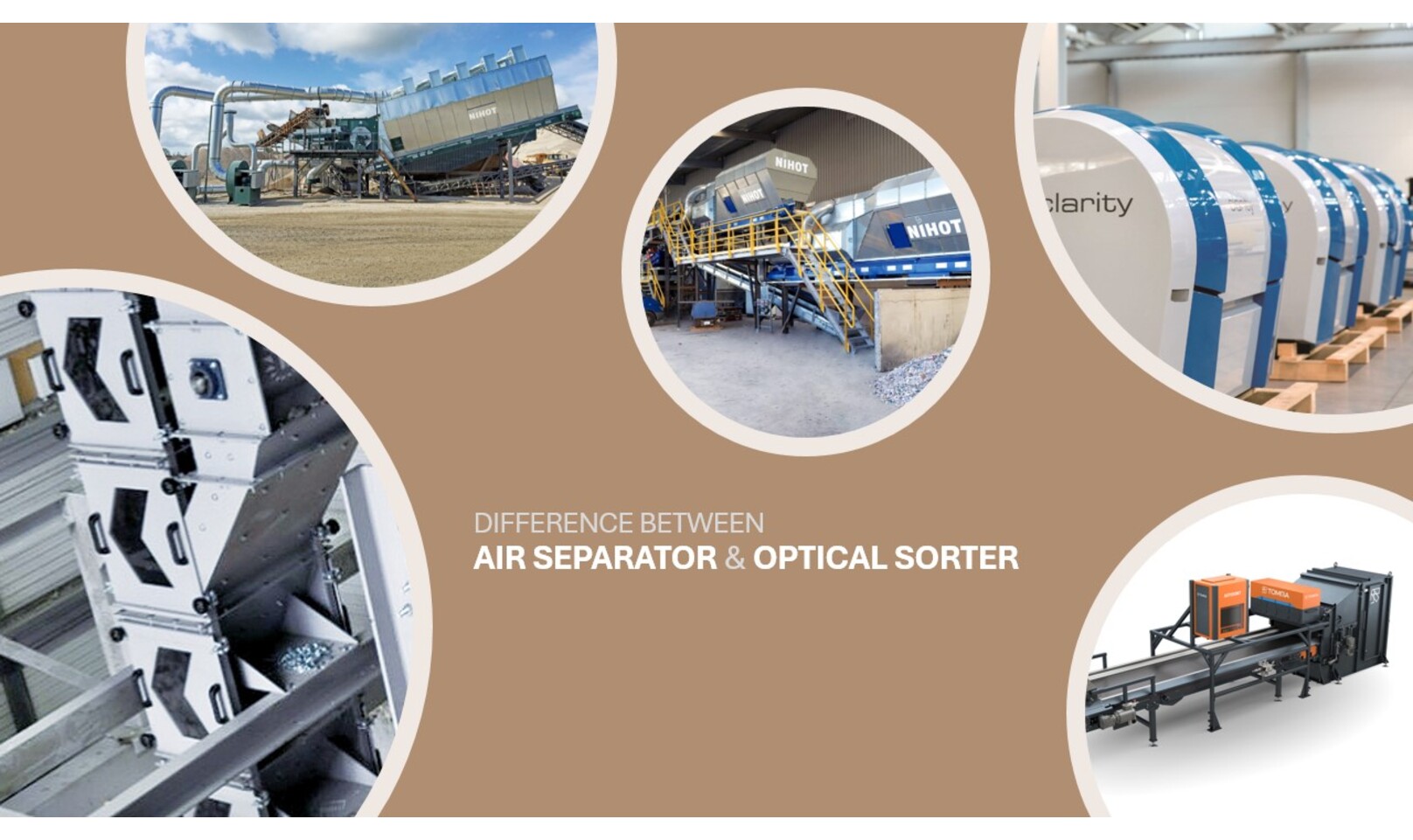
Waste Sorting: Air Separator vs Optical Sorter|How They Work and When to Use Each
Product Info
Understand how Air Separators and Optical Sorters work, their benefits and limits, and how to choose the right one for your factory. This article covers all the practical basics for industrial waste sorting.
1. Why Sorting Matters in Recycling
As industrial and municipal waste volumes rise, efficient sorting has become a crucial part of modern recycling. Proper separation at the source improves material purity, reduces labor costs, and increases the value of recovered materials.
Waste sorting systems play a central role in this process. Two widely used technologies — air separation and optical sorting — each offer distinct advantages. This article explains how both systems work and when they are best used.
2. What is an Air Separator?
An Air Separator uses airflow and gravity to separate light materials from heavier ones. It’s often used for initial sorting in recycling facilities.
How it works:
- Waste enters a chamber with controlled air pressure
- Lightweight items (like film, paper) are blown upwards
- Heavier items (like metal, glass) fall and are collected separately
Advantages:
- Simple design, low maintenance
- Cost-effective for high volumes
- Ideal for pre-sorting mixed waste
Limitations:
- Not suitable for materials with similar weights
- Cannot sort by material type (e.g., PET vs. HDPE)
3. What is an Optical Sorter?
An Optical Sorter identifies materials by scanning them with cameras and sensors. It can detect properties such as color or chemical composition and uses air jets to sort them precisely.
How it works:
- Materials move on a fast conveyor
- Sensors scan each item in real time
- Air jets sort materials into separate bins
Advantages:
- High precision — great for sorting plastics and packaging
- Reduces contamination
- Customizable for different materials
Limitations:
- Higher cost to install
- Needs regular maintenance of cameras and sensors
- Performance may drop if materials are dirty
4. Which System is Right for You?
Air Separators are excellent for basic separation tasks — such as light vs. heavy waste — and are budget-friendly. Optical Sorters are better for advanced sorting needs like separating plastic types or improving purity for high-value recycling. Your choice should depend on your materials, accuracy goals, budget, and available space.
5. Why Choose RYOHSHIN for Sorting Systems
RYOHSHIN Co., Ltd. specializes in advanced waste sorting systems for industrial use. Backed by Japanese technology, Ryohshin offers air separators, optical sorters, shredders, and full recycling system integration.
Their one-stop service includes consultation, design, installation, and local maintenance support. Whether your factory needs basic separation or high-end automation, RYOHSHIN provides tailored solutions to boost recycling efficiency and quality.
Download our product PDF or contact us for expert advice.
#WasteSorting #AirSeparator #OpticalSorter #IndustrialRecycling #RecyclingTechnology #FactoryAutomation #PlasticSorting #RecyclingSystem #RyohshinThailand
CATALOG
Related Catalogs
CONTACT
Inquiry