
NISSEI INTERNATIONAL (THAILAND) CO., LTD.
SERVICE
Production Goods & Services
Industrial Humidity Control Problems: Why Adding Dehumidifiers Doesn’t Work
Product Info
🌟 Key Takeaways
• When RH does not decrease despite full operation, the issue is usually the dehumidification mechanism, not system capacity
• Compressor-based systems have clear limitations in low-temperature and low dew point conditions
• Desiccant Rotors address the root cause of moisture removal through direct adsorption
ーーーーーーーーーーーーーーーーーーーーーーーーーーーーーーー
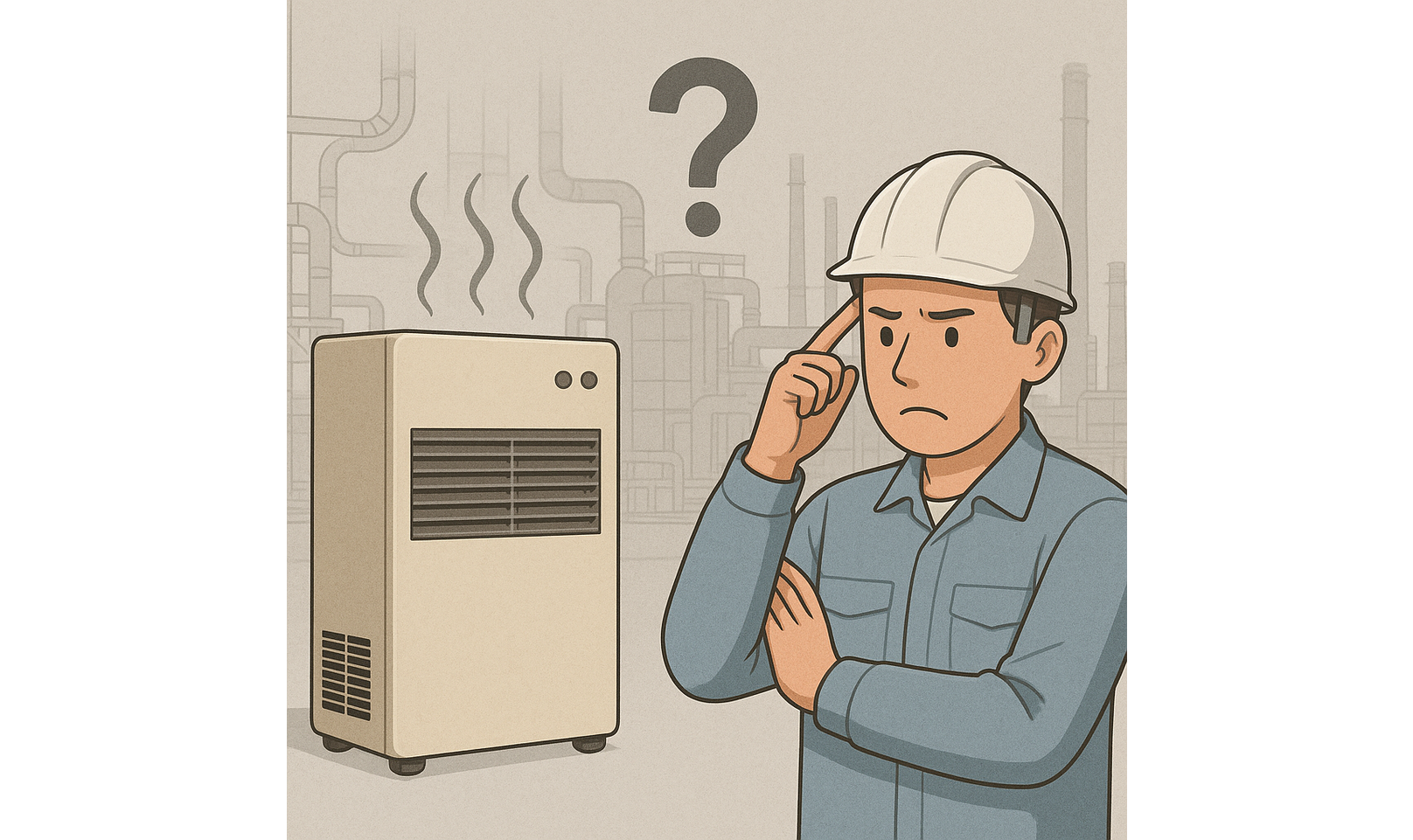
Humidity control in industrial plants and facilities often faces a recurring problem: relative humidity remains above target levels even when dehumidifiers operate continuously and consume high energy. Many users attempt to solve this by increasing unit size or adding more systems, yet the results remain unchanged. This article explains why this problem keeps occurring and why Desiccant Rotors provide a more effective solution.
🔹 Pain Point: Dehumidifiers Running at Full Load but RH Remains High
Common on-site conditions include:
• RH remaining above 60% despite 24-hour operation
• Rising energy costs with no improvement in air quality
• Condensation, mold growth, musty odors, or product quality issues
These issues are commonly found in cold rooms, temperature-controlled factories, or during the rainy season and in high-humidity regions.
🔹 Root Cause: Physical Limitations of Compressor-Based Systems
Conventional dehumidifiers rely on condensation, which requires:
• Sufficient air temperature
• A dew point within the effective condensation range of the cooling coil
As room temperature decreases, the dew point drops accordingly, making condensation difficult. Although the unit continues running, the actual moisture removal process becomes inefficient, leading to an “inefficient operation” state. Increasing system capacity does not resolve this fundamental limitation.
🔹 System Impact
Operating outside optimal conditions causes cascading effects, including:
• Energy loss from overcooling and reheating
• Reduced compressor lifespan
• Higher long-term OPEX
• Fluctuating RH that destabilizes production processes
🔹 Solution: Changing the Dehumidification Mechanism with Desiccant Rotors
Desiccant Rotors shift dehumidification from condensation to adsorption by:
• Directly adsorbing moisture using materials such as zeolite
• Operating independently of dew point
• Maintaining performance even at low temperatures
The honeycomb rotor structure increases air–desiccant contact area, minimizes pressure loss, and enables stable RH control.
🔹 Results of Addressing the Root Cause
By switching to Desiccant Rotors:
• RH consistently reaches target levels
• System overdesign becomes unnecessary
• Overall HVAC energy consumption is reduced
• Operation becomes stable and predictable
In many cases, waste heat can be used for regeneration, further improving overall energy efficiency.
🔹 Trade-offs and Design Considerations
Despite high efficiency, proper system design must consider:
• Heat sources for regeneration
• Appropriate cell type and rotor thickness for airflow
• Integration with existing systems
Correct design is critical for long-term performance.
📘 Summary
When RH does not decrease, the issue is not always system capacity but the dehumidification mechanism itself. Desiccant Rotors solve the problem at its root, delivering stable humidity control, improved energy efficiency, and suitability for real industrial conditions.
📥 CTA
For practical implementation, NISSEI INTERNATIONAL (THAILAND) CO., LTD.
recommends reviewing the related Core and Basic Knowledge topics below.
🔗 Cluster Internal Link
• Core Content: https://prime.nc-net.com/105714/en/product_others/detail_goods/25302
• Basic Knowledge: https://prime.nc-net.com/105714/en/product_others/detail_goods/27656
ーーーーーーーーーーーーーーーーーーーーーーーーーーーーーーー
❓ FAQ
• Q: Will adding another unit solve the problem?
A: If the same mechanism is used in unsuitable conditions, adding units increases energy cost without reducing RH.
• Q: What applications benefit most from Desiccant Rotors?
A: Applications requiring stable low RH in low-temperature or high-humidity environments.
ーーーーーーーーーーーーーーーーーーーーーーーーーーーーーーー
📚 Glossary (Key Terms)
• Desiccant Rotor: A rotating dehumidification wheel using materials such as zeolite
• Condensation: Moisture removal by cooling air below its dew point
• Regeneration: Releasing absorbed moisture from desiccant material using heat
📖 Reference
Based on the original article provided by the user
🔒 Trust
Reviewed by the Sales & Marketing Department
of NISSEI INTERNATIONAL (THAILAND) CO., LTD. for technical accuracy
#DesiccantRotor #IndustrialDehumidification #HumidityControl #HVAC
#FactoryEnvironment #RHControl #EnergyLoss #OPEX
📆 Updated: 2025-12-12
CATALOG
Related Catalogs
CONTACT
Inquiry