
TS COATING (THAILAND) CO., LTD.
SERVICE
Production Goods & Services
Photocatalytic Air Supply Filter | Air Filter for Viruses, Bacteria, Toxins & Odors
Product Info
🌟 Key Takeaway
- Designed for air supply systems
- Shown in the document to target viruses, bacteria, toxins, and odors
- Activated by natural light and indoor light
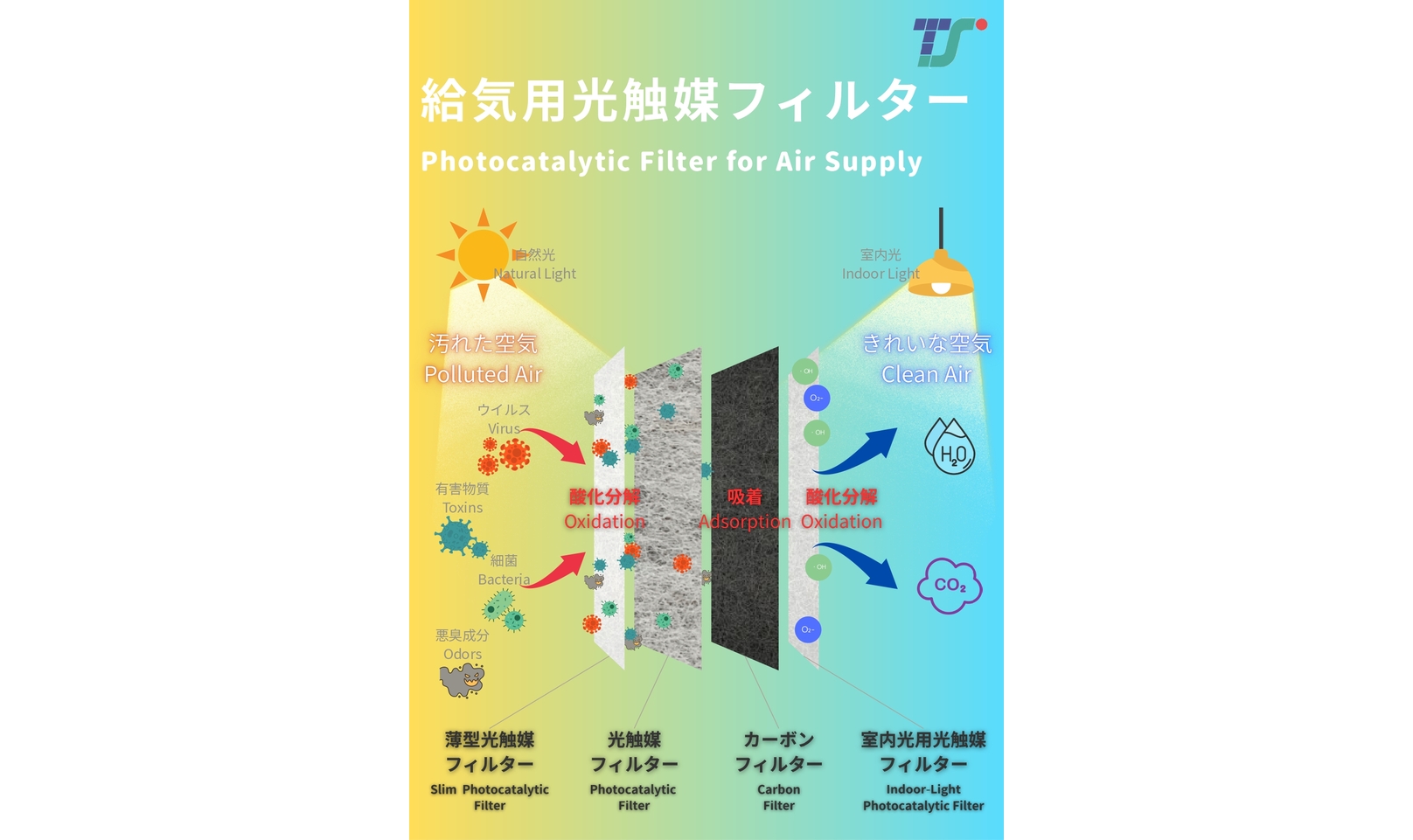
- Three-step process: Oxidation → Adsorption → Oxidation
- Four filter types shown: Slim Photocatalytic / Photocatalytic / Carbon / Indoor-Light Photocatalytic
────────────────────────
Air quality entering a production environment directly affects process stability. Outdoor air may carry viruses, bacteria, odors, and organic pollutants that impact coating, food processing, or controlled workspaces.
The photocatalytic filter concept in the document is designed to address these contaminants at the point of air intake.
🔷 Filter Mechanism
1. Oxidation — Activated by natural and indoor light; icons show O₂– and •OH radicals
2. Adsorption — Carbon layer adsorbs odors and organic compounds
3. Oxidation (final stage) — Produces H₂O and CO₂ before releasing clean air
🔷 Filter Types
- Slim Photocatalytic Filter
- Photocatalytic Filter
- Carbon Filter
- Indoor-Light Photocatalytic Filter
🔷 Why This Filter Matters
Incoming air is a major carrier of viruses, odors, and chemical pollutants.
A light-responsive photocatalytic filter that oxidizes and adsorbs contaminants helps maintain cleaner, safer production environments.
🔷 Before–After Comparison
Before: Viruses / Toxins / Bacteria / Odors
After: Clean Air (H₂O・CO₂)
🔷 Applications / Use Cases
Suitable for air supply systems such as:
- Paint booths
- Mixing rooms
- Food production lines
- Spaces requiring odor control
🔷 Insight
The photocatalytic filter concept focuses on light-activated reactions, not just trapping contaminants.
It breaks down pollutants through oxidation, offering an additional layer of air treatment.
📘 Summary
The photocatalytic air supply filter concept shown in the document helps manage viruses, bacteria, toxins, and odors through Oxidation + Adsorption before air enters production processes.
📥 Contact
For more information, please contact the TS Coating (Thailand) sales team.
ーーーーーーーーーーーーーーーーー
❓ FAQ
Q1: What is the main mechanism shown in the document?
A: The three-step process: Oxidation → Adsorption → Oxidation, activated by natural and indoor light.
Q2: What filter types appear in the document?
A: Slim Photocatalytic, Photocatalytic, Carbon, Indoor-Light Photocatalytic.
Q3: What contaminants does the filter address?
A: Viruses, bacteria, toxins, and odors (as indicated in the diagram).
Q4: What systems is this filter used for?
A: Air supply systems such as paint booths, mixing rooms, food lines, and odor-controlled spaces.
ーーーーーーーーーーーーーーーーー
📚 Key Terms
- Photocatalytic Filter: A filter activated by light to help decompose pollutants
- Oxidation: Light-triggered breakdown of contaminants
- Adsorption: Capture of odors and organics onto filter surfaces
- Carbon Filter: Layer that adsorbs VOCs and odors
- Air Supply System: Air intake feeding into production areas
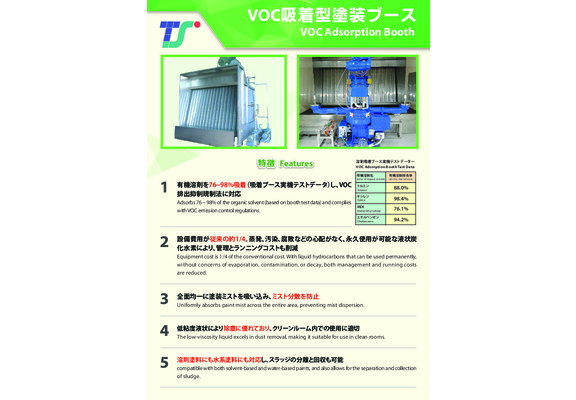
- VOC: Volatile organic compounds causing odor and contamination
📖 Reference
- Photocatalytic Filter for Air Supply – Page 1, Internal Validation
🔒 Trust
Reviewed by Yuki Okuno – Project Leader, TS COATING (THAILAND) CO., LTD.
Information sourced from -Photocatalytic Filter for Air Supply – Page 1-.
#PhotocatalyticFilter #AirSupplySystem #AirPurification #VirusControl #OdorRemoval #CarbonFilter #IndustrialAirQuality #CleanAirTechnology #FactoryAirManagement #TSCoating
📆 Updated: 2025-11-24
CATALOG
Related Catalogs
CONTACT
Inquiry